Illustration: Xia Qing/GT
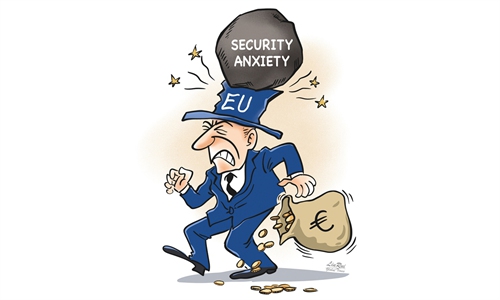
While it is not uncommon to see EU politicians hype the so-called "economic threat" from China, such rhetoric does not mask Europe's genuine need for cooperation with China.The head of the conservative European People's Party in the European Parliament, Manfred Weber, has called for a tougher EU trade policy toward China, warning that China's industrial strength threatened parts of Europe's economy, Reuters reported on Sunday, citing a report from Bild am Sonntag.
His comments came ahead of an EU summit on June 18, where leaders are expected to discuss economic security and likely provide guidance regarding what tools the European Commission should focus on.
Such rhetoric is nothing new. Almost every time the EU prepares to review China-related policies, certain voices emerge to strike a hard-line stance. A closer look at the underlying logic reveals that it is precisely the strong and genuine demand for cooperation with China among Europe's real economy and local industries that has prompted some forces to deliberately stir up negative narratives, attempting to drown out rational economic and trade logic with political noise. Yet business reality tells a completely different story.
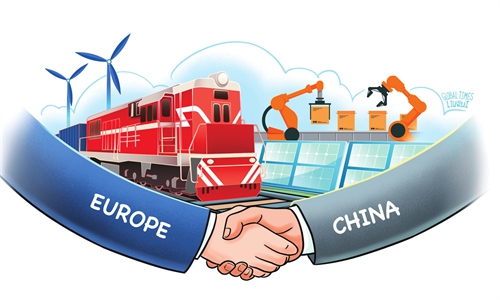
The actions of European companies serve as the most telling proof. Amid certain politicians' clamor about so-called "China threats," Stellantis, a leading European automotive giant, and China-based Dongfeng Group recently announced their intention to establish a new Stellantis-led, Europe-based joint venture to perform shared sales and distribution, manufacturing, purchasing and engineering activities. This cooperation is a win-win partnership built on complementary strengths in technology, production capacity and market access. Such a mutually beneficial and complementary model lies at the very heart of China Europe economic and trade relations.
The Stellantis venture is by no means an isolated case. According to a new survey by the EU Chamber of Commerce in China, 68 percent of European companies are either staying or expanding their operations in China. The fact that more and more European companies are choosing to deepen their presence in China and expand their business in the country is in itself the most powerful rebuttal to the so-called "de-risking" narrative. These collaborations reveal the truth that Europe's cooperation with China is driven by genuine industrial necessity.
This creates a striking split. On one side, certain politicians advocate tough trade policies and call for "de‑risking." On the other side, European companies and industries are actively seeking cooperation with Chinese partners. This sharp divide stems from a tendency in some circles to politicize normal economic competition, viewing EU‑China relations through the distorted lens of value‑based prejudice. In essence, it is a political performance disconnected from industrial reality.
The complementarity between Chinese and European industries far outweighs their rivalry. Decades of economic and trade exchanges have built a deeply intertwined community of interests. Europe excels in precision machinery, high-end chemicals and cutting-edge basic research; China specializes in full-chain manufacturing, the application-driven deployment of technologies and its vast domestic market. Bilateral cooperation enables effective resource sharing and mutual complementation of strengths.
Europe faces severe practical constraints in its green transition and digital transformation. In critical areas such as power batteries, autonomous driving chips and electric vehicle manufacturing, European domestic industries are either late starters or burdened by high costs. This is why European companies need China's technology, supply chains, cost-control capabilities and experience in mass production.
Rather than viewing China's industrial prowess as a threat, Europe should recognize Chinese innovation as an indispensable driving force for its own industrial upgrading. The hype about China's industrial threats ignores both the objective trend of the global industrial division of labor and Europe's development needs.
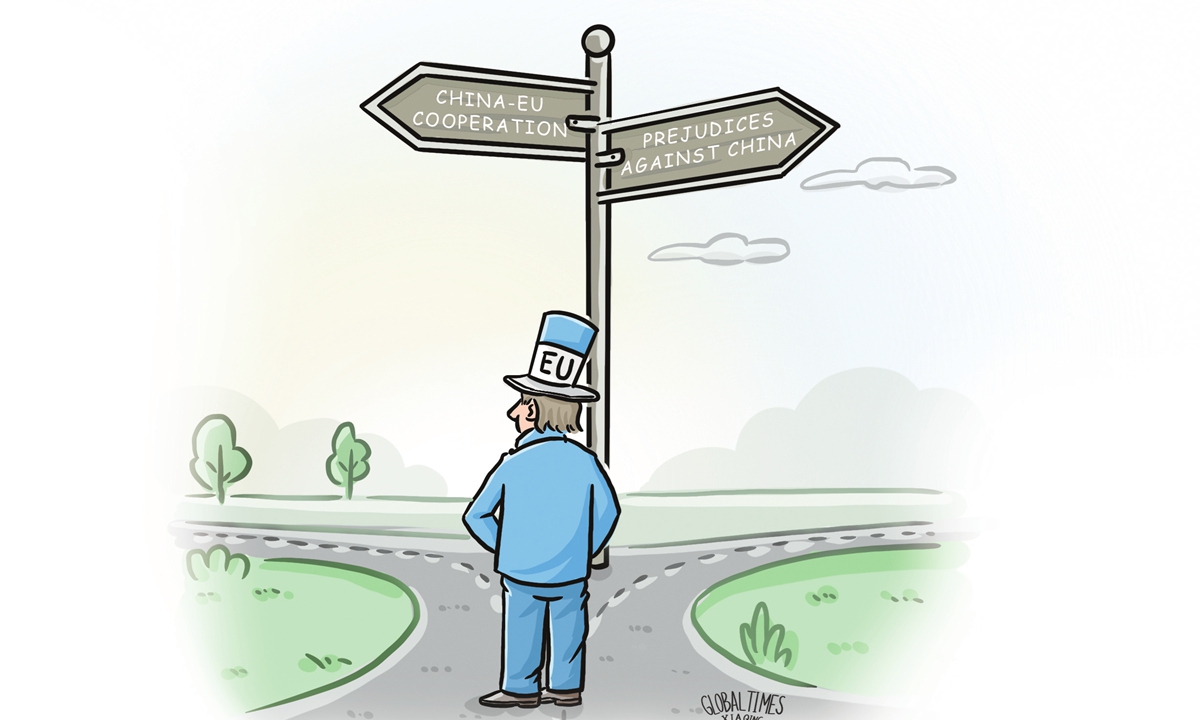
Rational voices still exist in Europe, though they may not be that sensational compared with confrontational political rhetoric. Yet, temporary political noise can never overshadow the tangible cooperation taking place on production lines. The real risk facing Europe is not economic engagement with China, but abandoning win-win cooperation out of prejudice and fear.
EU policymakers need to listen more closely to the genuine demands of local companies and the real economy, set aside narrow ideological biases, and recognize the irreplaceable value of in-depth China-Europe cooperation. That is the right path to safeguarding Europe's long-term economic interests and ensuring the steady, sustained development of EU-China relations.
RELATED ARTICLES