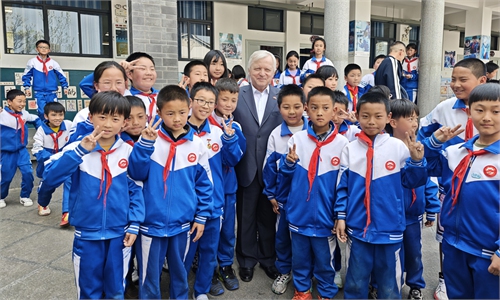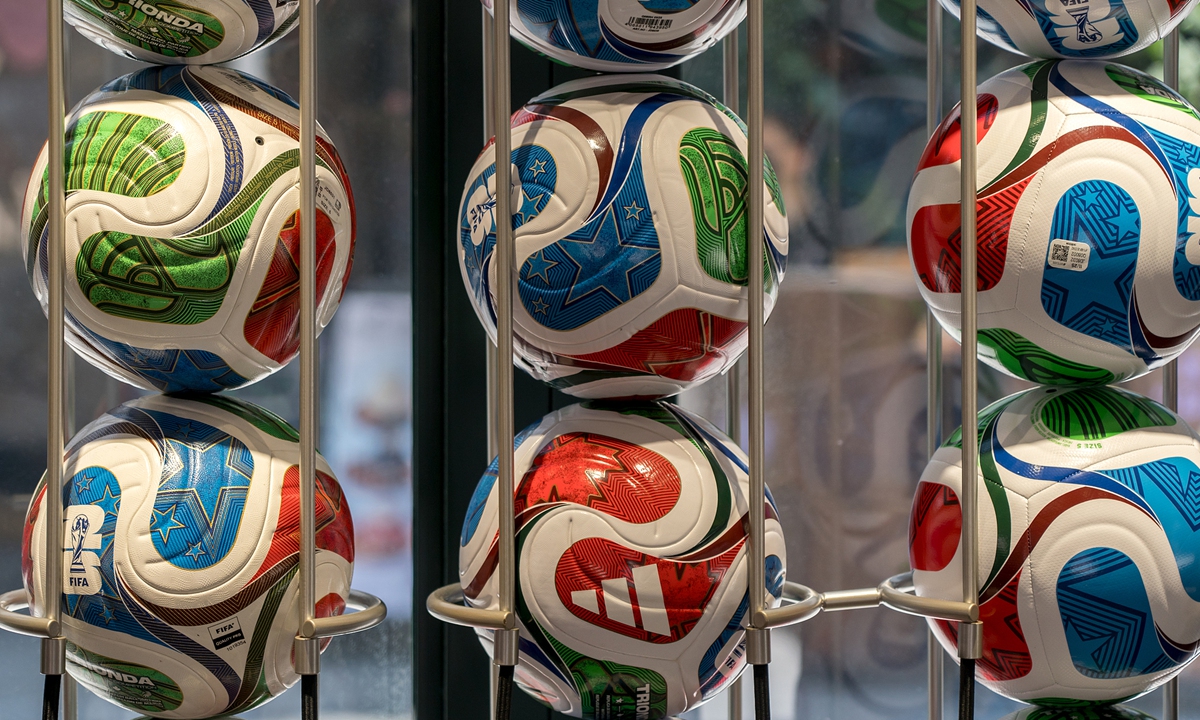
Trionda, the 2026 FIFA World Cup official match ball, are on display at a World Cup-themed pop-up venue in Shenzhen, South China's Guangdong Province on June 6, 2026. Photo: VCG
The 2026 FIFA World Cup, co-hosted by the US, Canada and Mexico, kicked off on Thursday.
Well before the grand opening, fierce competition had already spread far beyond the football fields.
Backed by solid industrial prowess, "Made in China" has become an indispensable part of the world's top football tournament.
Renowned as the "World Supermarket," Yiwu in East China's Zhejiang Province remains the core production hub for World Cup souvenirs and merchandise, including national team jerseys, flags, scarves, hats, cheering horns, mascot dolls and key rings.
The Global Times previously learned from the Yiwu Customs that, from January to April this year, Yiwu exported 3.77 billion yuan ($554 million) worth of sports goods and equipment, up 7.9 percent year-on-year.
Local merchants said this round of World Cup export boom stands out for original design, independent innovation and standardized operations. They actively tap into market demand and roll out distinctive, creative new products. New offerings including pet jerseys, World Cup-themed figurines and customized cultural creative products have gained great popularity among overseas buyers.
Apart from Yiwu, other major Chinese manufacturing hubs including Guangzhou in South China's Guangdong Province, Xiamen in East China's Fujian Province and Qingdao in East China's Shandong Province are running at full steam to produce World Cup-related goods.
According to the Workers' Daily, Qingdao's textile firms have made around 10 million flags for the 2026 World Cup so far, and the total output is projected to top 30 million throughout the tournament.
More noteworthy is that Chinese technology has been deeply embedded in almost every link of this world-famous football event, far beyond ordinary small goods.
The official match ball of the 2026 World Cup, named Trionda, is entirely manufactured and inspected at a production plant in Guangdong Province.
Making a high-end professional match ball involves highly sophisticated craftsmanship. Featuring an innovative four-panel structure, the 2026 World Cup match ball is embedded with internet-connected technology that transmits real-time data to the video assistant referee (VAR) system and semi-automated offside detection system. Manufacturing such a high-tech football requires strict standards for material formulas, thermal bonding technologies and precise control over weight and roundness.
At the Guangdong factory, each match ball undergoes rigorous procedures including raw material cutting, hot press forming, surface texture embossing, weight calibration and flight testing, with every step verified by precision instruments.
In Mexico, a total of 115 China-made light-rail trains will serve in Mexico City, Monterrey, and Guadalajara during the 2026 FIFA World Cup to bring fans to the opening-match venue and the other two host stadiums, expected to handle more than 1.25 million passenger trips a day, People's Daily said in a post on X on Tuesday.
Chinese brands continue to back the event with cutting-edge products. As FIFA's Official Technology Partner, China's multinational technology company Lenovo supplies AI devices, services and solutions for the tournament. Its 3D Digital Human Visualization Solution will be used in refereeing and live broadcast systems. Based in Dallas, the US, the 2026 FIFA World Cup International Broadcast Centre - dubbed the "media heart" of the event - has chosen China's electrical appliance giant Hisense as its exclusive supplier of display devices.
With these technologies, this year's tournament serves as the perfect stage to showcase how technology can support referees, teams, and media outlets in reshaping football both on and off the pitch, foreign media commented.
More importantly, from small goods and infrastructure to high-tech products, "Made in China" has become an irreplaceable pillar of this global sports gala. It serves as a vivid epitome of China's sound industrial system, efficient supply chain, ongoing manufacturing transformation and upgrading, and robust foreign trade resilience, fully showcasing the solid strength of "Made in China."
Global Times
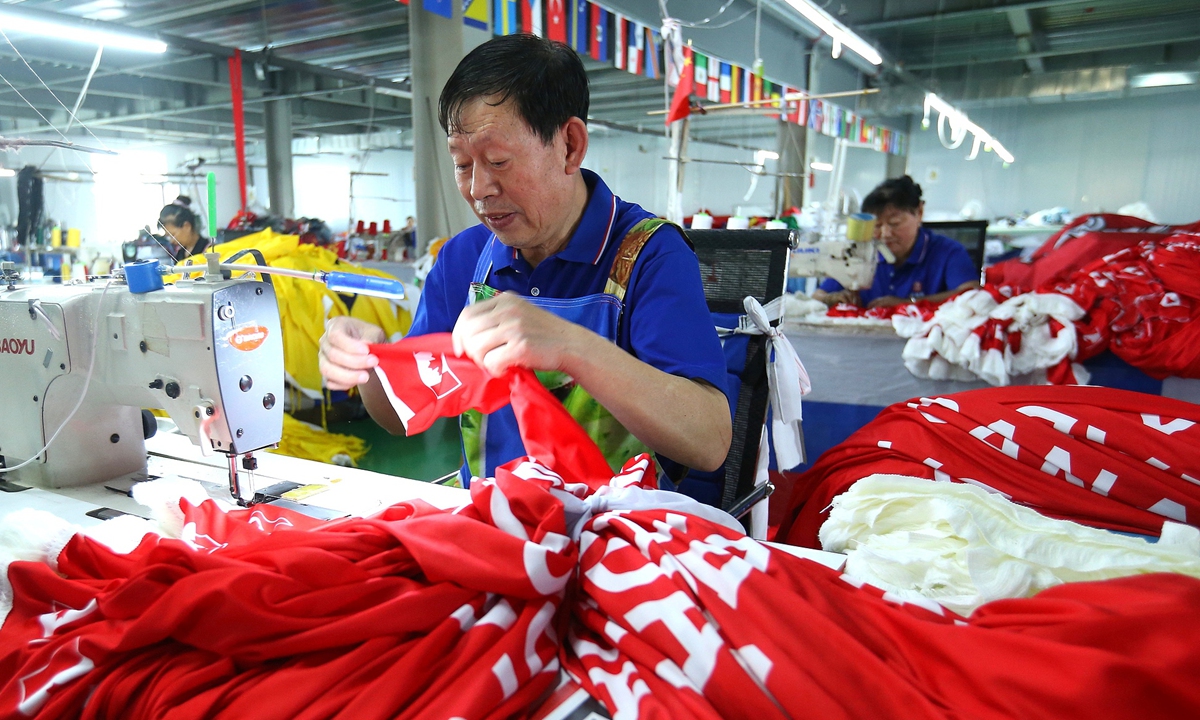
Workers at a textile company in Qingdao, East China's Shandong Province, produce flags for the 2026 FIFA World Cup on May 28, 2026. Photo: VCG
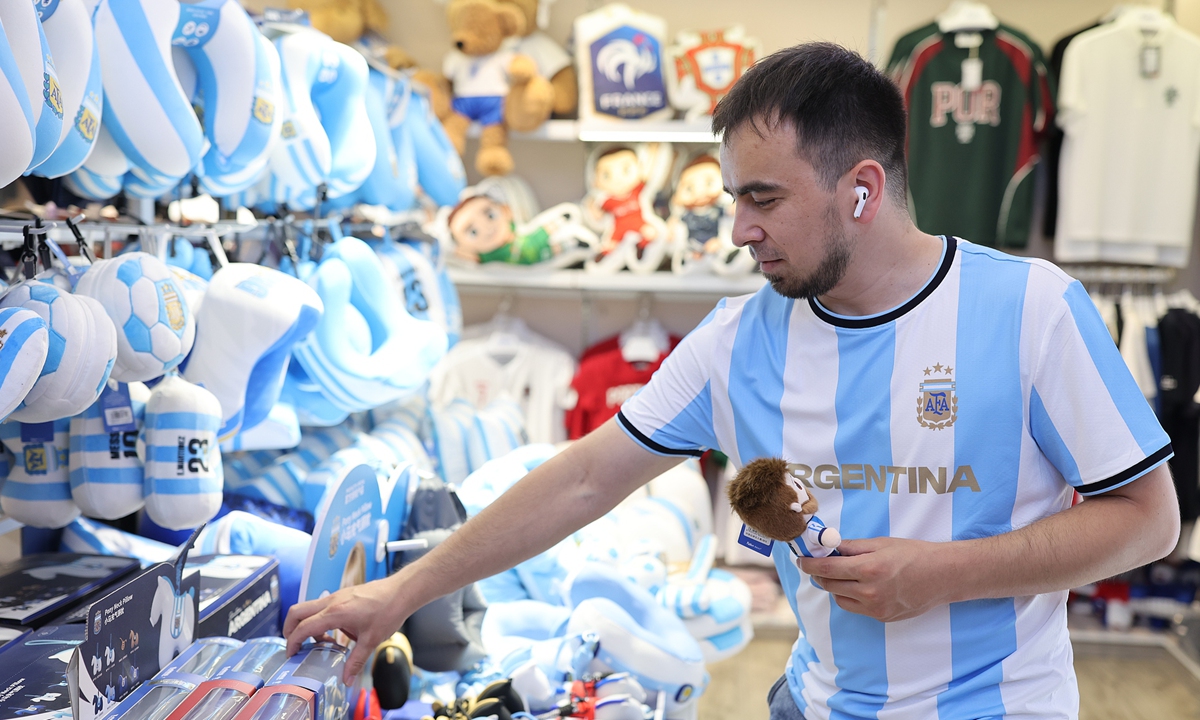
A foreign customer shops for World Cup merchandise at an official licensed store in Yiwu, East China's Zhejiang Province, on May 25, 2026. Photo: VCG
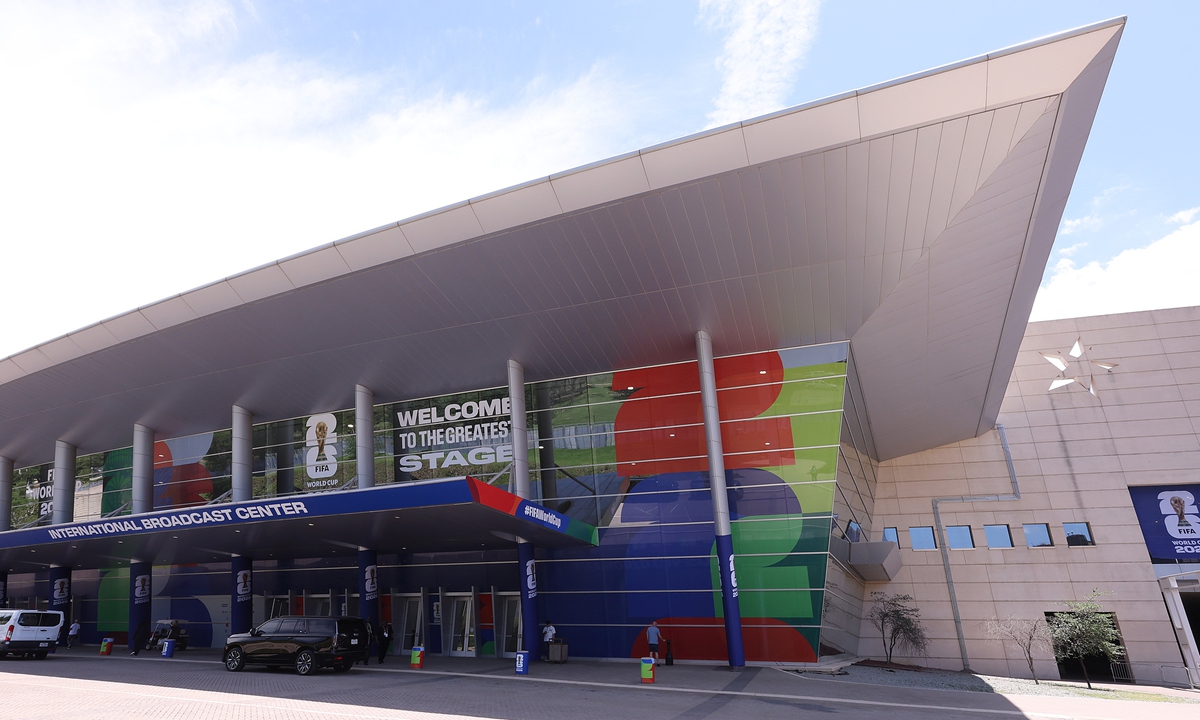
A general view of the exterior of the 2026 FIFA World Cup International Broadcast Centre, which is equipped with China-produced display devices Photo: VCG

FIFA President Gianni Infantino is seen during the grand opening of 2026 FIFA World Cup International Broadcast Centre on June 1, 2026. Behind him are display devices made by China's electrical appliance giant Hisense. Photo: VCG
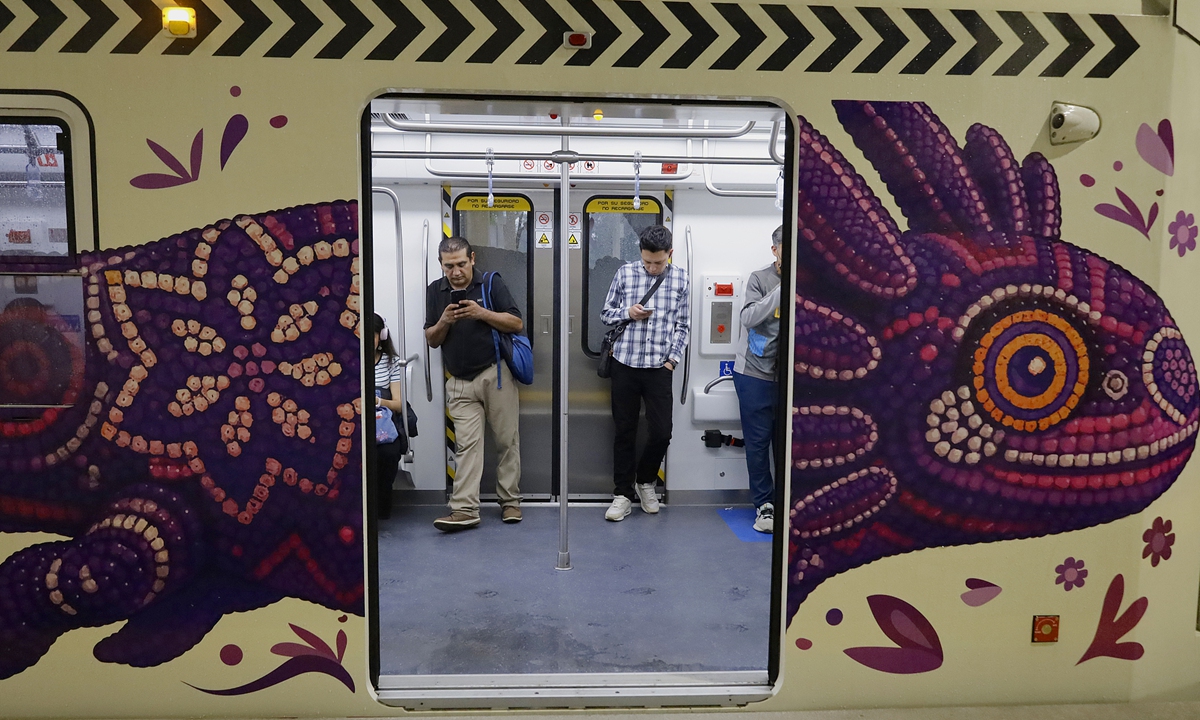
A China-made light rail train decorated with an axolotl pattern is spotted at the Taxquena station in Mexico City, Mexico, on May 19, 2026.
A special spotlight