GT on the spot: China, Singapore share time-transcending past, point to tech-driven future
Wearing a sleek pair of Meizu AI smart glasses purchased from China's Taobao platform, local tour guide Johnny Tan fluently guided a Global Times reporter through the bustling streets of Singapore while sharing insights into the country's multicultural heritage. Smiling warmly, Tan praised the affordable yet high-quality Chinese artificial intelligence (AI) device, which cost him around 300 Singapore dollars ($232).
"It prompts real-time translations during tours," ensuring his narration remains accurate and engaging for visitors, Tan said. The lightweight glasses, part of Meizu's StarV series featuring AI assistants for translation, note-taking and more, exemplify how accessible and helpful Chinese products have become in daily life.
This is just one example of China's widespread presence in Singapore. The Global Times reporter can spot Chinese influences without much efforts everywhere across the country, ranging from daily necessities to China's AI products and innovative achievements.
New Chinese charm
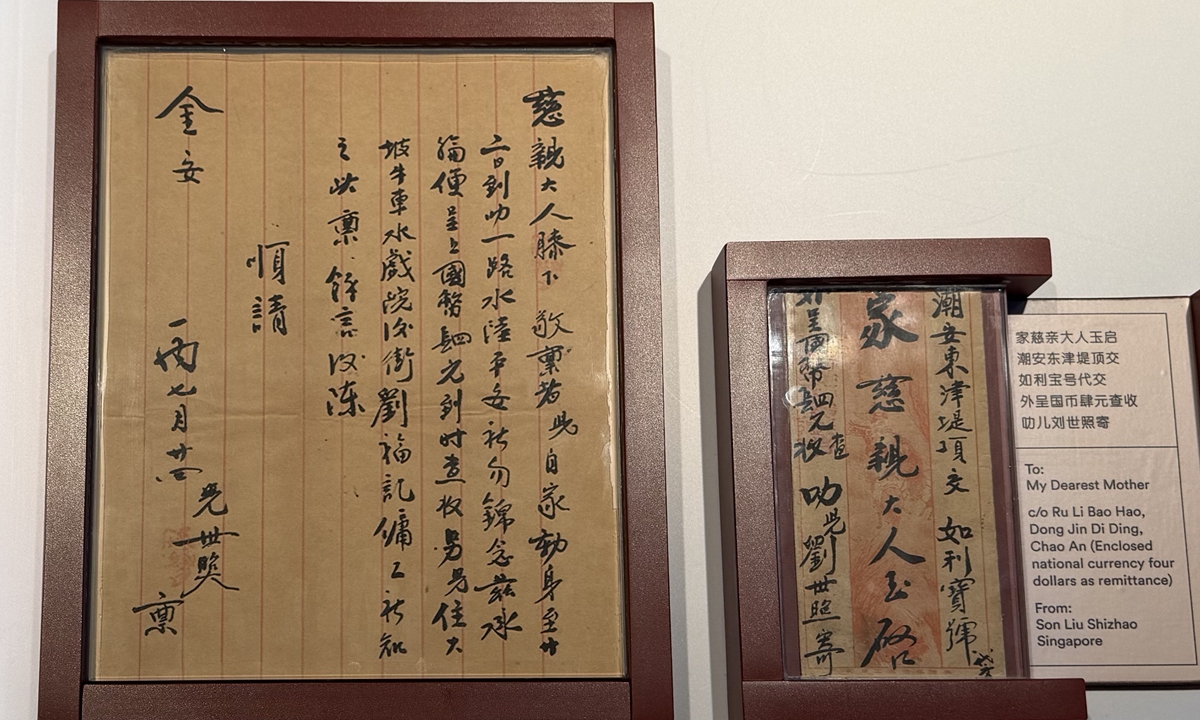
China and Singapore share a time-transcending bond. More than a century ago, countless Chinese traveled all the way to Singapore for livelihoods, living frugally and sending hard-earned remittances together with precious messages - known as qiaopi - back to China.
The recent box-office hit Dear You, a Teochew-dialect family drama, was inspired by real qiaopi stories. One of its patrons, is Ah Ma Handmade, a popular Chinese tea drink brand.
A Singaporean resident shared with the Global Times her fondness for Ah Ma Handmade milk tea, which she never fails to try whenever she is in China. She also mentioned the brand's sponsorship of the movie. This little-known detail took the reporter by surprise and testified to her in-depth understanding of Chinese culture.
Today, Chinese consumer culture is ubiquitous across Singapore. Outlets of CHAGEE tea and Luckin Coffee line local streets. While waiting for the traffic lights to change, the Global Times reporter can easily see young women carrying stylish bags from Chinese fashion brand Songmont, and many locals even ask friends to purchase such items for them in China.
Chinese TV dramas have also gained massive popularity. The Global Times reporters found that posters of actors staring in hit drama Pursuit of Jade are a common sight at convenience stores, and local families enjoy watching the series together.
Gu Xiaosong, dean of the ASEAN Research Institute of Hainan Tropical Ocean University, told the Global Times that Singapore's large ethnic Chinese community and shared cultural background have facilitated cultural communication and market entry. These allow Chinese culture to gain steady momentum as it takes root and spreads across Singapore, he added.
Chinese pop culture brings richer choices to Singapore's younger generation, and local cultural producers also draw inspiration to craft new blended styles, diversifying the country's cultural scape, Gu said.
"Modern Chinese trends gaining popularity in Singapore prove that Chinese products win market favor thanks to solid quality, reasonable pricing and strong emotional resonance," Gu said.
Embracing Chinese creativity
Chinese elements in Singapore not only manifest on streets and in households. They have also integrated seamlessly into the country's vocational training, economic partnerships and high-tech collaboration.
According to Singaporean media outlet Lianhe Zaobao, Alibaba Cloud has partnered with Singaporean entities, including Tech Talent Assembly and ST Telemedia Global Data Centres, to train over 1,000 local enterprises, developers and students in generative and agentic AI skills. The program promotes practical adoption of technologies such as Alibaba's Qwen (Tongyi Qianwen) large language models, the Wan video generation model and the Qoder programming platform.
Singapore's National AI Strategy (AISG) is currently going through a major shift. In its latest Southeast Asian language large model project, it has dropped the Meta Llama family in favor of Qwen architecture, people.cn reported on November 26, 2025.
Another example of this integration is the Punggol Digital District (PDD), Singapore's flagship smart business and innovation hub, set for full completion around 2026. This prominent innovation hub has already welcomed a Chinese firm - Wanxiang Blockchain - among its very first batch of tenants in 2021.
In addition, the area serves as a major living testbed for physical AI and robotics, with large-scale trials launching in 2026 involving Chinese companies like Unitree. Robots will handle food and parcel delivery, cleaning, and security patrols in real urban settings.
Lianhe Zaobao reported in September 2025 that three Autonomous Vehicle (AV) service routes have been finalized for PDD, to be operated by Grab and ComfortDelGro, with Chinese autonomous driving technology providers powering the fleets.
Grab's self-driving vehicles come from Chinese AV firm WeRide, featuring two models: an eight-seat Robobus and a five-seat GXR. ComfortDelGro's autonomous shuttles are also supplied by a Chinese AV company, Pony.ai, and can seat six passengers, per the report.
Gu said the presence of these Chinese firms in Singapore epitomizes the industrial upgrading of China's science and technology innovation sector and its growing economic vitality. It also shows Singapore's thoughtful long-term layout, which takes both immediate benefits and strategic goals into account, he added.
Lianhe Zaobao quoted Minister for Trade and Industry Gan Kim Yong as saying, "Tenant companies can not only leverage the unique strengths of the PDD, but also benefit from Singapore's standing as an open global hub for innovation, business and talent."
What makes PDD unique is its deliberate fusion of industry, academia and research in a single physical environment, a staff representative said. This "produce-learn-research" model in its truest physical form allows students and professionals to move seamlessly between theory and application. At the heart of PDD lies the new campus of the Singapore Institute of Technology (SIT), seamlessly integrated into the business park, and Chinese professionals also feature in talent training.
Thanks to its sound talent development system, the innovation district has become a key hub for bilateral academic cooperation. Associate Professor Zhao Mingshan from Central China's Hunan Province is a fine representative. Based at the SIT, he specializes in civil engineering and construction technology and supervises a number of PhD students from China. Zhao takes part in multiple China-Singapore higher education joint initiatives, serving as a bridge to share academic strengths between the two countries.
Gu noted that deepening cooperation in talent training enables China and Singapore to maintain robust growth and sound talent mobility, continuously driving innovation and development.
The China-Singapore exchanges blend historical bonds with forward-looking partnerships in AI, robotics, education, and lifestyle. From the streets where a local guide relies on Chinese AI glasses, through innovation districts fostering China-Singapore talent collaboration, to cultural resonance in cultural works, the Chinese elements in Singapore today tell a story of continuity and profound transformation. What was once primarily about survival and homesickness has matured into dynamic, win-win cooperation that benefits both nations, observers said.
"It prompts real-time translations during tours," ensuring his narration remains accurate and engaging for visitors, Tan said. The lightweight glasses, part of Meizu's StarV series featuring AI assistants for translation, note-taking and more, exemplify how accessible and helpful Chinese products have become in daily life.
This is just one example of China's widespread presence in Singapore. The Global Times reporter can spot Chinese influences without much efforts everywhere across the country, ranging from daily necessities to China's AI products and innovative achievements.
New Chinese charm
China and Singapore share a time-transcending bond. More than a century ago, countless Chinese traveled all the way to Singapore for livelihoods, living frugally and sending hard-earned remittances together with precious messages - known as qiaopi - back to China.
Photo of a qiaopi sent by a Chinese worker named Liu Shizhao to his mother while he was working in Singapore Photo: Shen Sheng/GT
The recent box-office hit Dear You, a Teochew-dialect family drama, was inspired by real qiaopi stories. One of its patrons, is Ah Ma Handmade, a popular Chinese tea drink brand.
A Singaporean resident shared with the Global Times her fondness for Ah Ma Handmade milk tea, which she never fails to try whenever she is in China. She also mentioned the brand's sponsorship of the movie. This little-known detail took the reporter by surprise and testified to her in-depth understanding of Chinese culture.
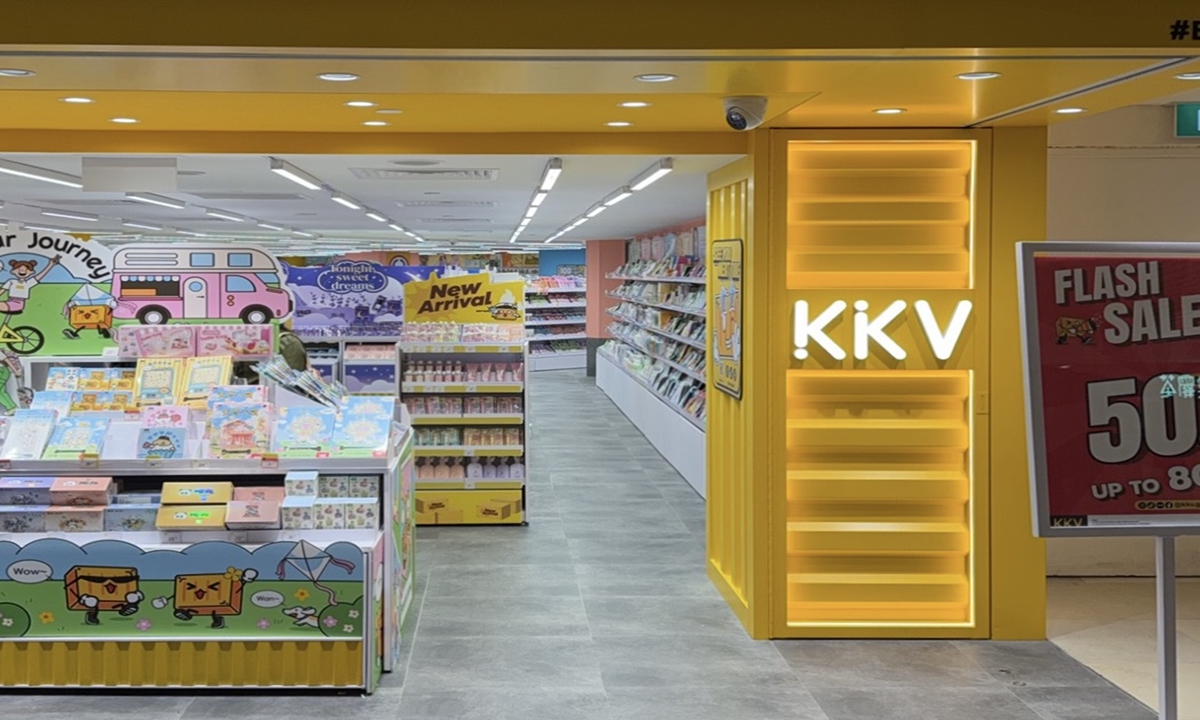
Chinese brand KKV in Singapore Photo: Shen Sheng/GT
Today, Chinese consumer culture is ubiquitous across Singapore. Outlets of CHAGEE tea and Luckin Coffee line local streets. While waiting for the traffic lights to change, the Global Times reporter can easily see young women carrying stylish bags from Chinese fashion brand Songmont, and many locals even ask friends to purchase such items for them in China.
Chinese TV dramas have also gained massive popularity. The Global Times reporters found that posters of actors staring in hit drama Pursuit of Jade are a common sight at convenience stores, and local families enjoy watching the series together.
Gu Xiaosong, dean of the ASEAN Research Institute of Hainan Tropical Ocean University, told the Global Times that Singapore's large ethnic Chinese community and shared cultural background have facilitated cultural communication and market entry. These allow Chinese culture to gain steady momentum as it takes root and spreads across Singapore, he added.
Chinese pop culture brings richer choices to Singapore's younger generation, and local cultural producers also draw inspiration to craft new blended styles, diversifying the country's cultural scape, Gu said.
"Modern Chinese trends gaining popularity in Singapore prove that Chinese products win market favor thanks to solid quality, reasonable pricing and strong emotional resonance," Gu said.
Embracing Chinese creativity
Chinese elements in Singapore not only manifest on streets and in households. They have also integrated seamlessly into the country's vocational training, economic partnerships and high-tech collaboration.
According to Singaporean media outlet Lianhe Zaobao, Alibaba Cloud has partnered with Singaporean entities, including Tech Talent Assembly and ST Telemedia Global Data Centres, to train over 1,000 local enterprises, developers and students in generative and agentic AI skills. The program promotes practical adoption of technologies such as Alibaba's Qwen (Tongyi Qianwen) large language models, the Wan video generation model and the Qoder programming platform.
Singapore's National AI Strategy (AISG) is currently going through a major shift. In its latest Southeast Asian language large model project, it has dropped the Meta Llama family in favor of Qwen architecture, people.cn reported on November 26, 2025.
Another example of this integration is the Punggol Digital District (PDD), Singapore's flagship smart business and innovation hub, set for full completion around 2026. This prominent innovation hub has already welcomed a Chinese firm - Wanxiang Blockchain - among its very first batch of tenants in 2021.
In addition, the area serves as a major living testbed for physical AI and robotics, with large-scale trials launching in 2026 involving Chinese companies like Unitree. Robots will handle food and parcel delivery, cleaning, and security patrols in real urban settings.
Lianhe Zaobao reported in September 2025 that three Autonomous Vehicle (AV) service routes have been finalized for PDD, to be operated by Grab and ComfortDelGro, with Chinese autonomous driving technology providers powering the fleets.
Grab's self-driving vehicles come from Chinese AV firm WeRide, featuring two models: an eight-seat Robobus and a five-seat GXR. ComfortDelGro's autonomous shuttles are also supplied by a Chinese AV company, Pony.ai, and can seat six passengers, per the report.
Gu said the presence of these Chinese firms in Singapore epitomizes the industrial upgrading of China's science and technology innovation sector and its growing economic vitality. It also shows Singapore's thoughtful long-term layout, which takes both immediate benefits and strategic goals into account, he added.
Lianhe Zaobao quoted Minister for Trade and Industry Gan Kim Yong as saying, "Tenant companies can not only leverage the unique strengths of the PDD, but also benefit from Singapore's standing as an open global hub for innovation, business and talent."
What makes PDD unique is its deliberate fusion of industry, academia and research in a single physical environment, a staff representative said. This "produce-learn-research" model in its truest physical form allows students and professionals to move seamlessly between theory and application. At the heart of PDD lies the new campus of the Singapore Institute of Technology (SIT), seamlessly integrated into the business park, and Chinese professionals also feature in talent training.
Thanks to its sound talent development system, the innovation district has become a key hub for bilateral academic cooperation. Associate Professor Zhao Mingshan from Central China's Hunan Province is a fine representative. Based at the SIT, he specializes in civil engineering and construction technology and supervises a number of PhD students from China. Zhao takes part in multiple China-Singapore higher education joint initiatives, serving as a bridge to share academic strengths between the two countries.
Gu noted that deepening cooperation in talent training enables China and Singapore to maintain robust growth and sound talent mobility, continuously driving innovation and development.
The China-Singapore exchanges blend historical bonds with forward-looking partnerships in AI, robotics, education, and lifestyle. From the streets where a local guide relies on Chinese AI glasses, through innovation districts fostering China-Singapore talent collaboration, to cultural resonance in cultural works, the Chinese elements in Singapore today tell a story of continuity and profound transformation. What was once primarily about survival and homesickness has matured into dynamic, win-win cooperation that benefits both nations, observers said.
RELATED ARTICLES