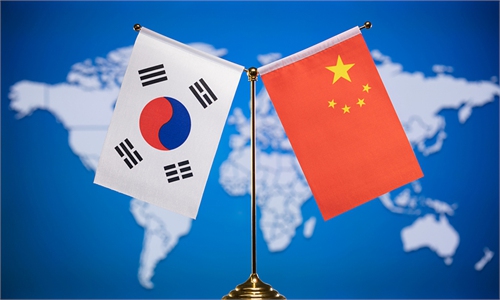
China, South Korea release millions of fry and juvenile in Yellow Sea to conserve fishery resources and benefit fishermen
By in Yantai Published: Jun 16, 2026 04:59 PM

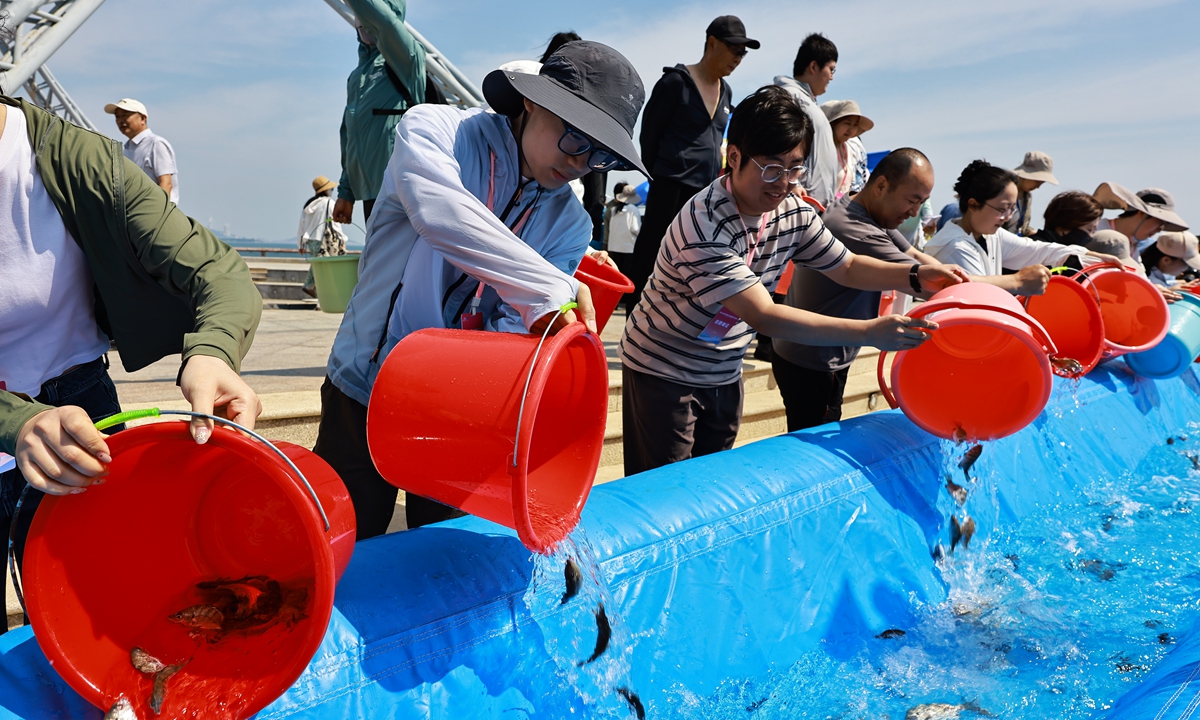
Yantai local residents and volunteers participate in the the seventh edition of the China-South Korea Joint Stock Enhancement and Release of Fishery Resources in Yantai, East China's Shandong Province on June 16, 2026. Photo: Deng Xiaoci/GT
China and South Korea are working together to make the Yellow Sea's fishery "pie" bigger, turning shared conservation efforts into a growing source of ecological and economic benefits for fishing communities on both sides. A total of 330,000 greenfin horse-faced filefish juveniles were released on Tuesday morning in Yantai, East China's Shandong Province, at the city's landmark Tianma Trestles, as part of an annual joint stock enhancement and release event between China and neighboring South Korea.
The event aims to conserve fishery resources and protect the ecological environment of the Yellow Sea — a traditional fishing ground and shared marine ecosystem that has sustained Chinese and South Korean fishing communities for generations — while promoting the recovery and sustainable use of fishery resources.
Tuesday's event marked the seventh edition of the China-South Korea Joint Stock Enhancement and Release of Fishery Resources which has become an annual routine for both countries since the 2018 launch year, except during the years affected by the COVID-19 pandemic.
The South Korean side, hosting this year's ceremony, released 4.29 million aquatic fry and juveniles with key commercial value, including small yellow croaker, red seabream and swimming crab, into the Yellow Sea from Incheon. The Chinese side held a simultaneous release in Yantai, Shandong Province, releasing 3 million aquatic juveniles with key commercial value, including greenfin horse-faced filefish, swimming crab and blackhead seabream, the Global Times learned from the event's main organizer, the Chinese Ministry of Agriculture and Rural Affairs, on Tuesday.
Cui Gang, a veteran fisherman and boat owner with more than 25 years of fishing experience, has spent over a decade operating in the jointly managed marine area in the Yellow Sea between China and South Korea.
Speaking to the Global Times ahead of the stock enhancement and release event, Cui repeatedly praised the two countries' joint stock enhancement efforts, saying that, from his own experience, the program has helped increase his annual income by about 20 to 30 percent.
Since the signing of the Fishery Agreement between two sides in 2000, the two governments have cooperated through the Joint Committee on Fisheries in multiple areas including fishing access arrangements, fishery resource survey, and fisheries law enforcement, achieving fruitful results, according to the Chinese Ministry of Agriculture and Rural Affairs.
After the release events, commercially valuable aquatic species have grown larger in size. For example, greenfin horse-faced filefish and red seabream have also become more commonly caught and larger in size, meaning better market price and profit for our fishermen, Cui explained.
According to the Yellow Sea Fisheries Research Institute, Chinese Academy of Fishery Sciences (YSFRI), the core goal of the joint stock enhancement and release program is to promote the conservation and sustainable use of fishery resources while protecting the ecological environment of the Yellow Sea.
Ma Zhuojun, secretary of the institute Party committee and the institute's deputy director, told the Global Times that the species selected for release are migratory species with high commercial value and shared with both nations, such as small yellow croaker, blackhead seabream, greenfin horse-faced filefish, red seabream and swimming crab, while highlighting that these releases help replenish fishery resources and benifit fishermen in both countreis.
Institute experts also explained that China and South Korea communicate through mechanisms such as the China-South Korea Joint Committee on Fisheries on the species, quantity, timing and location of fish releases, as well as follow-up assessments of their effectiveness. Experts from both sides explain fishery resource survey results, the ecological characteristics of different species and the needs of release-effect evaluations before consulting with each other to formulate plans that are relatively scientific and operationally feasible.
Such cooperation, however, also requires continuous coordination, they noted. "It is only natural that the two sides sometimes differ in terms of the priority species, size standards for released fry and juveniles and methods used to assess release effects. These differences are gradually coordinated through expert group meetings, data exchanges, technical discussions and joint surveys."
One example is the release of swimming crabs, which has received close attention from both sides in recent years, especially in terms of how its effects should be evaluated. Exchanges on molecular marker technology for assessing the effects of swimming crab releases are aimed at using more scientific methods to determine the contribution of released stock and continuously improve release plans.
South Korea saw a notable increase in swimming crab catch in its western waters (Yellow Sea) in the autumn of 2025, while the relevant TAC (Total Allowable Catch) also remained at a relatively high level, which may indicate improved resource conditions and recovery potential, though long-term monitoring is still needed. Stock enhancement releases have played an important role in this process, according to the institute experts.
Wang Hongliang, head of the Yantai Marine and Fishery Supervision and Inspection Detachment, told the Global Times that for this year's China-South Korea joint release event, Yantai plans to release a total of 3 million aquatic juveniles, including greenfin horse-faced filefish, blackhead seabream and swimming crab.
Through the joint release event, Yantai hopes to achieve a combination of economic, ecological and social benefits, Wang noted. The event is expected to help increase marine fishery resources and bring tangible gains to fishermen in both countries, while also protecting marine biodiversity and maintaining the balance of the marine ecosystem. More broadly, it is also aimed at raising public awareness of ecological conservation and building a stronger consensus on protecting the sea.
Since 2018, China and South Korea have jointly held seven such events to date, releasing 18.75 million aquatic fry and juveniles, according to data provided by the Chinese Ministry of Agriculture and Rural Affairs.
These efforts have made a positive contribution to conserving commercial fishery resources in the Yellow Sea, improving the marine ecological environment and increasing the income of fishermen in both countries, the ministry hailed in a release on Tuesday.
Qu Jiangbo, president of the Yantai Aquatic Biological Resources Conservation Association and legal representative of Tianyuan Aquaculture, told the Global Times that his company was responsible for maintaining and caring for the fry and juveniles released during this year's event and he has been actively participating in the joint release since its launch.
"The fish we release can swim into South Korean side waters, while the fish released by South Korea can also come into waters on our side" Qu said. "That is why the two sides carry out joint releases at the same time to increase fishery resources and boost incomes for fishermen on both sides."
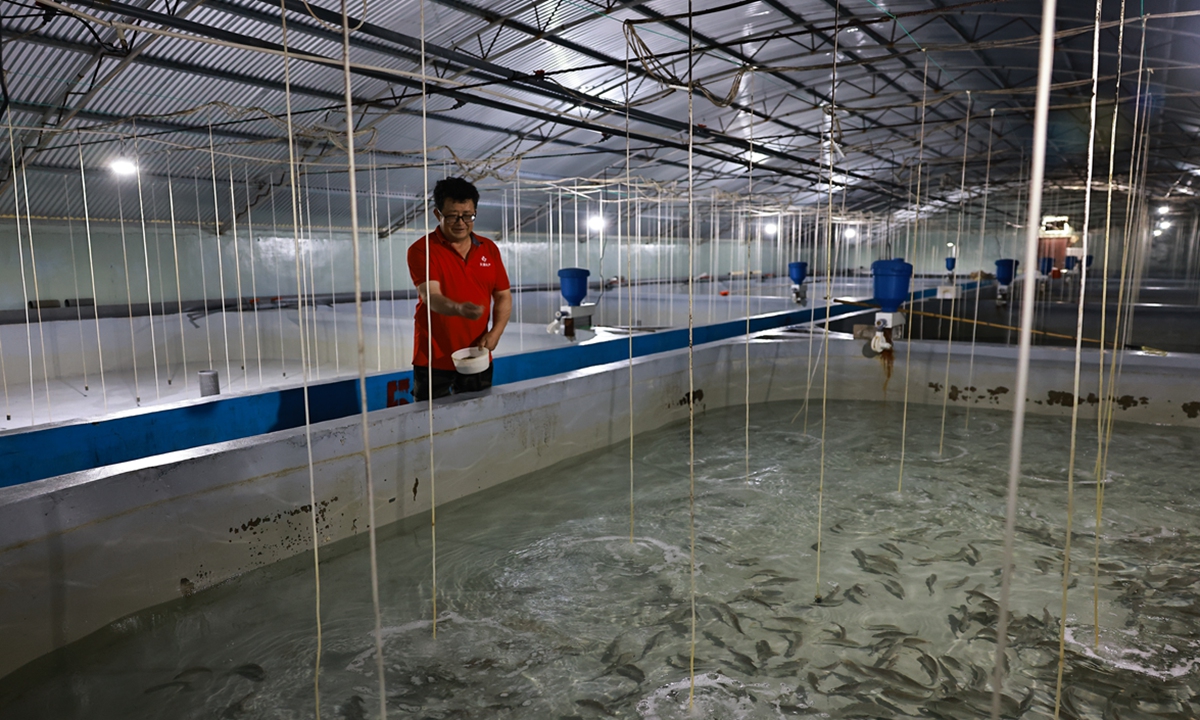
A local hatchery worker in Yantai feeds fry before their release into the Yellow Sea ahead of the seventh edition of the China-South Korea Joint Stock Enhancement and Release of Fishery Resources in Yantai, East China's Shandong Province on June 16, 2026. Photo: Deng Xiaoci/GT
RELATED ARTICLES