Illustration: Liu Rui/GT
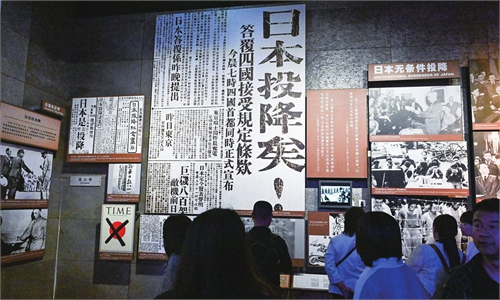
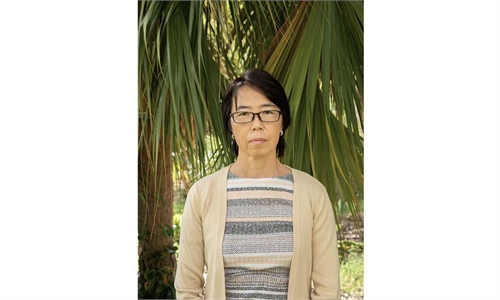
Editor's Note:2026 marks the 80th anniversary of the start of the Tokyo Trial. As a landmark judicial event in the aftermath of World War II, the trial has exerted a profound influence on modern international criminal law and the evolution of international order, especially Asian regional order. While recognizing the historical importance of the Tokyo Trial, Neil Boister (Boister), professor at the Faculty of Law at the University of Canterbury in New Zealand and author of The Tokyo International Military Tribunal: A Reappraisal, noted in an interview with Global Times (GT) reporter Zhang Ao that the Tokyo Trial is a valuable resource worthy of greater attention because there is no other lens with quite as broad a scope or depth of magnification for assessing the specific era involved.
GT: What is the core legacy of the Tokyo Trial? How would you assess the historical significance of the trial from today's perspective?
Boister: The Tokyo Trial is a valuable resource worthy of greater attention because there is no other lens with quite as broad a scope or depth of magnification for an assessment of the specific era involved. The core legacy of the trial is establishing that state leaders can be held legally accountable for their actions, rejecting both sovereign immunity and claims of lacking criminal intent due to distance from atrocities.
The legal community has come to recognize the Tokyo Trial as a landmark in the development of modern international criminal law. It is now valued as a uniquely complex legal endeavor.
By organizing massive evidence into legal frameworks, the trial produced an irreplaceable historical archive. Its oral and written testimonies, official records and private documents collectively established a comprehensive, verified historical record of Japan's imperial wars of aggression from the 1920s through 1945.
A multipolar world has heightened the political relevance of the conflicts examined in the trial. International attention is now rising as long-unresolved historical rifts resurface. China, the Philippines, India, Vietnam and Indonesia - all brutally occupied by Japan - cannot dismiss this history. Most have not fully reconciled with Japan over this traumatic past.
GT: There is a view long advocated by Japan that the Tokyo Trial was "victor's justice." Based on your research, what is the most common misunderstanding about the Tokyo Trial that needs to be dispelled? And what are the main causes of such misunderstanding?
Boister: The "victor's justice" critique, whether undertaken by Japanese or US commentators, originated contemporaneously with the trial itself. The argument rests on two core pillars.
The first is legal: the questionable legal status of crimes of aggression at that time. There were deep ambiguities over whether wars of aggression were criminalized under international law.
The second is plainly political: Such legal doubts were compounded by the reality that many victimized nations were themselves colonial powers, which had seized territory and enforced rule through military force.
The most prominent misunderstanding surrounding the Tokyo Trial is that the "victor's justice" narrative allows its detractors to largely overlook the trial's war crimes indictments and convictions - cases that represented countless military and civilian victims of Japan's imperial military forces.
While the "victor's justice" critique maintains strong and enduring influence in Japan, many Japanese scholars and commentators have adopted a far more nuanced, reasoned stance toward the Tokyo Trial.
GT: During your research on the Tokyo Trial, were there any particular details that left a deep impression on you?
Boister: What struck me most were the overlooked wartime atrocities the trial partially revealed: Japan's biological warfare in China, the intervention by the US to prevent the prosecution of its leaders, inadequate justice for "comfort women" and evidence of Japan's involvement in illicit drug trafficking in China as part of its aggression. Trial records offer only fragments; however, there is much that remains to be uncovered.
GT: Some scholars believe that challenging the legal validity of the Tokyo Trial undermines the post-WWII international legal order. To what extent is the tribunal an integral part of the post-WWII international legal system?
Boister: The international legal order established in the late 1940s, of which the Tokyo Trial was an important part, reflected, at the time, personal accountability on the part of the leaders of states and indirectly of the states themselves. The acceptance of the principle of the international accountability of leaders is critical to international justice, support for international law on the use and conduct of force and for the development of international criminal law as a part of the system of international law.
Accounts from trial participants clearly show a shared conviction: The atrocities of the 14-year war in China, as well as the Pacific and Southeast Asian wars, demanded accountability. A pivotal lesson for the evolution and enforcement of international law is that, no matter how powerful perpetrators once were, violations of international law can be exposed and punished through due legal process.
RELATED ARTICLES