Chinese scientists find over 50 endangered green sea turtles in seagrass beds of Huangyan Dao lagoon
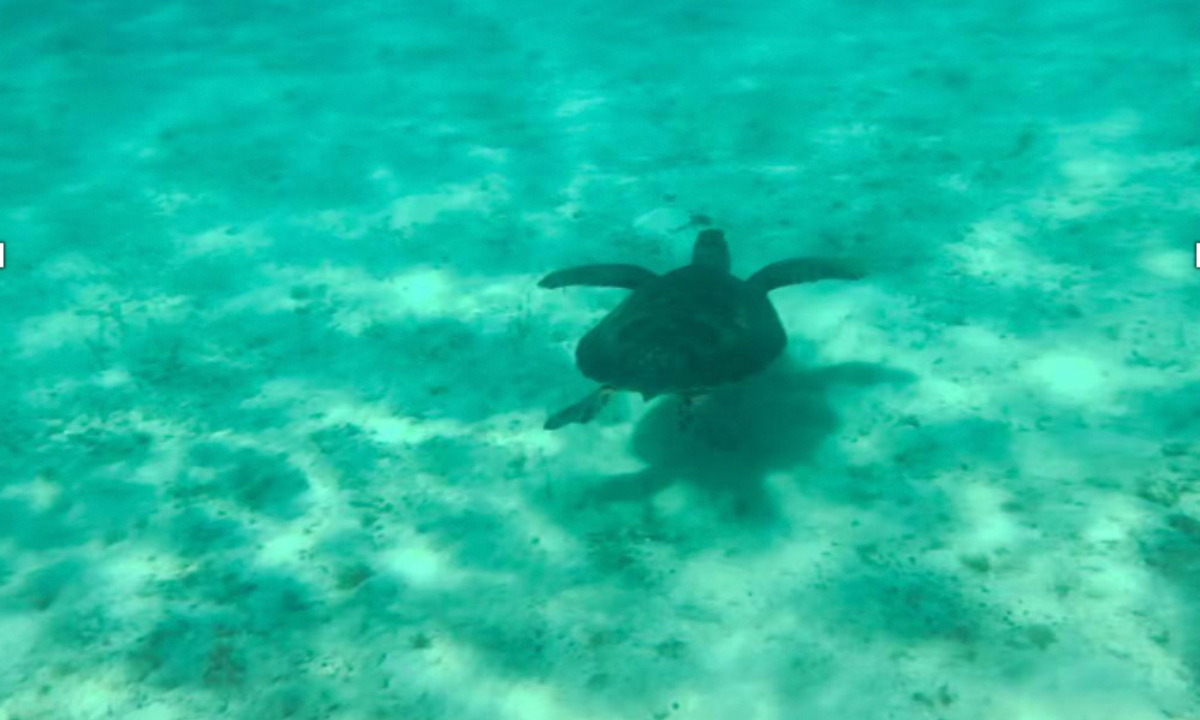
A green sea turtle glides through waters of the South China Sea. Photo: Courtesy of the South China Sea Institute of Oceanology under the Chinese Academy of Sciences
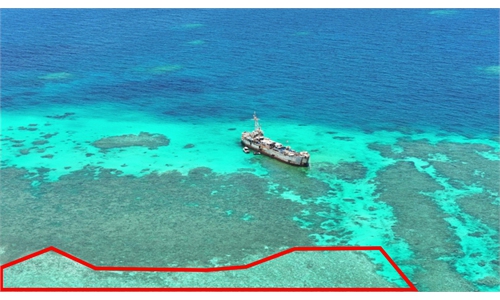
Chinese scientists have discovered a large population of endangered green sea turtles, a national first-class protected species, in the seagrass beds of Huangyan Dao lagoon. Preliminary observations indicate that the population exceeds 50 individuals. The finding highlights the positive impact of conservation efforts in the Huangyan Dao National Nature Reserve in protecting the island’s marine ecosystem and its rare wildlife resources.
The discovery was made by a comprehensive scientific expedition team from the South China Sea Institute of Oceanology under the Chinese Academy of Sciences, which studies the development, evolution and ecological resilience of Huangyan Dao, according to a statement received by the Global Times from the scientific expedition team.
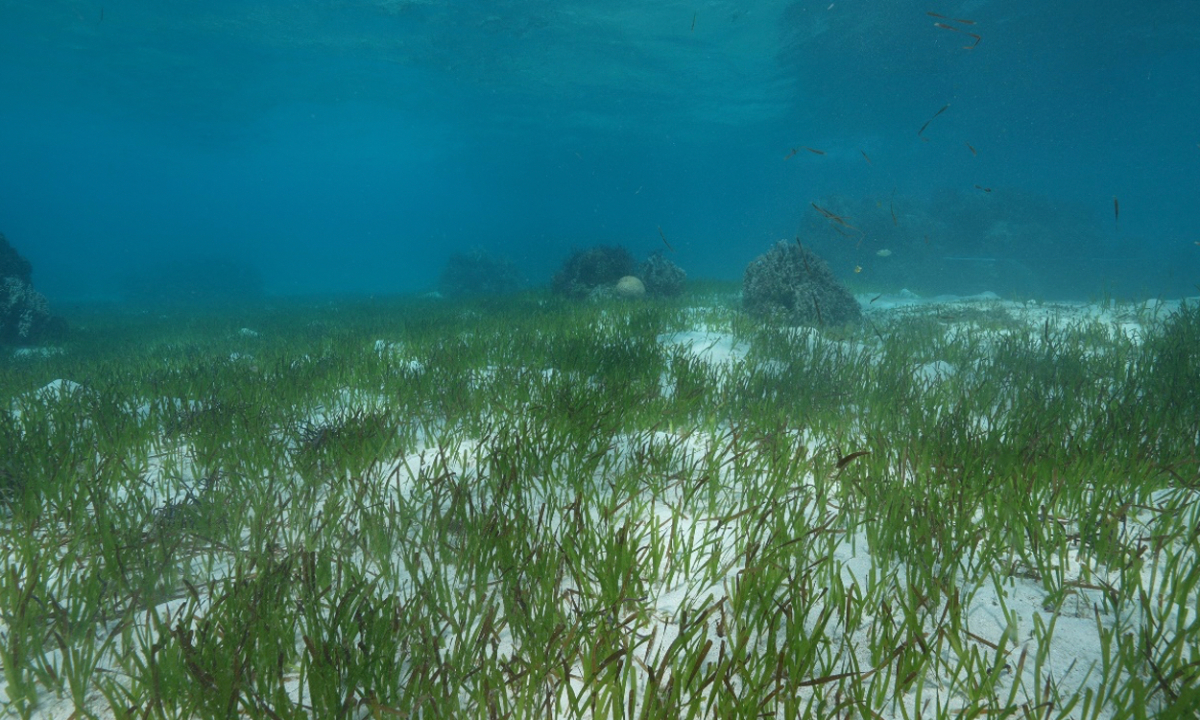
Seagrass beds of the lagoon at Huangyan Dao Photo: Courtesy of the South China Sea Institute of Oceanology under the Chinese Academy of Sciences
In recent years, the well-managed seagrass beds developed in soft sediment seabed zones in Huangyan Dao are thriving, providing key food sources for green sea turtles.
The findings suggest that Huangyan Dao lagoon has formed a mature coral reef-seagrass ecosystem, providing a high-quality habitat for valuable species such as green sea turtles and Gibberulus gibberulus (humpbacked conch).
The scientific expedition team also discovered a developing sandbar near Huangyan Dao’s seagrass beds that becomes exposed at low tide. This indicates that the sandbar has the potential to become fully emergent in the future and could serve as a nesting site for green sea turtles and hawksbill sea turtles, potentially turning the area into a complete habitat for them.
Since 2012, the China Coast Guard has stepped up efforts in curbing illegal fishing in the waters around Huangyan Dao, providing important safeguards for the survival of endangered marine wildlife populations such as green sea turtles. Under the joint protection of China’s military, law enforcement, and civilian efforts, populations of rare marine wildlife such as green sea turtles, hawksbill turtles and dugongs (or sea cows) have continued to recover across various islands and reefs in the South China Sea in recent years, demonstrating the gradual effectiveness of China’s long-term ecological conservation and restoration efforts in the region.
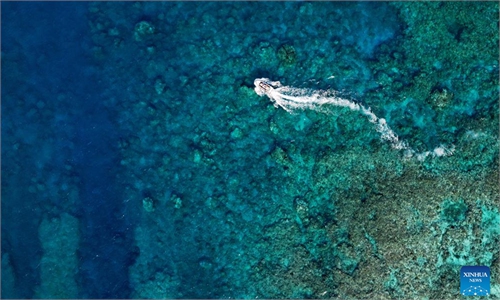
The researchers used drone-based monitoring as part of the green sea turtle population identification and tracking survey near Huangyan Dao. Using low-disturbance, innovative survey methods, the expedition team captured rare footage of the green sea turtles swimming together in groups.
Global Times
RELATED ARTICLES