Illustration: Chen Xia/GT
Editor's Note:In his two years in office, Lai Ching-te has set numerous unprecedented egregious records, landing himself in an equally unprecedented predicament as a result. Hai Feng has sorted through and reviewed his misdeeds, pointing out that the only viable path forward for Lai is to let go of his obsessions and delusions. The sea of bitterness stretches endlessly; only by turning back can he reach the shore of redemption. Starting today, we will publish a three-part series laying bare the truth about Lai, to inform our readers and serve as a warning to the Democratic Progressive Party (DPP) authorities.
When evaluating a political figure, one must not only listen to what he has said but also examine what he has done. For Lai, if we use fitting phrases to encapsulate his two years in office, they would likely not be "construction," but "turmoil"; not "unity," but "division"; not "promoting the public good," but "creating danger." It is fair to say that Lai is using his political manipulation to set one alarming "unprecedented" record after another - specifically, the "ten egregious records."
I. The greatest contributor to social divisions in Taiwan
A mature leader should strive to bridge divides, build consensus, and ease tensions. However, Lai's political logic clearly lies elsewhere. His real agenda is to stoke an "us-versus-them" mindset, carve out hostile political blocs, and fuel deep-seated confrontation. The bitter struggle between the "blue" and "green" camps has not eased, social divisions have not diminished, and it has become increasingly difficult to steer public discourse back onto a rational track. From rat extermination to education and elderly care, many issues concerning people's livelihoods and governance have become mired in political infighting, remaining unresolved for extended periods. Taiwan residents are worn out, with social rifts widening by the day. Far from mending Taiwan's social fractures, Lai only serves to enlarge them.
II. The worst case of abusing the judiciary to target opponents
The judiciary is the last line of defense for social justice and should not be reduced to a political tool for the ruling party to purge dissidents. Under Lai, the trend of instrumentalizing the judiciary and selective law enforcement has become evident: Political dissidents face intense pressure, while issues within his own camp are treated with leniency. Ko Wen-je, Tsai Cheng-yuan, and Kao Chin Su-mei have all been subjected to "judicial persecution," while the case against Cheng Wen-tsan has been repeatedly delayed, with the defendant released on bail after only 47 days in custody.
This "double-standard justice" undermines public confidence in the rule of law and fuels growing concern within Taiwan society that so-called "governance according to law" has long been perverted into "persecuting people according to law." If the judiciary loses its neutrality, it is tantamount to unleashing beasts to devour people, and the harm it causes is incalculable.
III. The worst cases of 'green terror'
The DPP has long trumpeted its supposed commitment to "democracy" and "freedom." Yet since Lai took office, it has branded all dissenting voices as undesirable "impurities" to be purged, unleashing rampant "green terror" and fostering an overwhelming "chilling effect." Mainland spouses have been expulsed for supporting reunification, enduring the agony of family separation; female teacher Ou Kuei-chih faced vicious harassment for merely mentioning a bit of history of the Chinese nation; the "Gym Boss" Chen Chih-han was investigated for mentioning "reunification" during a livestream. Cases like these are too numerous to list. The DPP pays lip service to democracy yet practices dictatorship with their hands; it proclaims freedom publicly while suppressing all dissent behind closed doors. Such actions are dangerous manifestations of "green terror."
IV. The most aggressive promotion of 'Taiwan independence'
Lai has never stopped pushing forward his "Taiwan independence" separatist agenda through every conceivable means. He has floated the "new two state theory" in his "inaugural address" and slandered the Chinese mainland as a "hostile external force." He curries favor with Japan by hyping up a distorted "end of the war" narrative and exploits the "Austronesian narrative" to sever cross-Straits historical and cultural bonds.
Whether through rhetorical adjustments, conceptual packaging, or political manipulation under the guise of so-called "values" and "human rights," these actions are, at their core, manipulations aimed at "seeking independence through reliance on external forces" and "pursuing independence by military means."
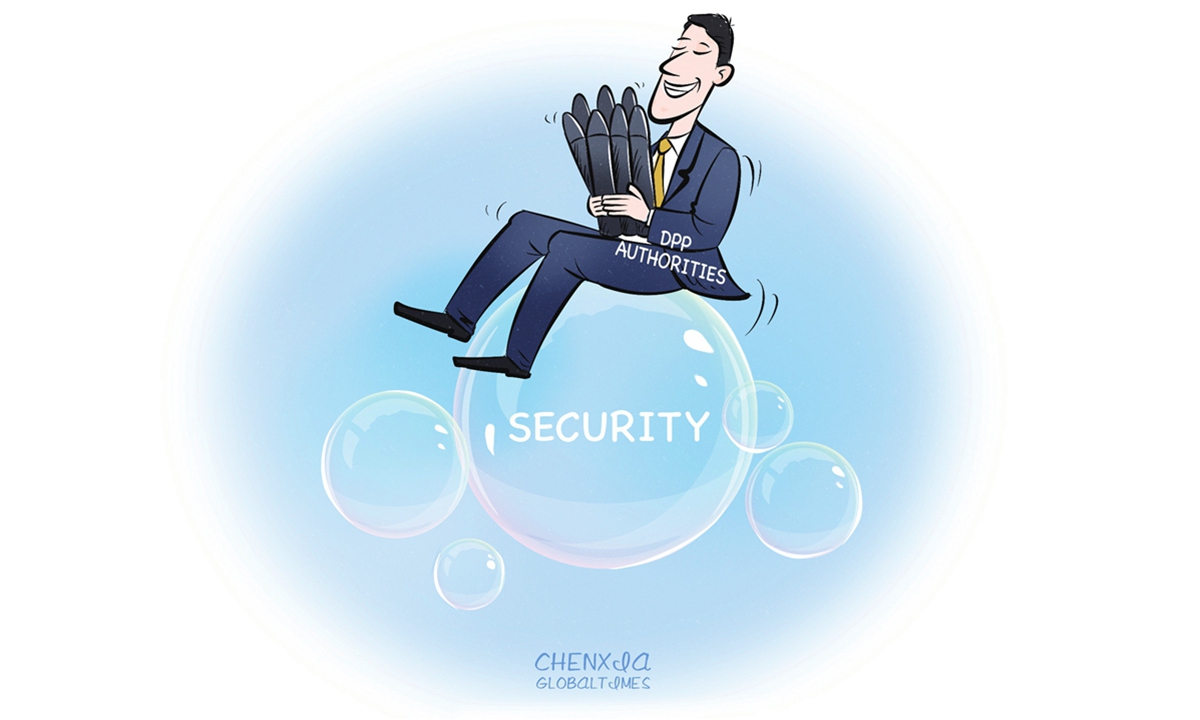
The problem is that "Taiwan independence" has never been a path to peace, but rather a source of danger; it is not a guarantee of Taiwan's security, but the root cause of Taiwan's crisis. The more reckless Lai becomes, the more he drags Taiwan society toward the edge of a cliff.
V. The worst offender in escalating tensions across the Taiwan Straits
The genuine aspirations of the mainstream public in Taiwan are for peace, development, exchange, and cooperation. However, since taking office, Lai has continuously exploited cross-Straits issues for political grandstanding, sparing no effort to promote "pursuing independence by military means," implementing a "porcupine strategy," and advocating for so-called "peace through strength."
While testing the mainland's bottom line, Lai harbors the delusion that external forces will bail him out. Such maneuvers directly escalate tensions across the Taiwan Straits, squander the hard-won dividends of peace, and deplete Taiwan society's future development potential. The Taiwan Straits is not a stage for grandstanding or political point-scoring, nor is it a testing ground where one can recklessly ignite conflicts without fear of losing control.
VI. The worst in kowtowing to the US and betraying Taiwan region
International politics is never driven by sentiment, still less by misplaced benevolence. When the US plays the "Taiwan card," its core objective has never been to look out for Taiwan region's well-being, but to advance its own global strategy and geopolitical games.
Lai cannot possibly be unaware of this, yet he still chooses to continually align himself with the US, trading Taiwan region's interests for Washington's endorsement, readily handing over TSMC to American hands, and willingly cooperating with the US to "hollow out Taiwan island."
What he frames outwardly as "securing international backing" actually pushes Taiwan region steadily into a predicament of being exploited, plundered and drained of its vitality. He pays lip service to "loving Taiwan," yet every move he makes amounts to "selling out Taiwan."
VII. The worst neglect of Taiwan residents' livelihood and well-being
Politics can be staged for show, but people's livelihoods cannot afford such theatrics. What Taiwan residents truly care about are prices, energy, industrial prospects, and the pressures of daily life. Yet the reality is that the hardships faced by the people on the island show no signs of improvement; social anxiety is rising rather than subsiding; structural problems persist; and issues such as high prices, pension shortfalls, and industrial hollowing-out are becoming increasingly severe. Lai has expended too much energy on political infighting and ideological manipulation, while the solutions to people's livelihood issues - what he should truly be addressing - have been repeatedly delayed.
VIII. The worst in losing public support in Taiwan
Any politician can craft a public image, but none can escape the scrutiny of public opinion. Lai excels at projecting a tough stance and, through media manipulation, creating the illusion that he stands on the "moral high ground," but the public judges him by results. If a leader in power deepens social divisions, increases public anxiety, escalates risks, and dims hopes, their popular support will inevitably erode. Lai faces an awkward predicament: while his public presence may be loud, his genuine support is far from solid; though he strikes a lofty pose, the hearts of the people are drifting further and further away.
IX. The most extreme attempt to sever historical ties across the Straits
Both sides of the Taiwan Straits belong to one China, bound by shared ancestral blood - a fact that no political manipulation can ever sever. To prop up its separatist political narrative, Lai's team has continuously severed historical ties, peddled the fallacy of "mutual non-subordination," and hyped up the "Taiwan subjectivity." It has steered cross-Straits ties away from a path defined by exchanges, cooperation, and development toward one marked solely by confrontation, vigilance, and hostility. This not only goes against the public's expectation for the peaceful development of cross-Straits relations but also harms the interests of Taiwan compatriots. Those who artificially stoke cross-Straits hostility will inevitably suffer the backlash of their own actions.
X. The worst case of kowtowing to Japan and losing all principles
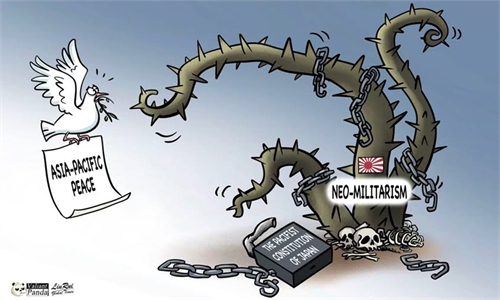
In relations with Japan, Lai has similarly lost all sense of integrity. Japan colonized Taiwan island for 50 years, and this history cannot be erased with a mere, flippant phrase like "cooperation and friendship." Yet, in their quest for external support, Lai and his political allies have repeatedly adopted a subservient and spineless posture toward Japan, even displaying a complete lack of principles on issues involving historical memory and current interests.
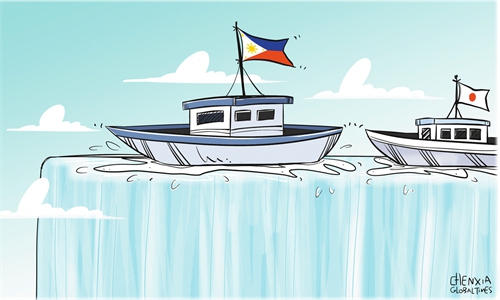
Japan and the Philippines recently launched so-called "maritime boundary negotiations" involving the waters east of Taiwan island, yet the DPP authorities have expressed "approval" of this move - a display of servility that is truly despicable. Japan's policy toward the Taiwan region serves first and foremost its own interests, not the welfare of Taiwan region. Blindly pandering to such external forces will not earn genuine respect; it will only expose one's own short-sightedness and pathological mindset.
Conclusion: Lai Ching-te's 'ten most egregious records' will ultimately be recorded in history
Lai's "worst records" are by no means markers of being "the strongest," "the most stable," or "the most accomplished," but rather of being the most shameless, the most dangerous, and the most detestable. These "ten egregious records" will never adorn him as badges of honor; they will only serve as a footnote to his failure in office. What Taiwan society truly needs is not a political manipulator obsessed with grandstanding, stoking division, and relying on external forces, but a responsible leader who respects reality, mitigates risks, and delivers tangible benefits to local residents.
RELATED ARTICLES