Lai Ching-te's predicament (Part 3): The only way out is to let go and turn back
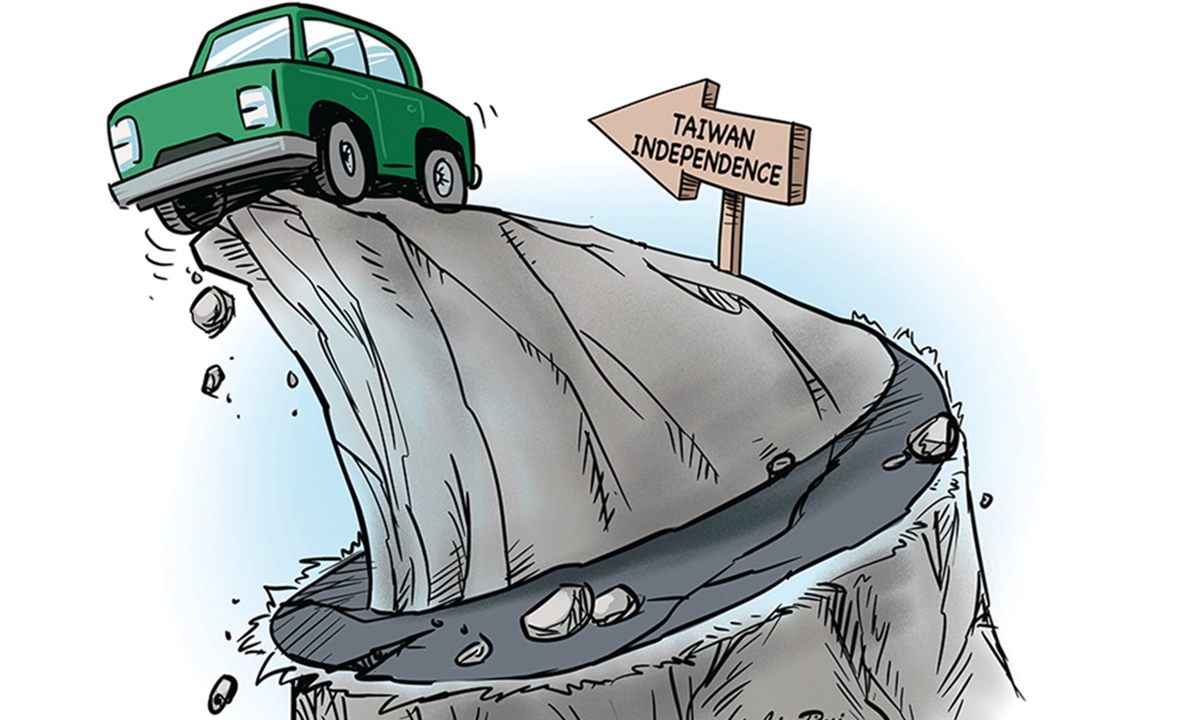
Illustration: Liu Rui/GT
The suffering in this world mostly stems from obsession and delusion.
Taiwan regional leader Lai Ching-te's "most egregious records" and "major predicaments" reflect his own deep suffering. The ocean of suffering knows no bounds - turn back, and one will reach the shore. So, does Lai still have a way out? The answer is yes. The political impasse he currently faces is not unsolvable. The key lies in whether he is willing to confront the problems and change course.
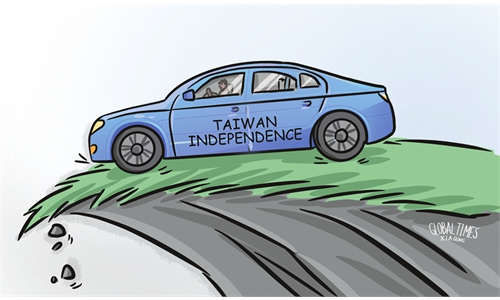
There are two choices before Lai: One is to continue down the current wrong path and eventually plunge into the abyss; The other is to recognize his mistakes and return to the right path - adjusting his direction on the basis of safeguarding the overall interests of the Chinese nation, returning to rationality, returning to reality, and returning to the well-being of the people. This is the only way out.
I. Let go of personal obsessions and put the people first
As the leader of the Taiwan region, one must never allow personal obsessions to override the well-being of the people. What the Taiwan people truly want has never been high-intensity political confrontation and social division, nor being constantly pushed to the brink of war and living in an atmosphere of mobilization and fear. What they want is a safe and stable environment, healthy and orderly development, and a promising future.
Yet the path Lai is currently taking has brought Taiwan society more risks, crises, and anxiety. If he truly wants to improve the current situation, the first thing he must do is abandon his personal political obsessions, put the interests of the people first in all considerations, and ease cross-party tensions and tensions across the Taiwan Straits. A regional leader who only seeks to prove his "tough stance" while disregarding the people's well-being will not win the hearts of the people, nor will he have a future.
II. Abandon the "Taiwan independence" illusion and recognize the 1992 Consensus - This is a key step to breaking the deadlock
The root causes of Taiwan's current difficulties - security anxieties, heightened cross-Straits tensions, and development constraints - are almost all tied to cross-Straits relations. For cross-Straits relations to truly ease, they must return to a common political foundation: recognition of the 1992 Consensus, which embodies the one-China principle.
Past experience has proven that with this foundation, the two sides can communicate, engage in dialogue, cooperate, and achieve mutual benefit. Without it, no amount of rhetorical maneuvering will help. If Lai genuinely wants to break the deadlock, he must take the most critical step: abandon the "Taiwan independence" path, recognize the 1992 Consensus, and return to the correct track of peaceful cross-Straits development. This is a vital issue that concerns whether Taiwan island can avoid risks and whether its people can stay away from disaster. A responsible regional leader should have the courage to do what is right, rather than only doing things that please his own base.
III. Stop "kowtowing to the US" and "appeasing Japan," and stop using Taiwan as a bargaining chip
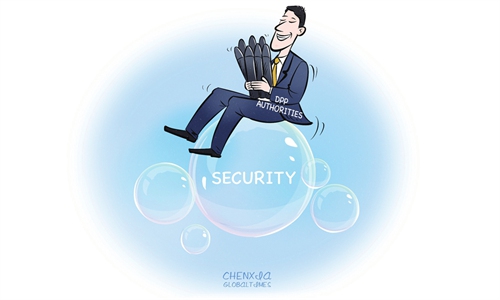
Taiwan's true security can never be built on dependence on external forces. In recent years, the Democratic Progressive Party (DPP) authorities have continuously pursued "seeking independence by relying on the US" and "seeking help by flattering Japan." On the surface, this has brought some attention and posturing, but in reality, it has pushed Taiwan island step by step into a more dangerous position.
International politics always follows realist logic. No country will unconditionally bear the risks and costs for others. The so-called security commitments gained by selling out Taiwan cannot withstand storms or real tests. If Lai truly cares about Taiwan, he must stop the practice of blindly relying on and begging for help from others, and stop turning Taiwan into a pawn in others' hands or a sacrifice in geopolitical games.
IV. Face reality and stop evading problems
Lai's performance over the past two years has been more radical and adventurous than in any previous period of DPP "governance." In the past, despite many controversies, the DPP authorities at least tried at times to maintain superficial stability and balance. However, since Lai took office, the overall perception on the island has been one of chaos, with more intense political struggles, deeper social divisions, a more tense external environment, and greater public anxiety. This shows that he is not simply "not doing well enough," but is actually making the situation worse and worse.
If a leader of the Taiwan region creates a widespread impression in just two years that "things are getting worse," this cannot be explained away as an "adjustment period," nor excused by "strong external pressure." The reason the people do not approve is that they have seen no hope.
V. Recognizing mistakes and turning back is the only way out
If Lai still wants to talk about a "path" today, he must first acknowledge that the path he is on leads to a dead end. Continuing "Taiwan independence" provocations leads nowhere; continuing to "seek independence by relying on the US" brings no security; continuing to manufacture confrontation brings no stability; and continuing to ignore people's livelihoods wins no public support. Therefore, the only path he can take is to turn back - return to the people's standpoint, return to the 1992 Consensus, and return to the correct direction of cross-Straits relations. Only in this way can risks across the Taiwan Straits be reduced, public confidence restored, and joint development between the two sides become possible.
History does not demand that a person never makes mistakes, but it will severely judge those who know they are wrong yet refuse to turn back. It is never too late to mend the fold after the sheep have been lost. Taiwan's future should not be destroyed by Lai's obsession, and the fate of the Taiwan people should not be tied to his wrong path.
RELATED ARTICLES