Chinese researchers draw highest-resolution, most comprehensive human proteome map to date
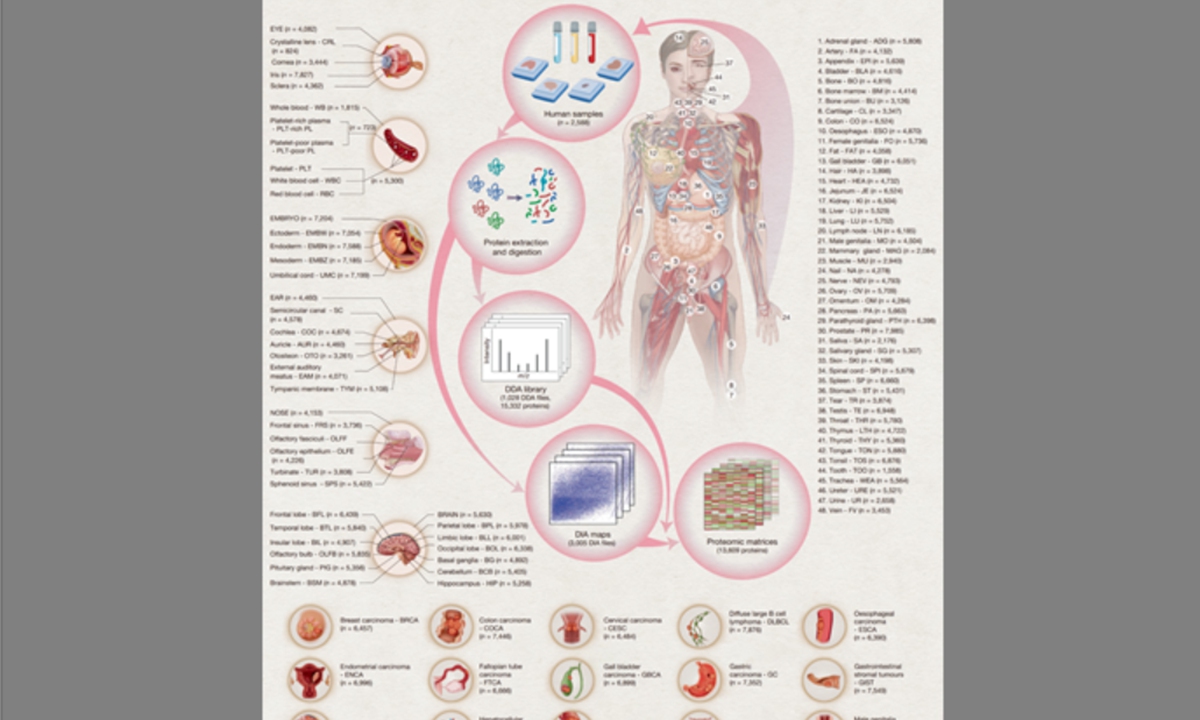
Photo: Screenshot from the Science and Technology Daily
Chinese researchers have drawn the highest-resolution and most comprehensive "spatial map" of the human proteome to date, a breakthrough that could accelerate drug discovery and advance precision medicine, the Science and Technology Daily reported on Sunday.
The study, led by Professor Guo Tiannan of Westlake University's School of Medicine in collaboration with multiple research institutions, analyzed nearly 3,000 human tissue samples covering 58 normal tissue types and 25 types of cancer. The team conducted quantitative analyses of more than 13,000 proteins to build what researchers described as the most detailed spatial atlas of the human proteome so far.
The findings were recently published in the journal Nature, and all data from the study have been made publicly available through an open-access database for researchers worldwide.
To enable the large-scale project, Guo's team developed a proteomics analysis platform capable of processing extremely small tissue samples. Using the new method, researchers can perform standardized proteomic analyses with tissue samples as small as a sesame seed.
According to the university, the approach increases analytical speed by about tenfold while significantly reducing experimental costs, laying the technical foundation for large-scale, high-throughput proteomics research.
After years of sample collection and experimental work, the team established a database containing 15,332 proteins and conducted precise quantitative analyses of 13,609 of them, ultimately generating a high-resolution map of the human proteome.
Guo said the findings could help transform drug development from a process of "exploring a black box" into one guided by a detailed map.
By analyzing the spatial proteome atlas, researchers can identify potential drug targets more accurately, making drug development more precise and efficient, he said. The map could also help scientists uncover new therapeutic targets for existing medicines, opening new possibilities for drug repurposing.
Global Times
RELATED ARTICLES