China, South Korea maintain close communication on the matter: Chinese FM on SK president’s concern over ‘illegal fishing’
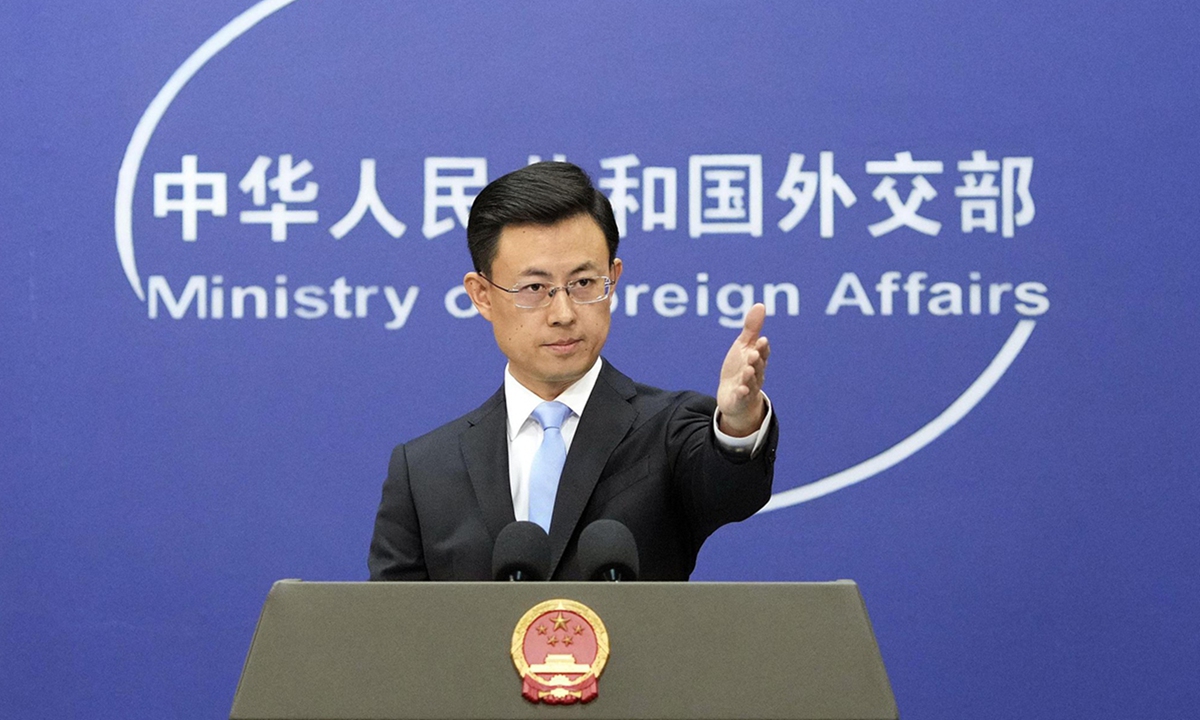
Chinese Foreign Ministry spokesperson Guo Jiakun
China and South Korea have in place well-developed dialogue mechanisms on fishing-related issues and maintain close communication over relevant issues, Chinese Foreign Ministry spokesperson Guo Jiakun said at a regular press conference on Friday.The remarks were made in response to a media inquiry for comment regarding South Korean President Lee Jae-myung's recent expression of concern over "illegal fishing" by some Chinese fishing vessels.
According to Yonhap News, Lee on Wednesday visited the Yeonpyeong Peace Observatory to assess the situation in waters near the Northern Limit Line (NLL) in the West Sea, where he received a report on so-called "illegal fishing activities" by Chinese vessels near the NLL. He said he cannot simply ignore the so-called "crossing of the NLL," while calling for a firm response.
It serves the two sides' shared interests to maintain a stable situation in waters between China and South Korea and have orderly fishing activities there. China always asks Chinese fishermen to follow relevant laws and regulations. At the same time, we will firmly protect their lawful rights and interests, Guo said.
Since President Lee took office, exchanges between China and South Korea across various fields have become increasingly close. China and South Korea maintain smooth diplomatic communication channels on fisheries issues, providing institutional arrangements and a rule-based framework that enables fishermen to carry out lawful and regulated fishing activities, Da Zhigang, a researcher at the Institute of Northeast Asian Studies at the Heilongjiang Provincial Academy of Social Sciences, told the Global Times on Friday.
At present, China-South Korea relations remain generally stable, with people-to-people exchanges continuing to expand. The two sides should continue to properly handle relevant differences and maintain stability in maritime situations, Da said.
China and South Korea also have significant cooperation potential in the fisheries sector, with broad shared interests in areas such as fishery resource conservation and marine ecological protection, the expert added.
China and South Korea are working together to make the Yellow Sea's fishery "pie" bigger, turning shared conservation efforts into a growing source of ecological and economic benefits for fishing communities on both sides. A total of 330,000 greenfin horse-faced filefish juveniles were released on Tuesday morning in Yantai, East China's Shandong Province, at the city's landmark Tianma Trestles, as part of an annual joint stock enhancement and release event between China and neighboring South Korea.
The event aims to conserve fishery resources and protect the ecological environment of the Yellow Sea — a traditional fishing ground and shared marine ecosystem that has sustained Chinese and South Korean fishing communities for generations — while promoting the recovery and sustainable use of fishery resources.
Da said that as communication mechanisms continue to improve, there remains further room to deepen cooperation in areas including scientific assessment of fishery resources, optimization of fishing moratorium arrangements, and enhanced coordination in maritime law enforcement efficiency, so as to better achieve win-win outcomes in blue economy cooperation and people's livelihoods.
Global Times
RELATED ARTICLES