Burundi draws on China’s poverty alleviation experience, learns from its modern agricultural, industrial technologies: envoy
Burundi draws on China’s poverty alleviation experience: envoy
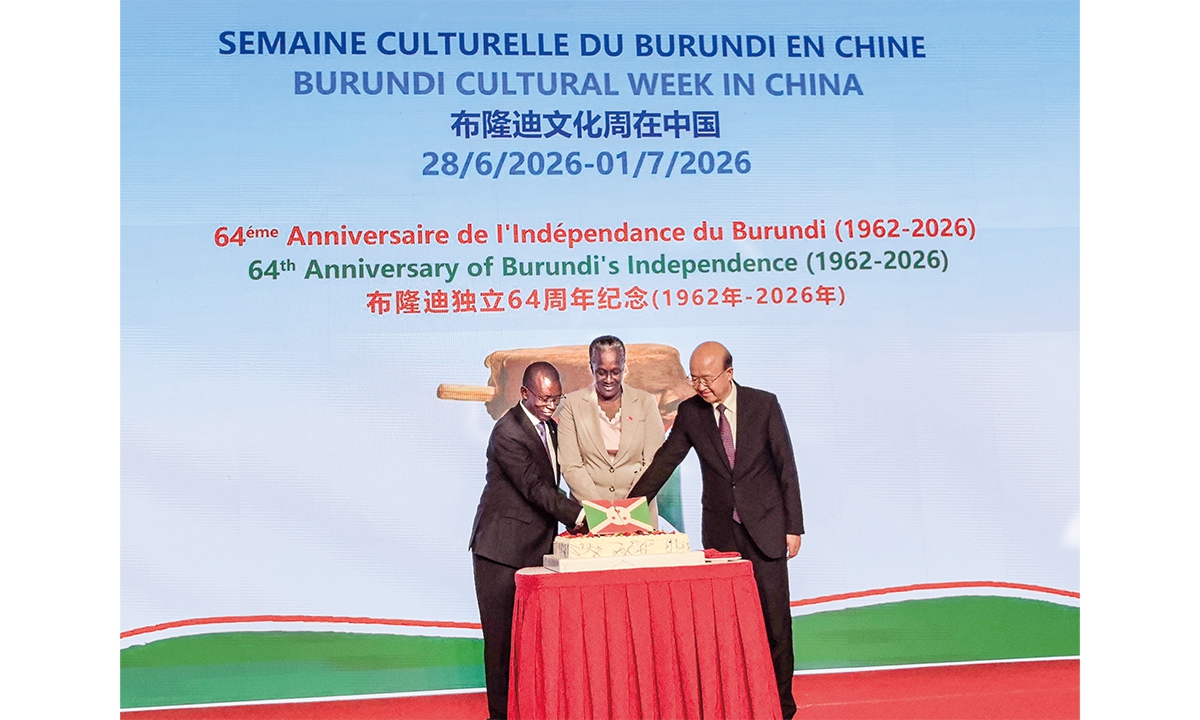
Liu Xianfa, the Special Representative of the Chinese Government on African Affairs (right), Lydia Nsekera, Minister of Youth, Sports, and Culture of Burundi (center), and Telesphore Irambona, Burundi's Ambassador to China cut the anniversary cake during the celebration ceremony in Beijing on July 1, 2026. Photos: Dong Feng/GT
The Embassy of the Republic of Burundi in China hosted a celebration in Beijing on July 1, marking the 64th anniversary of the country's independence. Ahead of the celebration, Telesphore Irambona, Burundi's Ambassador to China, told the Global Times that the country has learned a lot from China's experience in poverty elimination and wants to develop its own scientific and technological capabilities.Ambassador Irambona said that Burundi has observed that technology has been a crucial enabler that holds pivotal significance in advancing the modernization of Burundi's agriculture and mining sectors.
He said that a mutually beneficial partnership framework with focus on agriculture, mining and tourism has been proposed. The collaborative model prioritizes tangible value creation to drive comprehensive socio-economic transformation across Burundi, delivering inclusive growth for local communities, while fostering balance, long-term bilateral ties with China. The envoy also underscored China's zero-tariff policy for African imports, saying that Burundi has to roll out support measures to boost competitiveness of its export commodities.
China has granted zero-tariff treatment to all 53 African countries with which it has diplomatic relations since May 1, while continuing to push forward negotiations on economic partnership agreements for shared development.
According to statistics from China Customs, the bilateral trade volume between China and Burundi in 2025 reached $122 million, with coffee increasingly becoming a new highlight of bilateral trade between the two countries. Since the end of July 2025, the two countries have signed coffee bean procurement contracts totaling more than 900 metric tons and valued at more than $5.44 million.
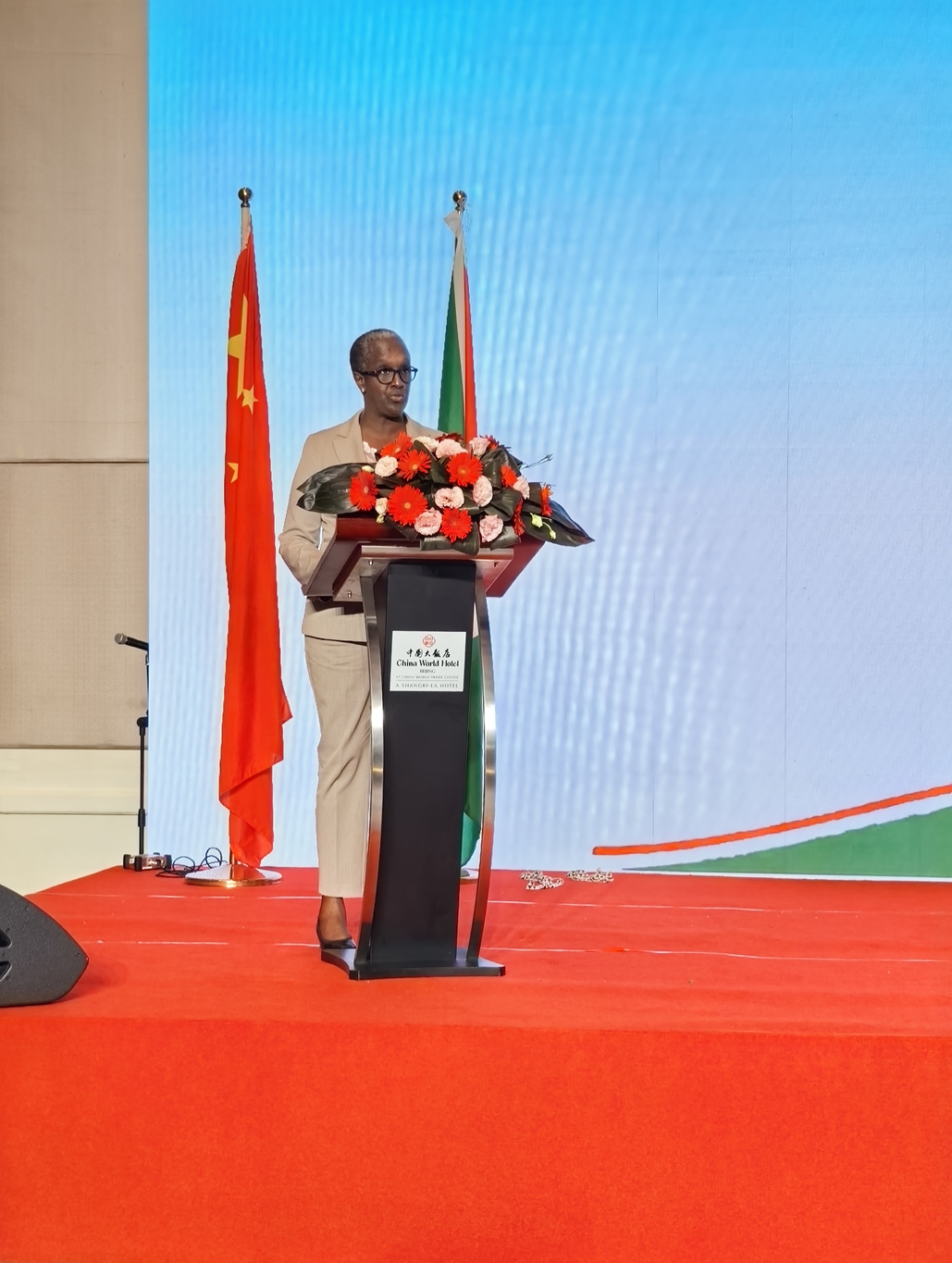
Lydia Nsekera, Minister of Youth, Sports, and Culture of Burundi, gives a speech at the celebration ceremony in Beijing on July 1, 2026.
Lydia Nsekera, Minister of Youth, Sports, and Culture of Burundi, said in her speech at the Wednesday celebration that for decades, relations between Burundi and China have steadily strengthened, characterized by constant mutual support and a partnership spanning all socio-economic sectors."In our fight against poverty, Burundi draws inspiration from China's experience under the leadership of the Chinese leader, while ensuring that solutions are adapted to our national context," she noted.
Nsekera said Burundi remains firmly committed to strengthening the bilateral relations by promoting mutual support on major issues of common interest.
"We are convinced that frank and close collaboration between Burundi and China will enable us to effectively meet the challenges of a constantly changing world - a world marked by geopolitical tensions, the politicization of human rights, persistent poverty, the effects of climate change, and the resurgence of diseases, particularly epidemics," she said.
Liu Xianfa, the Special Representative of the Chinese Government on African Affairs, said in his speech that "we should all revisit the glorious days when China, Burundi and other African countries fought shoulder to shoulder and helped each other in our efforts to seek national independence and liberation."
"Over the past half a century and more, no matter how the international landscape may have changed, our relationship has always been one marked by mutual respect, equal treatment and mutual support, an epitome of the high-level solidarity and cooperation between China and African countries and among members of the Global South," he noted.
He also shared that the zero-tariff policy has injected new momentum in bilateral economic and trade cooperation. "In the first quarter of this year, our trade volume saw a year-on-year increase of 63.9 percent, and Burundi's export to China soared by a whopping 835.9 percent," he added.
Seizing the opportunity of the implementation of the zero-tariff measures, China is ready to work with Burundi to build on the momentum of bilateral trade growth, expand cooperation across agriculture, mining and other fields, and ''promote high-quality development of our practical cooperation,'' Liu said.
Despite major global changes, China's policy toward Africa has never changed. As always, China will adhere to the principle of sincerity, real results, amity and good faith and take the right approach to friendship and interests. "We stand ready to work with Burundi and other African countries to make greater contribution to the joint efforts of building an all-weather China-Africa community with a shared future for the new era," said Liu.
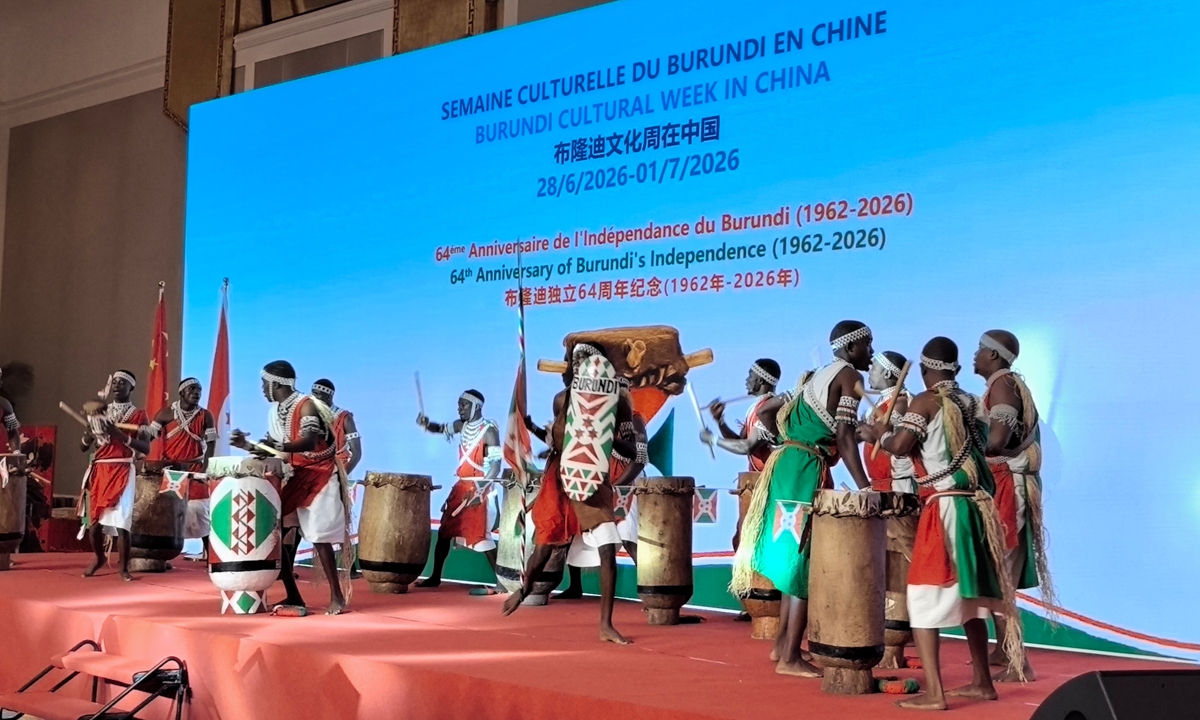
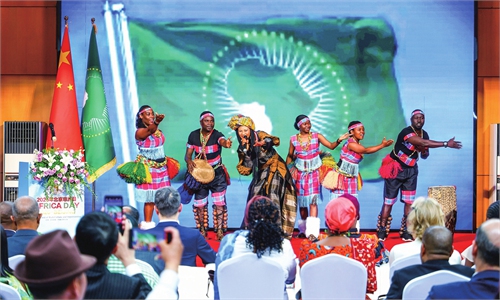
Burundi dancers and drummers perform the sacred drum of Burundi (Ingoma) at the ceremony in Beijing on July 1, 2026.
The Embassy of the Republic of Burundi in China has also launched a Burundi Cultural Week in Beijing since June 28. Under the theme of "When the Sacred Drums of Burundi Strengthen China-Africa Ties," the cultural week aims to further strengthen the relations of friendship and cooperation between Burundi and China, while beefing up the country's international profile in its year of the presidency of the AU.As 2026 is the China-Africa Year of People-to-People Exchanges, Ambassador Irambona noted that "through these various activities, we aim to illustrate our conviction that culture brings people together and strengthens trust between them; that peace and stability create the conditions for investment, the foundation of shared and sustainable prosperity."
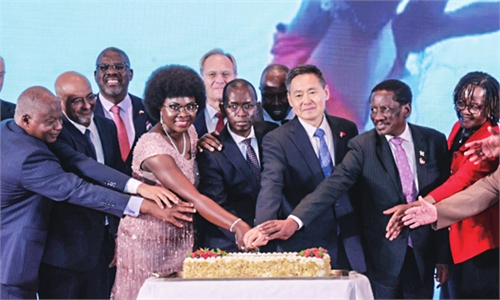
Burundi's 64th Independence Day featured dances by Burundi drummers and cultural performances, celebrating the country's journey since gaining independence and to highlight achievements on the path to peace, stability and development.
RELATED ARTICLES