German summons Chinese ambassador over alleged ‘training of Russian soldiers’; Chinese expert says unfounded accusations aim to divert attention from internal conflicts
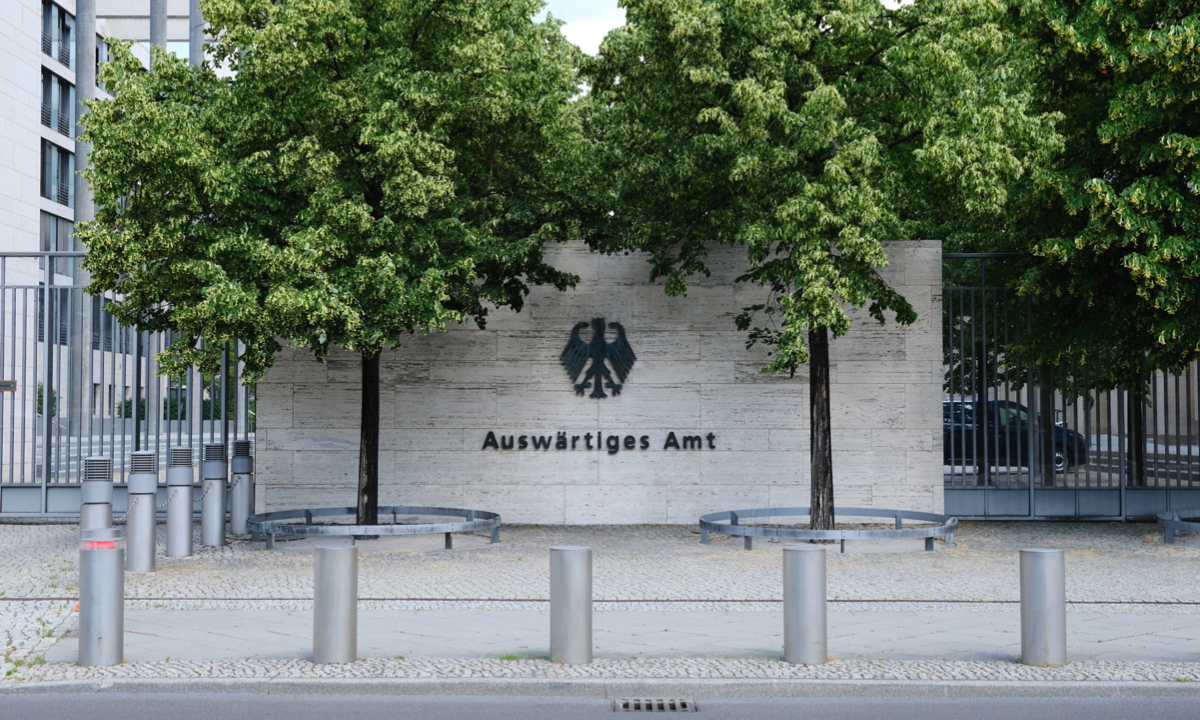
The German Foreign Ministry building Photo: VCG
The German Foreign Ministry claimed on Friday that the Chinese ambassador in Berlin had been summoned for talks over reports that Russian soldiers were being trained in China, according to media reports. A Chinese expert pointed out that these groundless accusations are intended to divert public attention from domestic discontent triggered by the Ukraine crisis, and that China has no reason to accept such unfounded allegations.
The Chinese ambassador was summoned for urgent talks about media reports that Russian soldiers were being trained in China, the Guardian reported on Saturday, citing the German Foreign Ministry.
The ministry claimed that anything that enables Russia to continue its operations against Ukraine also “represents a threat to our security,” per the Guardian.
As Germany made unfounded allegations against China, the Russian Defense Ministry said on Friday that Russian forces conducted one massive and five group strikes over the past week targeting industrial, infrastructure, energy and logistics facilities used by the Ukrainian army. The ministry added that a total of 10 settlements were seized in the past week.
Russia also claimed on Friday that its armed forces had taken full control of the city of Konstantinovka in eastern Ukraine, the Xinhua News Agency reported.
European countries have made little headway in addressing the Ukraine crisis and have faced daunting challenges, which have generated plenty of pent-up grievances at home. They largely blamed China for such frustrations, leveling unfounded accusations against Beijing in an attempt to divert public attention from Europe’s internal troubles, Jian Junbo, director of the Center for China-Europe Relations at Fudan University's Institute of International Studies, told the Global Times on Saturday.
Jian also suggested that these unwarranted political accusations are, to some extent, linked to the settlement of economic and trade issues between China and Europe. “Some European countries may be attempting to exert political pressure on China in order to gain a certain degree of leverage in trade negotiations,” he said.
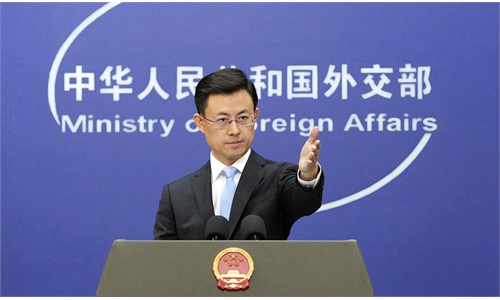
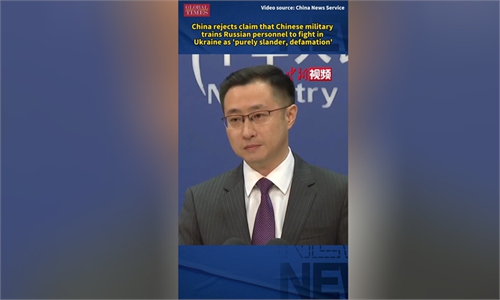
This is not the first time European countries have leveled allegations and hyped narratives claiming that China trained Russian military personnel to engage in combat in Ukraine. At a regular press briefing on June 16, when asked to comment on the EU High Representative for Foreign Affairs and Security Policy Kaja Kallas’s claim that the bloc had “verified reports” that the Chinese side had been training Russian military personnel to fight in Ukraine, Chinese Foreign Ministry Spokesperson Lin Jian said, “Such assumptions have no factual basis at all and are nothing but smears.”
Jian said military exchanges between China and Russia have long existed and fall within the normal scope of exchanges between sovereign states, adding that such exchanges are transparent and do not provide any grounds for European countries to level unfounded accusations against China, nor is there any reason for China to accept such accusations.
In addition to making unfounded accusations that China trained Russian soldiers, European officials have also claimed that China has provided assistance to Russia in the Ukraine crisis. When asked for comment on NATO Secretary General Mark Rutte's assertion that Beijing supports Moscow in circumventing sanctions and supplying dual-use goods, spokesperson Lin said on June 18 that “we did not provide lethal weapons to either party to the conflict and have enforced strict control over dual-use items.”
Lin said that on the Ukraine crisis, China has maintained an objective and just position, consistently making active efforts toward ending hostilities and promoting peace talks. NATO needs to address its wrong perception of China and stop inciting confrontation and shifting blame. As a Cold War relic, it needs to seriously reflect on what role it has played and what impact on peace and stability in today’s world, Lin added.
When addressing China's role in resolving regional conflicts, particularly the Ukraine crisis at the Munich Security Conference on February 14, 2025, Chinese Foreign Minister Wang Yi said that China is not a party to the conflict and therefore does not hold decision-making power over its outcome.
Since the conflict is taking place on European soil, Wang said, Europe has the right and should participate in the negotiations. Europe should not be on the menu, but at the table, he said.
RELATED ARTICLES