Illustration: Xia Qing/GT
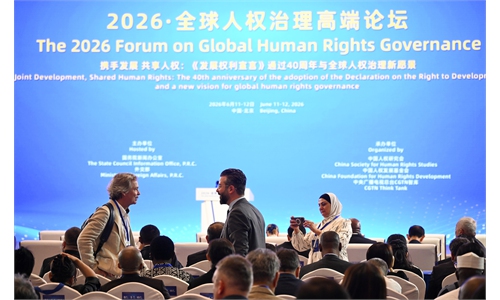
The year 2026 marks the 40th anniversary of the Declaration on the Right to Development by the UN General Assembly. Four decades on, this milestone invites the international community to revisit a fundamental question: How can we ensure that all people enjoy their fundamental rights and freedoms? At a recent forum on global human rights governance held in Beijing, this once again highlighted China's growing role in shaping discussions on global governance and human rights.While civil and political freedoms are important, people must first have economic and social rights such as access to food, shelter, healthcare, education and employment if they are to live a dignified life. In this view, development is not merely an economic goal but a human rights objective in itself.
The examples of China-Africa cooperation have demonstrated how development can create the conditions necessary for people to enjoy a broader range of rights. Over the past two decades, cooperation between China and African countries has expanded significantly in infrastructure, agriculture, healthcare, education, technology and industrial development. These initiatives have had a direct impact on improving the quality of life of millions of people.
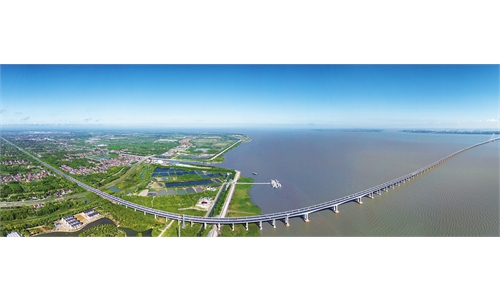
While infrastructure is often viewed primarily as an economic issue, we cannot ignore its human rights dimension. For example, Chinese-built roads in Africa have connected farmers to markets, enabling them to earn better incomes. Improved transport systems have reduced isolation and increased access to essential public services. In this sense, infrastructure development contributes to the realization of the rights to development, education, health and economic participation.
As China and Africa celebrate 70 years of diplomatic relations, the partnership is entering a new phase - one that extends beyond infrastructure and trade to include innovation, modernization and a stronger voice for developing countries in global governance.
Rwanda offers an important illustration. Investments in infrastructure, technology and connectivity have played a significant role in the country's transformation over the past three decades. Similar experiences can be observed in other African countries where improved transportation and energy networks have created opportunities for employment and economic growth. These experiences reinforce the idea that human rights should be understood not only in legal terms but also through the practical conditions that allow people to improve their conditions of living.
Since the 1960s, China has sent medical teams to numerous African countries, providing medical services and training local healthcare professionals. I am glad that in my country, Rwanda, Masaka hospital on the outskirts of the capital city Kigali has been expanded with the support of the Chinese government, becoming an important medical center in the country.
Food security remains a major challenge in many parts of the world. China's experiences in increasing agricultural productivity and reducing rural poverty have generated interest among African countries seeking to modernize their agricultural sectors. Through demonstration centers, technical training programs and agricultural technology exchanges, cooperation has helped improve farming methods and productivity in several African countries. Access to adequate food is a fundamental human right, and agricultural development remains central to achieving this objective.
China's miraculous achievement in lifting hundreds of millions of people out of poverty was frequently referenced as an example of large-scale social transformation. Poverty is not merely an economic condition but also a barrier to the enjoyment of many other rights. Individuals trapped in extreme poverty often face limited access to education, healthcare, employment and social mobility. The lessons from China's poverty reduction efforts demonstrate the importance of targeted policies, effective governance and long-term planning. These are important lessons for African countries where more than 40 percent of their population still live in extreme poverty.
The world is currently facing numerous challenges, including poverty, inequality, climate change, public health threats, food insecurity and economic uncertainty. Human rights cannot be separated from the broader conditions that shape people's lives.
The experience of China-Africa cooperation demonstrates how development partnerships can contribute to improving people's well-being and expanding opportunities. Through its development partnerships, infrastructure projects and global initiatives, China is championing a vision of a world where countries cooperate with each other rather than confront one another, and where development serves as the foundation for human dignity.
The Chinese representative pointed out at the forum: Every civilization has a concept of Human Rights in its culture. There is no single path to human rights advancement. Different societies may pursue different approaches while sharing the common objective of enhancing human dignity and improving the lives of their citizens. I'm convinced that when the global community works together to address practical human needs, human rights become not merely an aspiration but a reality experienced by ordinary people in their daily lives.
The author is a researcher and publisher on China-Africa Cooperation and Development. opinion@globaltimes.com.cn
RELATED ARTICLES