Guangxi disease control authority says infectious disease situation remains stable in flood-hit areas, urges vigilance against major diseases
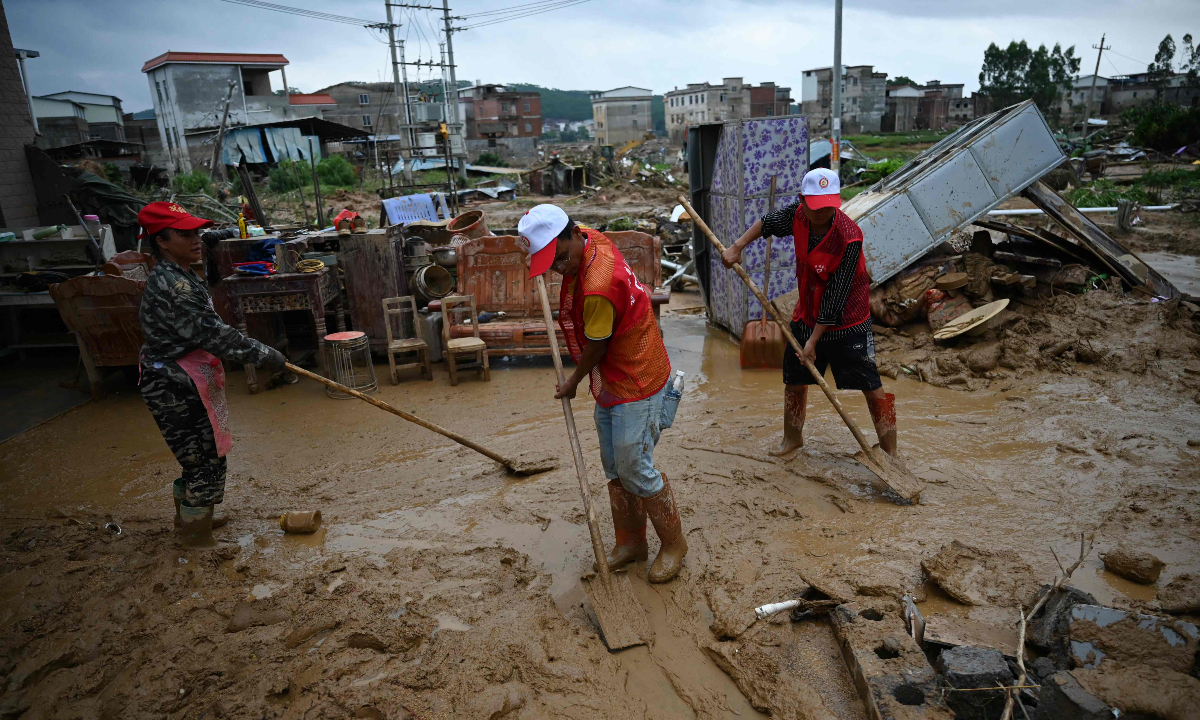
Disaster-affected residents in Hengzhou, South China’s Guangxi Zhuang Autonomous Region, continue resettlement and post-flood recovery efforts on July 8, 2026. Photo: VCG
The disease control authority in South China’s Guangxi Zhuang Autonomous Region announced that an emergency monitoring and response system has been activated in rain and flood-hit areas, with no abnormal indicators detected so far, urging the public to take precautions against five major categories of diseases, according to a release from the region’s disease control and prevention authority.
Typhoon Maysak-triggered torrential rains have caused severe flooding in many parts of the region, significantly increasing the risks of intestinal infectious diseases, vector-borne diseases and respiratory illnesses, according to the authority.
Jiang Lina from the center for disease control and prevention center in Guangxi was cited in the release as saying that the region has launched a multi-dimensional, full-coverage emergency monitoring and response system in rain-hit areas to strengthen post-disaster epidemic prevention and control efforts.
Jiang also reminded the public to pay special attention to preventing five categories of diseases: intestinal infectious diseases, foodborne diseases, vector-borne diseases, water-related infectious diseases, and respiratory infectious diseases.
Local authorities have implemented a dual protection mechanism combining disease monitoring and early warnings with environmental cleanup. Measures include daily case assessments, symptom monitoring at medical stations and resettlement sites, frontline health inspections, and strengthened water quality and vector surveillance. Any abnormal signals will trigger rapid epidemiological investigations and targeted control measures to prevent outbreaks.
Efforts target risks including water contamination, stagnant water, mosquito and fly breeding, and spoiled food to protect public health and safety in affected areas, according to the release.
Global Times
RELATED ARTICLES