Cooling demand drives Chinese AC sales surge, illustrating mutual benefit at heart of China-Europe trade
By Published: Jul 09, 2026 09:47 PM

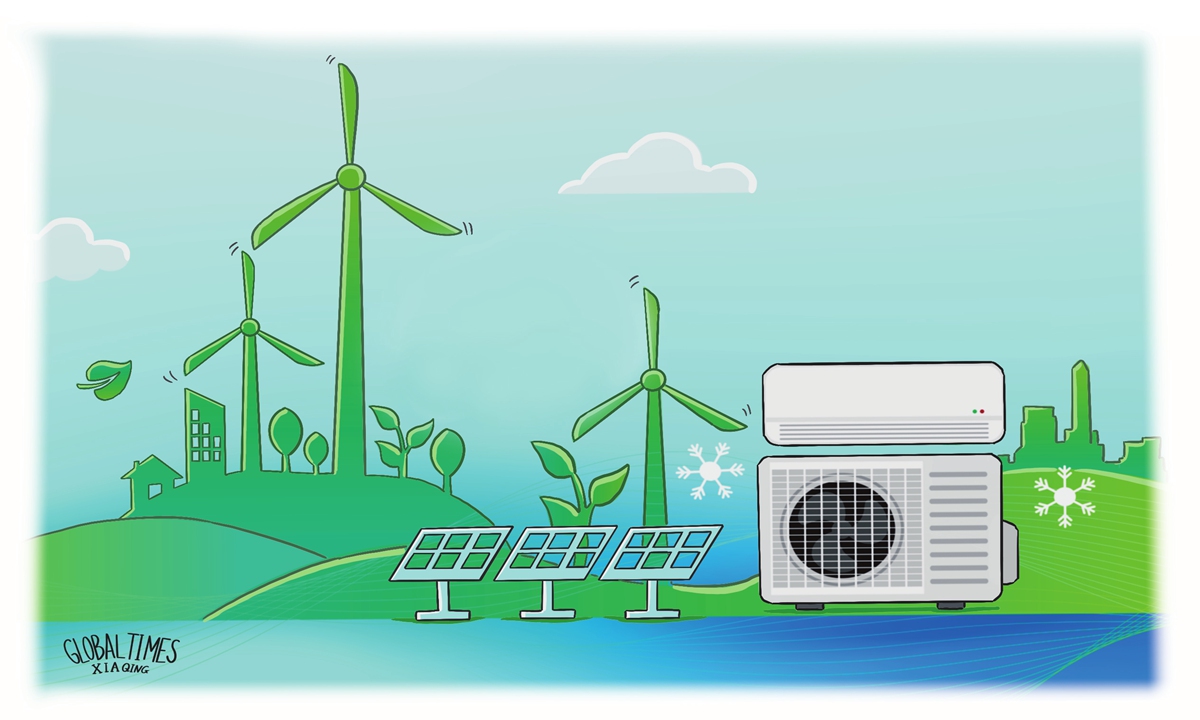
Illustration: Xia Qing/GT
A few days ago, I received an email from a French friend inviting me to spend this summer in Paris with my daughter. For a moment, I was tempted. But as I looked at my little girl comfortably reading a picture book in our air-conditioned room, and then glanced at the headlines about Europe's relentless heatwaves, I decided to postpone the trip.In recent weeks, record-breaking temperatures have swept across France, Spain, Italy, Germany and several other European countries.. Heatwaves have become a growing challenge to Europe's daily life. Public discussion around cooling and home comfort has become more visible.
Against this backdrop, Chinese-made air conditioners (ACs) have become some of the most sought-after products in Europe. From market observations, some European consumers tend to consider Chinese ACs due to their cost efficiency, energy performance, and mature supply reliability.
In pursuit of ambitious climate goals, many European governments have long encouraged lower energy consumption. Air conditioning, once viewed by some as an environmentally unfriendly convenience, never became a standard household appliance as it did in many parts of Asia or North America. As extreme heat becomes increasingly common, however, Europe's limited cooling capacity has become a growing vulnerability.
It is precisely at this moment that Chinese manufacturing has demonstrated its value.
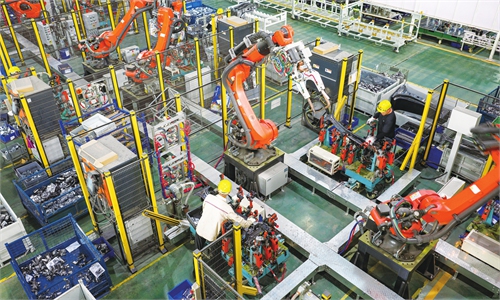
Over the past several years, Chinese home appliance manufacturers have steadily expanded their global footprint. Many have invested in developing models tailored specifically to European consumers: energy-efficient inverter technology, compact systems suitable for older buildings, and products designed to meet stringent environmental standards.
According to China's General Administration of Customs, China's AC exports to the European Union increased by 43.2 percent in volume during the first half of 2025, with total exports reaching $3.76 billion. These figures reflect genuine market demand - and China's ability to help meet it.
More broadly, they illustrate how global industrial specialization works in practice: concentrating production where expertise, scale and infrastructure converge lets regions lean into their comparative advantages, delivering collective benefits no single economy could match alone.
Chinese manufacturing has often helped fill supply gaps in the European market. From ACs and solar panels to battery storage systems, electric vehicles and smart home appliances, Chinese companies offer not only competitively priced products but also highly efficient supply chains, large-scale manufacturing capacity and continuous technological innovation.
As more European households switch on Chinese-made ACs during increasingly frequent heatwaves, they also reaffirm a simple truth: Markets ultimately reward those who best meet people's needs. And in today's world, openness and cooperation will always offer a more sustainable - and more human - path than decoupling.
Critics who frame these trade flows through ideological lenses, warning of industrial control or hyping so-called "over-independence," overlook lived experience on the ground. A Paris family choosing a portable Chinese split unit to keep their children's bedroom habitable, an Italian café owner installing efficient cooling to stay operational through heat alerts, a Spanish nursing home securing bulk units to safeguard residents - these are individual, voluntary choices rooted in survival and quality of life. Trade thrives when each side contributes what it can produce efficiently, responding to bottom-up societal demand.
The surge in Chinese AC demand across Europe is about consumers voting with their wallets for reliable, affordable cooling when they need it most. It demonstrates how integrated global manufacturing turns isolated national shortages into shared solutions, supporting public health and advancing climate resilience. As summers grow hotter and climate challenges intensify, the lesson is clear: openness, pragmatic partnership and respect for consumer choice deliver cooler homes, stronger communities and a more sustainable path forward than division ever will. In every quiet evening spent reading with a child in a cooled room, in every café staying open for patrons, in every hospital ward kept safe for patients, we see trade working as it should - for people first.
The author is deputy director of the News Desk of the Global Times. The article was originally published in Daily News Hungary. chenqingqing@globaltimes.com.cn
RELATED ARTICLES