Illustration: Chen Xia/GT
Data from South Korea-based CarIsYou Data Research Center showed that for the first time, new-energy vehicles (NEVs) accounted for more than half of new car registrations in South Korea in the first half of this year, the Yonhap News Agency reported on Sunday. In the pure electric vehicle (EV) sales ranking, BYD secured fourth place with 11,760 units sold, trailing Kia, Tesla and Hyundai.That a Chinese brand has broken into the top four in the EV market of a traditional automotive powerhouse like South Korea is, in itself, worth heeding. BYD is not the only Chinese automaker eyeing South Korea's promising market. For instance, Zeekr, a brand under Geely Holding Group, has officially entered South Korea by signing cooperation deals with four major local distributors to build solid local sales channels.
XPeng is also actively preparing for its official launch in the South Korean market, according to the China Automotive News. From targeted product planning to localized channel building, Chinese NEV brands have paid increasing attention to the South Korean market.
Yet, as Chinese automakers advance into the South Korean market, the development may have triggered concerns in South Korea. When BYD participated in the 2026 Busan Mobility Show in late June, local media discussions were rife with concerns that Chinese NEVs might challenge domestic hybrids. A report by The Chosun Daily claimed that "Cost-cutting pressures will intensify across domestic automakers and their supply chains."
But are these worries justified, and do they really serve South Korea's long-term industrial interests? Indeed, China has become an important source of South Korea's EV imports. International brands such as Tesla, BMW, Volvo, and Polestar have been ramping up production in China and exporting vehicles to South Korea. Viewed beyond the perspective of automotive market competition and from the broader picture of China-South Korea economic and trade relations, any protectionist mindset runs counter to the general trend of mutually beneficial win-win cooperation.
China-South Korea economic and trade cooperation is in a steady upward phase, with the industrial chains of the two countries increasingly deeply integrated and interdependent. Customs data fully demonstrates the strong resilience and growth momentum of bilateral trade. In the first five months of this year, China's imports of goods from South Korea surged by 56.5 percent year-on-year.
This substantial growth fully reflects China's continuous expansion of opening-up, which has provided a vast incremental market for South Korean goods, advanced technologies and industrial chain products, delivering tangible development dividends to South Korea's manufacturing sector.
Meanwhile, China's exports to South Korea increased by 28.5 percent year-on-year. This robust growth in both directions proves that the two countries' industrial chains remain tightly intertwined, with genuine, mutual demand for each other's products.
While it is true that as China's industrial structure continues to optimize and upgrade, there is competition in some sectors. Yet this has not altered the fundamental fact that their economic and trade complementarities still outweigh competition. The two sides have already built highly complementary ties in key industrial chain links such as semiconductors and batteries, and formed a diversified, closely coupled division of labor across electronics, machinery and many other fields.
Moreover, under the Regional Comprehensive Economic Partnership, China and South Korea will implement zero tariffs on 86 percent of each other's products. Key sectors including auto parts and chemical products are included in the tariff reduction list, opening up new space for high-value-added industrial cooperation.
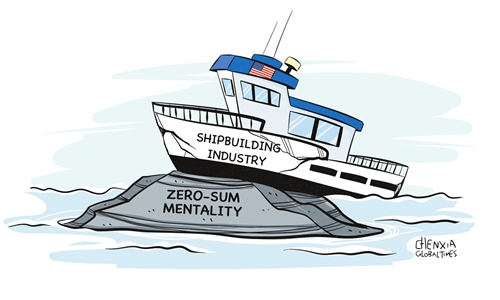
In this situation, clinging to protectionism and exaggerating market competition anxiety is short-sighted. A closed and conservative market environment cannot nurture high-quality industries, and excessive policy protection will never drive indigenous technological progress and industrial upgrading.
While continuously enjoying export dividends from the Chinese market, South Korea is advised to embrace high-quality Chinese products and advanced technologies with a more rational and open mindset, which will allow the two countries to achieve dual industrial upgrading in the new energy sector and amplify the dividends of bilateral economic and trade cooperation.
RELATED ARTICLES