US, Iran exchange attacks amid Hormuz Strait dual blockades row; cycles of clashes and diplomacy to persist as brinkmanship drags on: expert
Cycles of clashes and diplomacy to persist as brinkmanship drags on: expert
By Published: Jul 14, 2026 10:14 PM

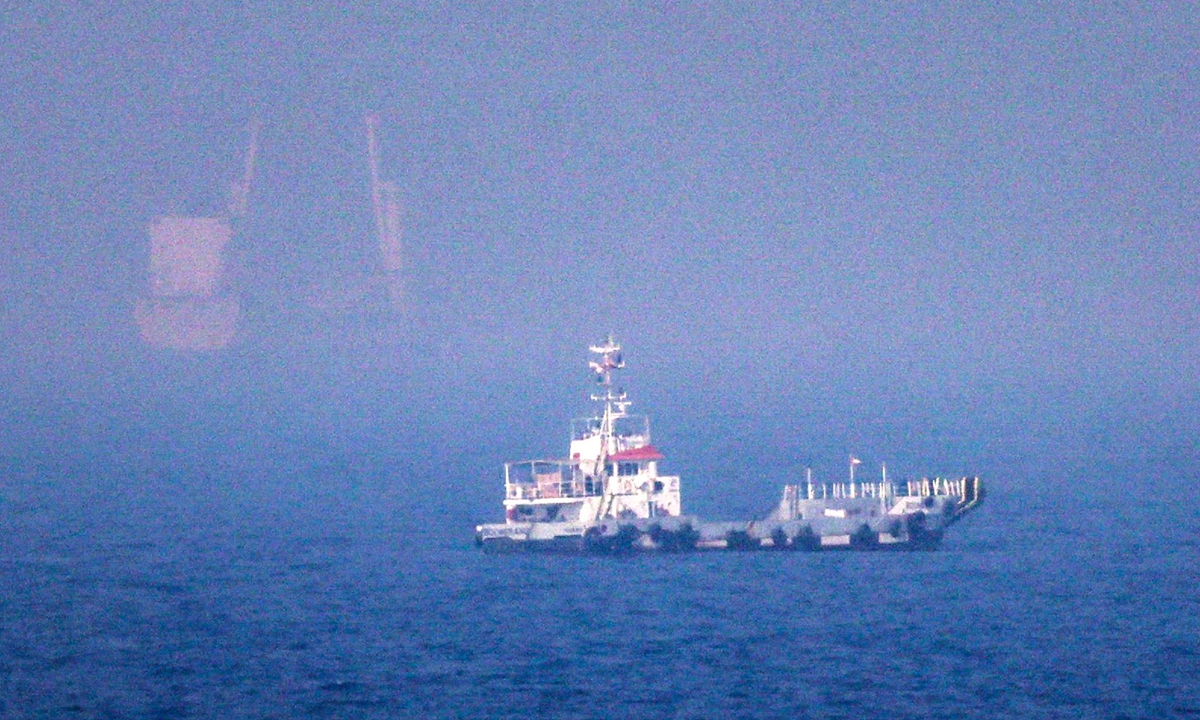
This picture shows ships sailing near the Strait of Hormuz off the eastern coast of the United Arab Emirates at Khor Fakkan on July 13, 2026. Photo: VCG
Just weeks after a MoU was signed, tensions in the Middle East flared once again. Washington has reinstated its naval blockade of ships bound for and departing Iranian ports and conducted airstrikes against Iran for three consecutive nights, while Tehran retaliated by firing missiles at US missile assets and American military outposts based in regional nations, multiple media outlets reported.
Analysts said the renewed military clashes have escalated the US-Iran rivalry, with the Strait of Hormuz emerging as the core flashpoint. They noted the two sides may resume talks in the long run, yet the game of brinkmanship may turn into a protracted back-and-forth, with cycles of armed clashes and diplomatic talks set to persist and a smooth path to de-escalation remaining elusive.
In response to renewed military hostilities and the US' order to reinstate a naval blockade on Iran in the Strait of Hormuz, Chinese Foreign Ministry spokesperson Lin Jian said on Tuesday that China calls on relevant parties to heed the strong call for peace and stability from the region and beyond, remain calm and exercise restraint, safeguard the hard-won ceasefire, avoid the return of war and more importantly, prevent the fighting from spreading and hurting more innocent people.
"Respect for the lawful rights and interests of coastal countries of the Strait of Hormuz and an early resumption of normal and safe passage at the Strait is what the international community want to see. Relevant parties need to work in the same direction and seek a proper settlement," Lin said.
Protracted back-and-forth
In an X post on Tuesday, the US Central Command (CENTCOM) said that the US completed the latest wave of strikes against Iran at 10:15 pm ET on July 13.
CENTCOM claimed that during the five-hour mission, US forces "successfully struck military targets across Iran including Bushehr, Chah Bahar, Jask, Konarak, Abu Musa, and Bandar Abbas to further degrade Iran's ability to attack commercial shipping."
CNN confirmed the latest strike marks the third consecutive night the US has conducted strikes against Iran.
On Monday local time, US President Donald Trump said that the US would take out Pickaxe Mountain in Iran, a deeply buried site that is believed to be part of Iran's nuclear program, CBS News reported.
In a statement, the Iranian army said it had targeted US military assets in Kuwait, the state-run IRNA news agency reported. Early on Tuesday morning, Iranian Revolutionary Guards Corps (IRGC) confirmed they had targeted several missile depots and fuel storage facilities at Jordan's Prince Hassan Air Base which has been used by the US and allied forces for regional operations, per Iran International.
The Bahrain Interior Ministry instructed the public to seek shelter with warning sirens blaring. The UAE's Defense Ministry said Iranian cruise missiles targeted two of its oil tankers in Omani waters in the Strait of Hormuz, with an Indian national crew member killed and eight crew members injured, according to Al Jazeera.
Zhu Yongbiao, an expert on Middle Eastern affairs at Lanzhou University, told the Global Times on Tuesday that the severe lack of strategic trust between the US and Iran lies at the heart of the resurgent military confrontation. Another major contributing factor is that both countries, particularly the US, are dissatisfied with their respective negotiating goals and bargaining chips from previous rounds of talks.
Judging by the scale of the latest military strikes and Washington's threats to target Iran's nuclear-related locations, the US' latest military actions serve as a typical tool of Washington's longstanding maximum pressure campaign, designed to secure greater leverage in future negotiations, the expert said.
When asked about the Iran-US Memorandum of Understanding (MoU) signed just last month to end the war, Trump told media on Monday that it was just a "test." He leveled accusations that Iran "didn't honor the test." In response, Iranian Foreign Ministry spokesperson Esmaeil Baghaei said on Monday that the MoU has undoubtedly entered a "crisis phase," while Iran was not the party that violated its commitments under the deal first, per Xinhua.
However, when asked by a reporter on Monday if he has decided that a negotiated settlement with Iran is no longer possible, Trump said "I never reached that conclusion." He claimed that he believed the "most effective" way to put pressure on Iran was through a combination of a blockade and "hitting them," Al Jazeera reported.
In the long run, Zhu said the US and Iran are likely to return to the negotiating table, yet their game of brinkmanship will evolve into a protracted back-and-forth. Cycles of armed clashes followed by diplomatic talks are set to persist, making a smooth path toward de-escalation between Washington and Tehran elusive.
The Hormuz flashpoint
Hours before launching its latest wave of airstrikes, Trump issued an order at 4 pm local time on Tuesday reinstating the naval blockade on Iran in the Strait of Hormuz and floated a 20 percent transit toll for all ships traversing the vital global energy artery, CNBC reported.
Trump's actions came shortly after he formally notified Congress that fighting has resumed amid tit-for-tat attacks by both sides in recent days, according to New York Times.
Before Trump's remarks, in an X post on Sunday, Iran's Persian Gulf Strait Authority said that passage through the Strait of Hormuz was currently unfeasible because of recent illegal military actions by US forces, adding that transit requests would be reviewed once stability and calm were restored.
On Monday, Trump claimed that the US would ultimately control the Strait of Hormuz and insisted the war with Iran is moving "very fast." He also said that the US should be reimbursed by "the countries that we're helping" in the conflict with Iran, naming several Middle East allies, CNN reported.
Iranian Foreign Minister Abbas Araghchi shared a video on Tuesday featuring remarks from a spokesperson of Iran's Armed Forces, who pushed back firmly against Trump's claims of US dominion over the strait.
"The United States interference in the Management of the Strait of Hormuz have seriously Jeopardized Regional Security and International Trade… The United States shall Never be allowed to Interfere in the Management of the Strait of Hormuz."
In an earlier X post, Araghchi rebutted Trump's toll proposal: "Iran has always been the GUARDIAN of the Strait and will remain so FOREVER…. 20% is of course too much. We will be fair."
"Despite a host of thorny issues including the nuclear issue among the US and Iran, disputes over the management of the Strait of Hormuz stand as the flashpoint of their current game," Liu Zhongmin, a professor at the Middle East Studies Institute of Shanghai International Studies University, told the Global Times.
Washington's decision to impose a naval blockade on the strait alongside threats to levy transit fees is a strategic gambit amid its dilemma between military confrontation and diplomatic easing. The move intends to ramp up pressure on Iran and Gulf states alike, while grabbing dominance in drafting navigation regulations governing the strait, Liu said.
When asked about Washington's plan to impose a 20 percent tariff on all commercial vessels passing through the strait, a spokesperson for UN Secretary-General Antonio Guterres told Al Jazeera the UN chief "wants to see freedom of navigation in the Strait of Hormuz."
Also on Monday, the International Maritime Organization said that it was waiting to find out more about Trump's proposal but remained opposed to tolls for passage through international waterways, as "there is no legal basis through which to introduce mandatory tolls simply to transit through a strait," CBS reported.
Liu noted that the US-Iran game over the Strait of Hormuz is likely to grow increasingly intricate. A standoff featuring reciprocal blockades and mutual transit fees could emerge, alongside frequent low-intensity skirmishes.
RELATED ARTICLES