TPP delegation kicks off maiden mainland visit; trip poised to facilitate cross-Straits communications: expert

latest news
A delegation from the Taiwan People's Party (TPP) on Tuesday kicked off a four-day visit to Shanghai, marking the party's first official trip to the mainland, Taiwan island media outlets reported.
Against the backdrop of the Democratic Progressive Party's (DPP) continuous disruptions to cross-Straits exchanges, the people-to-people interactions stemming from the TPP visit are poised to facilitate cross-Straits communications and cultivate a peaceful atmosphere across the Straits, a mainland expert said.
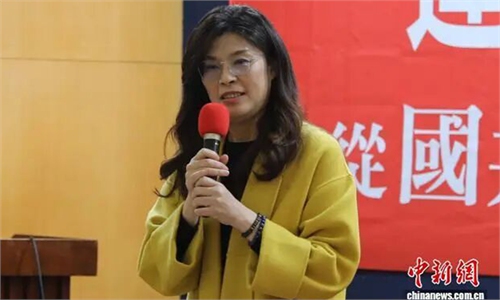
According to Taiwan local media Taipei Times, TPP Central Review Committee chairman Lee Wei-hwa on Tuesday led the delegation. Speaking to reporters at Taiwan Taoyuan International Airport, Lee said he hoped the trip would foster goodwill through exchanges and replace confrontation with dialogue, and promote cross-Straits engagement.
Amid shifting cross-Straits and international dynamics, maintaining communication is even more critical during times marked by division, Lee said, according to the report.
The delegation of three party staffers and five youth division members is scheduled to visit major economic infrastructure projects, historical sites, technology firms and youth entrepreneurship hubs in Shanghai. The group is also scheduled to visit Shanghai Jiao Tong University and hold discussions with young local people, Lee said, adding that youth exchange is a key focus of the trip, according to Taipei Times.
Sheng Jiuyuan, director of the Center for Taiwan Studies at Shanghai Jiao Tong University, told the Global Times on Tuesday that as the DPP authorities keep putting up artificial hurdles to block cross-Straits exchanges, the TPP delegation's trip may help break down information barriers across the Straits, boost bilateral communication and contacts, and aid the cultivation of a peaceful environment for cross-Straits relations.
Sheng further noted that youth exchanges are high on the visit's agenda, echoing a consensus among insightful people in the Taiwan region. "Expanding interactions between young compatriots on both sides could gradually nurture goodwill and solidify supportive conditions for the sustained development of cross-Straits ties, underscoring how vital youth communication truly is," Sheng said.
Lee also said before departure for Shanghai that the TPP advocates advancing cross-Straits exchanges through communication on the premise of preserving the existing social system and way of life of compatriots in the Taiwan region. It takes "mutual acquaintance, mutual understanding, mutual respect, mutual cooperation and mutual accommodation" as its principles for cross-Straits exchanges, Taiwan regional media CNA reported.
Sheng noted that generally speaking, the TPP's overall cross-Straits policy statements are rather ambiguous, and there are certain gap between its position and the mainland's well-defined stance of upholding the 1992 Consensus and resolutely opposing "Taiwan independence." "Nevertheless, the two sides share areas of common ground. The TPP holds that dialogue is preferable to confrontation, which constitutes a key practical foundation enabling its delegation to make this mainland visit," he said.
Looking ahead, continuous integration and exchanges across all sectors between the two sides are essential to consolidate the one-China principle widely recognized by the international community and gradually build a broader environment favorable to peaceful cross-Straits development, Sheng said.
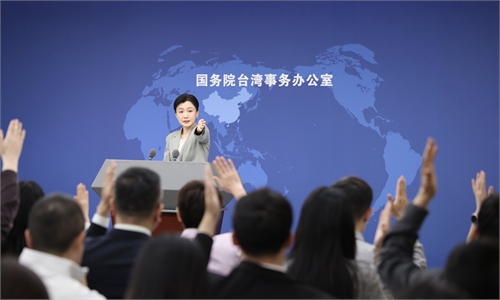
The mainland has repeatedly voiced its openness to cross-Straits communication. In response to a question about Chinese Kuomintang (KMT) Chairwoman Cheng Li-wun's visit to the mainland in April, Chen Binhua, spokesperson for the State Council Taiwan Affairs Office, told a press conference at that time that peace, development, exchanges and cooperation are the common aspirations of people from both sides of the Taiwan Straits, and no force can hold back the irresistible tide of cross-Straits dialogue and exchanges.
On the common political foundation of upholding the 1992 Consensus and opposing "Taiwan independence," we stand ready to strengthen communication with all political parties, organizations and people from all walks of life in Taiwan to boost mutual trust, work together to safeguard peace across the Taiwan Straits, deliver benefits to compatriots on both sides, and advance the rejuvenation of the Chinese nation, Chen said.
RELATED ARTICLES