Pew poll finds China viewed more favorably than US; shift accelerated by Washington's 'America First' policies and Beijing's growing role in global governance: experts
By and Zhang Yuying Published: Jul 16, 2026 08:09 PM


A foreign visitor takes a picture at the Palace Museum in Beijing on June 21, 2026. Photo: VCG
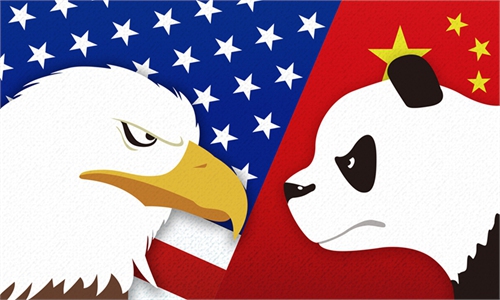
Results of a latest Pew Research Center poll released by the Washington DC-headquartered organization on local time Wednesday showed that China is now viewed more positively than the US in many countries around the world, and according to a related AP report on Thursday, the findings represented the first time in nearly 20 years of Pew's global opinion tracking that such a shift had been recorded.
According to the official website of Pew Research Center, the latest results are based on surveys of 42,151 adults conducted from February 8 to May 13. In most of the 36 countries surveyed, more people have a favorable view of China than of the US. The gap is especially large in several Asia-Pacific and Middle Eastern countries.
Taking a close look at the poll results, China's popularity surpassed that of the US in 27 out of the 36 surveyed countries and regions, with the 27 including longtime US allies such as the UK, Canada, France and Germany. People in all four viewed the US more favorably than or just as favorably as China last year, the Washington Post reported, citing Pew's data.
The significance of the survey lies in showing a shift in how the international community perceives the roles of China and the US, said some Chinese experts, while cautioning that such surveys also have limitations, as framing global perceptions through a direct China-US comparison risks creating a zero-sum narrative.
Sun Xihui, an associate research fellow with the National Institute of International Strategy at the Chinese Academy of Social Sciences, told the Global Times on Thursday that China has maintained a consistent foreign policy anchored in non-interference in other countries' internal affairs, openness and win-win collaboration. This policy consistency serves as the fundamental driver behind the increasing global favorability toward China.
China viewed more positively
It marks the first time in the roughly 20 years Pew has been tracking global opinions that China has been viewed more positively than the US, Laura Silver, associate director of Pew's Global Attitudes Research and one of the researchers on the study, was quoted as saying by the AP in the Thursday report. Views of Beijing and Washington have been very similar at some points in the past but have not been significantly more favorable for China until now, she said.
The improvement in China's global image is primarily driven by the growing visibility of its development achievements, Chinese experts pointed out.
China's progress in infrastructure, technological innovation, green energy, digital economy and emerging industries such as electric vehicles, high-speed rail, cross-border e-commerce and artificial intelligence has created tangible opportunities for many countries. For many nations, including developing countries and some Western economies, China is increasingly viewed as a partner that brings investment, trade and development opportunities rather than a source of confrontation. Such real-world experiences are more persuasive than any external narrative, Chen Hong, Director of Country and Region Studies Institute, School of Foreign Languages, East China Normal University told the Global Times.
The US is viewed more positively than China in just six countries, including four in the Asia-Pacific region: India, Japan, the Philippines and South Korea, the center's data showed.
The six countries can generally be divided into two categories, according to Chinese experts.
The first includes some of China's neighboring countries, where public perceptions are closely linked to historical disputes, recent bilateral tensions and domestic narratives portraying China as a major competitor. Japan, India and the Philippines are examples of countries where such factors have shaped relatively negative views of China, Cui Hongjian, a professor at the Academy of Regional and Global Governance at Beijing Foreign Studies University, told the Global Times.
The second category includes countries such as Poland, where perceptions of China have been influenced by the Russia-Ukraine conflict and Western narratives linking China and Russia. These cases, however, are largely shaped by specific geopolitical circumstances and are not representative of the broader global trend, Cui noted.
Not a new phenomenon
Other institutions have carried out research showing similar trends in recent years. According to BBC, polling company Gallup found that China surpassed the US in global approval ratings last year, with the widest gap recorded in China's favor in 20 years.
An earlier survey by the Pew Research Center released in July 2025 also showed that the share of people with a favorable view of China increased since 2024 in 15 of the 25 countries surveyed.
Polling organization Nira Data's Democracy Perception Index (DPI) found in 2025 that far more countries hold a favorable view of China than of the US - 76 out of the 96 nations surveyed had a preferable view of China compared to the US. China was viewed more positively across all continents, enjoying the largest levels of support in the Middle East and North Africa (MENA) region and Sub-Saharan Africa, Newsweek reported in May 2025.
The fact that China's favorability ratings have surpassed those of the US in public opinion surveys in multiple countries is probably no longer a new phenomenon. In particular, this shift has become increasingly evident since last year, Cui said.
Cui pointed out that behind this trend are two major factors. "One is that people in many countries now have a stronger tendency or perspective to compare China and the US. This may also be partly because of the US itself, as Washington has repeatedly and publicly emphasized China as its only major competitor. As a result, the design of many polls and the feedback they generate increasingly reflect a comparative framework between China and the US."
As for why public perceptions of China have started to improve in comparison, Cui said he thinks this is also a very realistic response to current developments, including the US government's "America First" approach in geopolitics and diplomacy.
Multiple US mainstream media services including the Washington Post and Axios also took heed of the new Pew poll results.
In its report titled "China has become more popular than U.S. in much of world, survey finds," the Washington Post pointed out that the shift comes amid a spate of highly visible, and controversial, US involvements on the world stage, including the second Trump administration's threats to annex Greenland and Canada, the ongoing war in Iran, the imposition of US tariffs on nearly every economy in the world, the forcibly seizing of Venezuelan President Nicolás Maduro, the Pentagon's targeting of boats in the Caribbean, and the gutting of US foreign aid.
Underscoring this in its headline - "China surpasses US in global favorability, poll finds" - Axios wrote on Thursday that the findings suggest the global standing of the US has slipped as President Trump advances his "America First" agenda, while China's international image has improved, explaining on "Why it matters."
The survey also showed that on foreign policy, respondents in 17 middle-income nations raised more concerns about the US than China. More in those countries see China as "a reliable partner" than the US and say China contributes "a great deal" or a "fair amount" to peace and stability around the world more than the US, per Bloomberg.
The AFP, on the other hand, highlighted that those in some US allied countries, such as Canada, have drastically shifted their views in recent years. In the new survey, only 33 percent of Canadians have positive views of the US, down from 57 percent in 2023. Over the same period, their favorable opinions of China rose from 14 to 44 percent.
Sun noted that heightened concerns about the US among people in middle-income nations can likely be traced to their respective development realities. "These countries rely heavily on affordable, quality goods to advance economic growth and living standards - a demand China is well-positioned to meet, fostering deeper ties between these economies and Chinese goods and markets," he said.
Specifically, the Pew survey found that across Latin America, views of China are now slightly more positive than views of the US, due largely to worsening views of the US, and that people are much more likely to say the US interferes in the affairs of other countries than they are to say the same of China.
Sun noted that repeated US intervention in regional affairs appears to have eroded its standing there. China, meanwhile, has stuck to a consistent framework for cooperation with Latin American nations, which has yielded a host of positive outcomes. "Steady, predictable cooperation with China brings real improvements to livelihoods and local development across Latin America, which likely contributes to residents there viewing China more positively than the US," he said.
Chen also cautioned that such surveys also have limitations, as framing global perceptions through a direct China-US comparison risks creating a zero-sum narrative. China's growing international recognition, the expert said, is not driven by competition for rankings or popularity, but by its own development, international cooperation and the accumulation of long-term credibility.
RELATED ARTICLES