Why have China’s large AI models taken the world by storm once again?: Global Times editorial
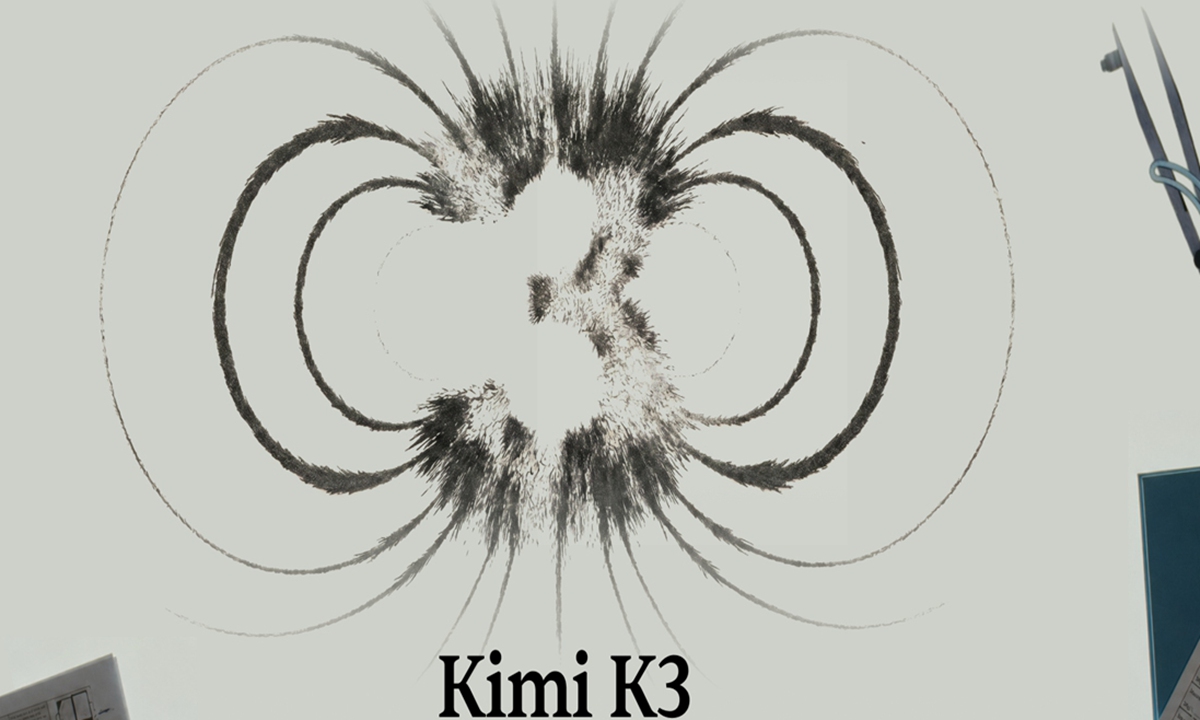
Photo: Courtesy of Moonshot AI
The launch of the Kimi K3 large model bears witness to a "Chinese approach" distinct from the West's more closed pathways, adding a new chapter to the triumph of open-source principles. The technological catch-up of China's AI large models belongs not only to China, but also to the world.
Chinese AI start-up Moonshot AI has recently unveiled its next-generation model, Kimi K3, which is currently the world's largest open-source model by parameter scale. Within a day of its release, Kimi K3 topped the internationally recognized Frontend Code Arena and delivered strong performances across multiple benchmark tests. Foreign media described the model as "impressive," sparking not only amaze across the AI industry but also triggering alarm in Silicon Valley and Washington. Some US media outlets even went so far as to claim that "China just erased America's AI lead."
Amid the varied international voices, it is important to maintain a sober sense of self-awareness. On the one hand, the achievement is something to be proud of. With 2.8 trillion parameters, a one-million-token context window and native multimodal understanding, Kimi K3 demonstrates that China's large models have reached world-class competitiveness in the open-source arena. On the other hand, we have not yet reached the stage of "comprehensive superiority."
The US continues to hold significant advantages in frontier closed-source models, the chip ecosystem, talent concentration, and commercialization. Claims that Chinese AI is about to "defeat the US" cannot be ruled out as merely a pretext for intensifying US chip embargoes and expanding technology blockades against China. Every step of China's AI development has been achieved through steady, down-to-earth efforts. Its value needs no definition from others, nor should it be misled by hyperbolic and exaggerated praise from the outside.
As for the clamor of the so-called "China theft" narrative, it is time for it to come to an end. Such noises merely reflect the discomfort of some Western commentators with the fact that "China is capable of sustained innovation" - in essence, it is nothing more than a habitual emotional outburst. The breakthrough of Kimi K3 lies at its core in independently developed foundational model architectures and a complete set of scientific model training methodologies - something that could never be achieved by simply copying Western models.
Western models also make extensive use of publicly available global data, including content from China. On what grounds, then, can they accuse China of "theft" while describing their own practice as "legitimate reference"? This is double standards.
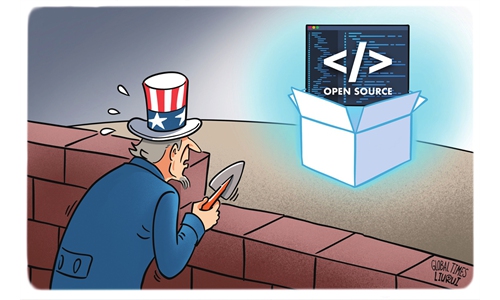
In fact, Kimi K3's greatest strengths lie in its open-source model and cost efficiency. Compared with many high-priced proprietary models developed in the West, Kimi K3 delivers near-frontier performance at a much lower cost. More importantly, it has given a tremendous morale boost to the global open-source AI ecosystem.
According to Moonshot AI, the full model weights of Kimi K3 will be released before July 27, allowing developers worldwide to download, deploy, and build upon the model. This means that cutting-edge large-model capabilities are no longer merely profit-making tools monopolized by a handful of companies but have become a shared starting point for developers worldwide.
Today, the cumulative downloads of China's open-source large AI models have surpassed 10 billion. Rather than weakening the competitiveness of Chinese enterprises, open-sourcing has allowed competitiveness to take root in the global innovation ecosystem, benefiting small- and medium-sized enterprises around the world - including those in the US. This shows that AI development is not a zero-sum game, but a fertile ground for shared innovation by all of humanity.
If, when DeepSeek first burst onto the scene last year, the Western world largely regarded it as an "unexpected breakthrough" or even as a stroke of "luck" for a Chinese startup under specific circumstances, then the debut of Zhipu's GLM 5.2 last month and now Kimi K3 has quietly reshaped this narrative. They have led the world to recognize China's capacity for "sustainable innovation." The continuous breakthroughs of China's large models prove that Western technological containment and suppression have not stifled China. Instead, they have accelerated the rapid construction of a domestic innovation chain, demonstrating the resilience of China's technological development under constraints. Western media coverage of Kimi K3 - whether measured, exaggerated, or smearing - reveals not only an acknowledgment of China's technological progress, but also an underlying anxiety over the failure of containing China.
The release of Kimi K3 coincided with the 2026 World AI Conference (WAIC) and High-Level Meeting on Global AI Governance held in Shanghai. This is no coincidence. It illustrates the fertile ground underpinning China's AI breakthroughs: a vast talent pipeline in science and engineering, abundant real-world application scenarios, full industrial chain coordination, and strategic deployment at the national strategic level. These are the very foundations of China's sustainable competitiveness in AI. The success of K3 does not belong to a single company alone - it represents the collective achievement of a thriving Chinese AI ecosystem.
"AI development should not be a solo performance by a single country, but a symphony of international cooperation," Chinese President Xi Jinping mentioned this in his keynote speech at the opening ceremony of the 2026 WAIC and High-Level Meeting on Global AI Governance. This sentence was widely cited by international media, sparking global deeper reflection on the digital age. The launch of the Kimi K3 large model bears witness to a "Chinese approach" distinct from the West's more closed pathways, adding a new chapter to the triumph of open-source principles. The technological catch-up of China's AI large models belongs not only to China, but also to the world.
RELATED ARTICLES