China reaffirms support for ASEAN centrality in regional cooperation ahead of foreign ministers’ meeting
By Published: Jul 20, 2026 04:19 PM

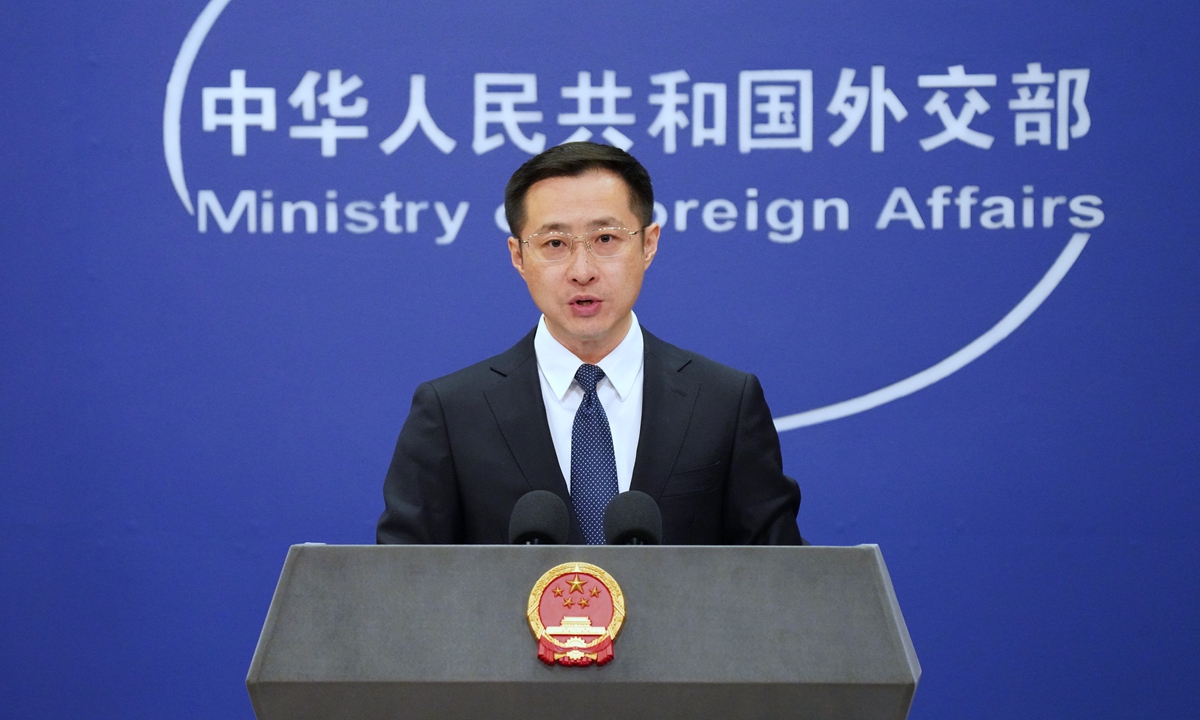
Chinese Foreign Ministry spokesperson Lin Jian
Member of the Political Bureau of the CPC Central Committee and Foreign Minister Wang Yi will attend the China-ASEAN Foreign Ministers' Meeting in Manila, the Philippines, on July 22, the Chinese Foreign Ministry announced on Monday.
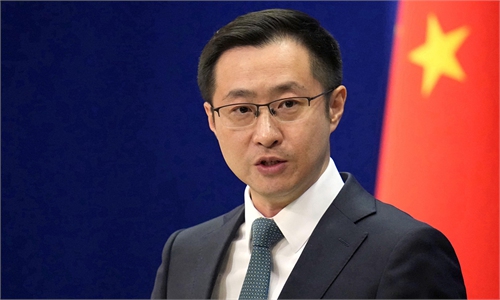
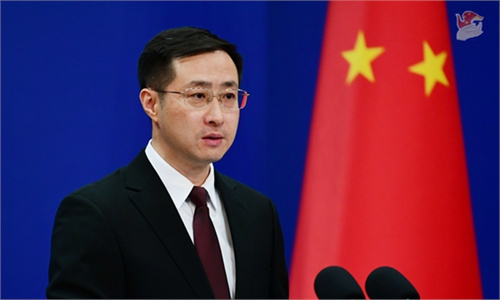
Following the announcement, Chinese Foreign Ministry spokesperson Lin Jian said on Monday that ASEAN is a friendly close neighbor, an important cooperation partner, and a priority in China's neighborhood diplomacy. China supports ASEAN centrality in the regional cooperation architecture and hopes to see booming East Asia cooperation contributing more to stability, development and prosperity in the region and beyond, Lin said.
While some Western media put the spotlight on topics including the South China Sea issue, claiming that this is among a number of "regional disputes" and "poses a broader challenge to ASEAN unity," Chinese experts noted that some foreign media have placed the South China Sea issue at the center of China-ASEAN relations, attempting to amplify differences and disrupt China-ASEAN cooperation.
This year marks the beginning of China's 15th Five-Year Plan period and the fifth anniversary of the establishment of the China-ASEAN comprehensive strategic partnership. Under the strategic guidance of leaders of the two sides, China-ASEAN relations have been growing with sound momentum, Lin said.
"At the upcoming Foreign Ministers' Meeting, we look forward to expanding consensus on development and cooperation, making new progress in jointly fostering a peaceful, safe and secure, prosperous, beautiful and amicable home, and striving to forge a closer China-ASEAN community with a shared future," the spokesperson said.
The Philippines holds the 11-nation regional bloc's chairmanship this year and is hosting the three-day talks in Manila, the media report said.
Energy and food security, South China Sea tensions are among the issues under scrutiny, according to Channel News Asia on Monday.
The South China Sea poses a broader challenge to ASEAN unity, Japanese media outlet Nikkei claimed on Monday, noting that the issue is especially important to the Philippines, this year's ASEAN chair, and Vietnam.
The meeting came after China firmly rejected joint hype on the 10th anniversary of the illegal "South China Sea arbitration award" on July 12, urging relevant countries to stop stirring up trouble on the South China Sea issue, and stop undermining peace and stability in the South China Sea.
In recent years, China and ASEAN have continued to advance dialogue mechanisms aimed at maintaining stability in the South China Sea, while consultations on the Code of Conduct (COC) in the South China Sea have also moved forward steadily. These efforts have become important measures for promoting regional peace and stability, Ge Hongliang, deputy director of the College of ASEAN Studies at Guangxi University for Nationalities, told the Global Times on Monday.
"Therefore, apart from the South China Sea frictions involving the Philippines, the issue has not, on the whole, posed a substantive challenge to or undermined China-ASEAN relations. The vast majority of ASEAN countries recognize both the importance of the South China Sea issue and the fact that maintaining regional stability serves the common interests of all parties," Ge said.
On May 21, China and ASEAN countries held the 26th ASEAN-China Senior Officials' Meeting (SOM) on the Implementation of the Declaration on the Conduct of Parties in the South China Sea (DOC) in Kuala Lumpur, Malaysia, according to the Chinese Foreign Ministry.
The parties attending the meeting unanimously underscored the importance of maintaining peace and tranquility in the South China Sea, and reaffirmed their commitment to continuing the full and effective implementation of the DOC, strengthening dialogue and consultation, exercising self-restraint, properly managing differences, deepening maritime practical cooperation, and keeping the situation in the South China Sea stable, the ministry said.
Philippine media claimed that Philippine Foreign Affairs Secretary Maria Theresa Lazaro is set to meet with Chinese Foreign Minister Wang Yi during this week's meeting, Chinese Foreign Ministry spokesperson Lin Jian said that further information will be released in due course when asked about this meeting.
US Secretary of State Marco Rubio is also set to travel to the Philippines to attend the 59th ASEAN Foreign Ministers' Meeting, according to Reuters.
"The South China Sea issue is not a matter concerning China's overall relations with ASEAN, nor is it an issue of ASEAN itself. Rather, it is a specific issue involving some ASEAN member states. At present, attempts by countries outside the region to interfere with broader China-ASEAN cooperation, including cooperation in the Asia-Pacific region, are unlikely to succeed," Zhou Shixin, director of the Center of Southeast Asia Studies, Shanghai Institutes for International Studies, told the Global Times on Monday.
China and ASEAN countries, particularly at the bilateral level, have developed extensive and in-depth cooperation, and reached a series of cooperation agreements and common understandings through joint statements and other mechanisms, Zhou said, noting that the two sides have also established institutionalized cooperation frameworks, including a free trade agreement.
"Such institutionalized cooperation has strong resilience and will not be disrupted by provocations or interference from individual countries," the expert added.
RELATED ARTICLES