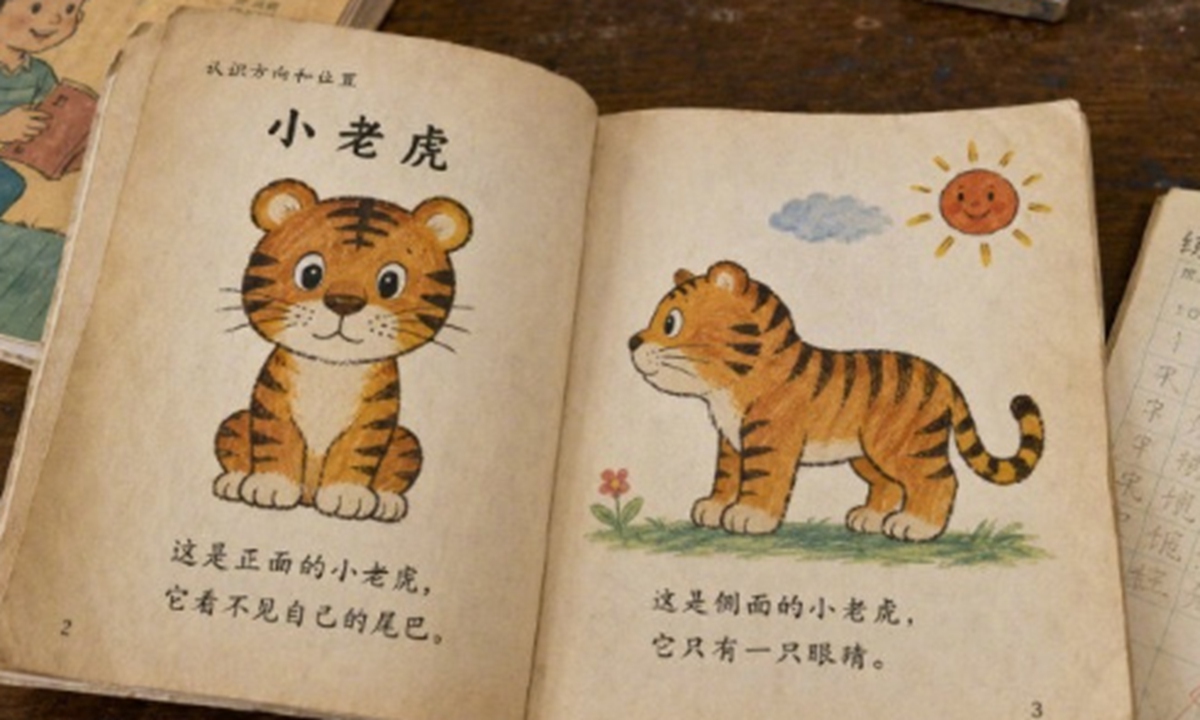
Screenshot of an online picture from Sina Weibo used to explain the Two Tigers nursery-rhyme
"Two tigers, two tigers, running fast, running fast..." This Chinese children's song, which has accompanied generations across the Taiwan Straits, recently became a trending topic again due to an online "truth‑revealing" activity, with Taiwan netizens joining in as well. Some said it teaches children to distinguish between "front" and "side"; others associated it with the folk symbolism of tiger‑head shoes; some traced its melody back to a French nursery rhyme later adapted into a revolutionary song. What was originally a warm nostalgic online discussion has now alarmed pro‑independence media and "Taiwan independence" separatist forces on the island, who have slapped the rhyme with the labels of "united front work against Taiwan" and "political conspiracy."
The song Two Tigers itself is not strange; what is strange is the minds of the "Taiwan independence" separatist forces. Over the years, in order to sever cross-Straits ties, these forces have become so paranoid that they see a "conspiracy of infiltration" in virtually any cultural content with a mainland connection. Even Mazu, Guan Gong, short dramas, and pop songs have been stigmatized by them as "united front tools." They keep crying "the wolf is coming," essentially using the pretext of "protecting Taiwan" to deceive the people in Taiwan, inflame cross-Straits confrontation, and attempt to completely detach Taiwan from the mainland - all in pursuit of their own political interests in separating the island of Taiwan from the Chinese mainland.
The nursery rhyme Two Tigers is sung by people on the mainland and in the Taiwan region, and by Chinese communities around the world. It carries a shared cultural memory and a common recognition of ethnic roots. If even this can be labeled as a "united front tool," one can't help but ask: Who on earth is not "in league with the the Communist Party of China"? The more insecure the "Taiwan independence" separatist forces feel, the bigger the labels they throw; the louder they shout, the more panicked they are inside. They fear the two sides of the Taiwan Straits draw closer; they fear that children on the island, humming the same melody and hearing the same stories, might realize they are no different from children in the mainland. Intimidated by the growing cultural influence of the mainland, they become so scared that even the tigers in the nursery rhyme are turned into "real tigers" to them.
This self‑deceiving farce may fool people for a while, but not forever. More and more Taiwan people have seen through the absurdity of "Taiwan independence" separatist forces, and some have even created satirical versions such as "Two Bluebirds" and "Two Frogs" to mock its ridiculousness. "Two bluebirds, two bluebirds, can't fly high, can't fly high. One has no brain, one cannot think, led by the nose, led by the nose." Those who insist on turning Two Tigers into "political tigers" will end up like the "tea-egg" incident - a laughingstock for people on both sides of the Taiwan Straits.