IN-DEPTH / IN-DEPTH
Exclusive: New NHK documentary shines light on Japanese Unit 731’s buried war horrors, proving historical truth can never be erased
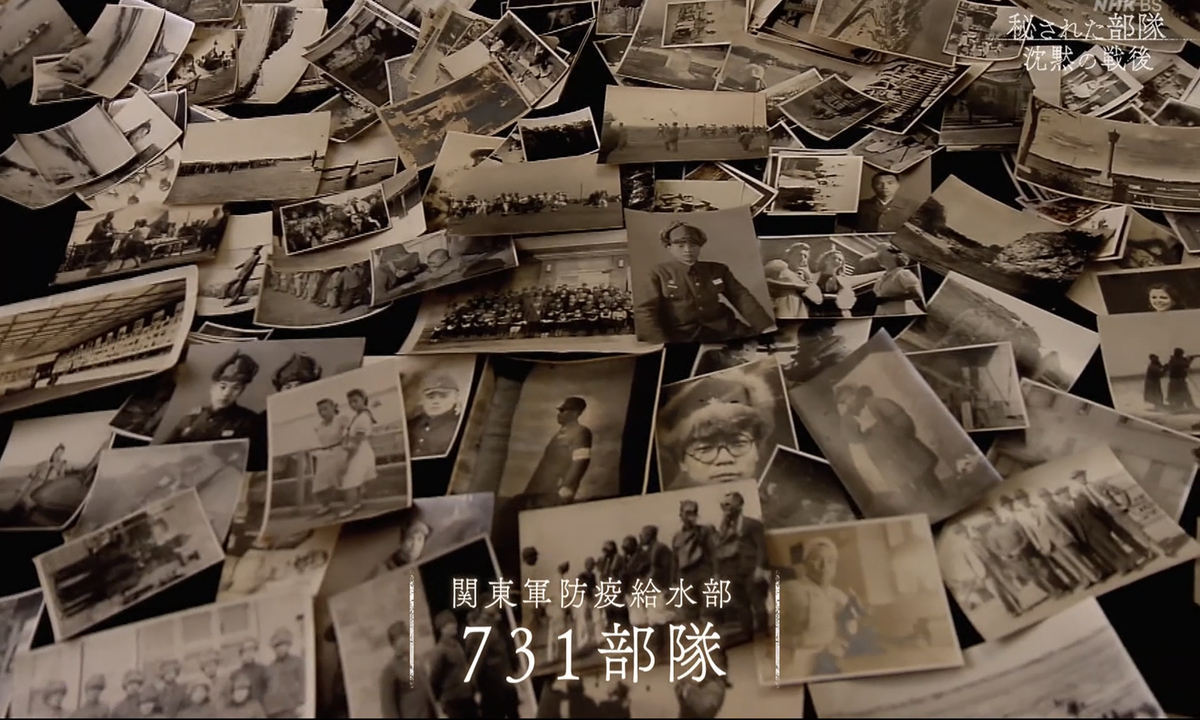
Old photographs documenting the crimes of Unit 731 Photo: Screenshot from A Secret Unit: The Silent Postwar Era
From the night of Tuesday to the early hours of Wednesday local time, Japan's NHK aired a documentary centering on Unit 731, the notorious Japanese germ-warfare detachment established during World War II, titled A Secret Unit: The Silent Postwar Era. Although the documentary was broadcast on NHK's BS satellite channel, which has a relatively limited reach, and was not made available on platforms such as YouTube, reporters with the Global Times secured exclusive access to the full documentary and gained a complete view of its content.
The proprietor of a secondhand bookstore in Shizuoka Prefecture, central Japan, stumbled upon over 200 long-forgotten vintage photographs. These images stand as damning evidence of the human experiments widely conducted by Unit 731 in the puppet state of "Manchukuo" to develop biological weapons.
Shortly before Japan's defeat in 1945, Unit 731 blew up its research facilities in a bid to erase all traces of its atrocities and imposed a gag order on its members, forbidding them from disclosing any details of their experiences. What unspeakable crimes did these cold-blooded executioners commit? What sort of lives did they lead in the postwar years?
Using this cache of old photographs as its narrative thread, NHK's production team traveled to Shizuoka, Nagano and other prefectures to interview more than a dozen former Unit 731 members and their bereaved families. The documentary lays bare the grim realities of how rank-and-file soldiers, military physicians and officers perpetrated atrocities during the war, then concealed their heinous crimes after Japan's surrender.
Cross-verified by a wealth of first-hand footage, personal journals and historical archives, the documentary also uncovered a chapter of history deliberately buried by the Japanese government for decades after the war.
Issei Hironaka, an associate professor from Aichi Gakuin University in Japan and a leading scholar on Unit 731 research, appears as a featured commentator in the documentary. In an exclusive interview with the Global Times, Hironaka said that historical truth can never be fully erased.
As time passes, growing volumes of archives have been declassified, and descendants of survivors and perpetrators alike have stepped forward to share their stories, gradually reconstructing the full scope of Unit 731's atrocities.
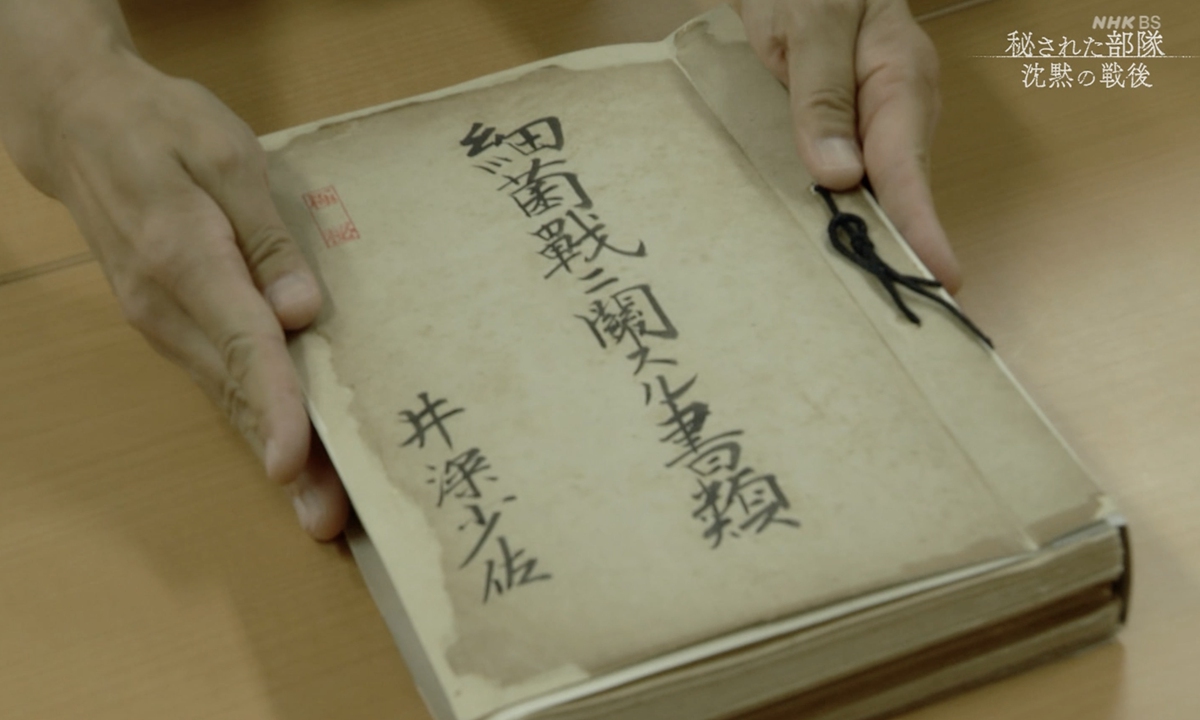
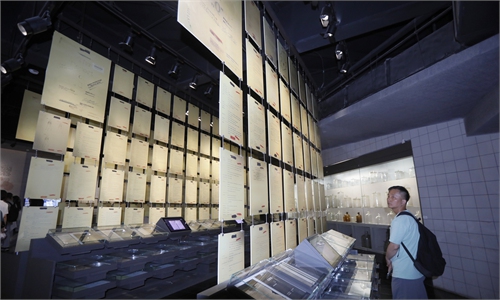
A stack of documents related to biological warfare committed by Japanese invaders Photo: Screenshot from A Secret Unit: The Silent Postwar Era
New light on buried atrocities
Unit 731 set up its headquarters on the outskirts of Harbin in "Manchukuo," under the command of the infamous Shiro Ishii. The unit rounded up Chinese, Russian and other nationals, whom its personnel dehumanizingly dubbed "maruta" - "human test subjects." These captives were forcibly infected with lethal pathogens, or subjected to trials of unrefined vaccines. At least 3,000 people perished in these atrocities.
As Unit 731 operated as a top-secret institution from its inception, with all operations strictly concealed from the outside world, "the release of these photographs casts a brand-new light on this dark chapter long buried from public view. Visual archive materials of this exact kind have barely surfaced before," Hironaka told the Global Times. As Japan's defeat loomed in 1945, Ishii issued a sweeping gag order to every member: they were forbidden from contacting one another; prohibited from mentioning the unit's name or base location to outsiders; and banned from listing their affiliation or wartime duties on job applications. This severe suppression explains the scarcity of surviving archives and firsthand witness testimonies. The photographs, preserved for over 80 years, were likely smuggled back to Japan by former unit members, serving as direct physical evidence of Unit 731's war crimes.
Hironaka recounted that the NHK production team used the cache of photographs as a core lead. They cross-referenced each picture against the unit's wartime roster recording all staff members released in 1945 - and validated the evidence against other unearthed historical records, untangling layer upon layer of hidden historical details.
The team ultimately verified the service records and family backgrounds of 26 former troops pictured in the photos, paid door-to-door visits to their households, and secured brand-new documentary materials that brought Unit 731's long-concealed history to light.
NHK previously released two documentaries related to Unit 731 in 2017 and 2018. Hironaka told the Global Times that NHK's earlier productions largely centered on the so-called "elite scholars" who carried out human testing - officers educated at top institutions including the University of Tokyo and Kyoto University. This latest documentary, by contrast, shifts its lens to ordinary rank-and-file troops, granting global audiences a far more holistic understanding of how Unit 731 functioned day-to-day.
Hironaka himself had been involved in the production of this documentary for roughly two years before its broadcast, attending meetings with the director, conducting field interviews, examining historical facts, and offering professional insights. The planning for the documentary had begun even earlier, with many other scholars providing assistance, and the production team invested a considerable amount of time in the entire process.
CG technology reconstructs 'devil's base'
The production team, in collaboration with architectural and historical experts, used computer graphics (CG) technology to recreate the full 2-square-kilometer layout of Unit 731's headquarters, based on aerial photographs, archival records, and archaeological data from the site's foundations. The living quarters for members and their families included an assembly hall, art exhibitions, and movie screenings. The quarters also had a shrine, and a sports field next to the shrine hosted athletic meets, allowing Unit 731 members to "go about their daily lives."
The section where human experiments were conducted was the headquarters area, completely sealed off by barbed wire. The main building was a three-story structure over 10 meters tall, arranged in a square. Buildings No. 7 and No. 8 in the center were called the "Special Prison," the core site where human experiments were performed on "maruta." A medical orderly who served there left testimony: "This month's work continues to be the repeated injection of typhoid vaccine into test subjects."
Ultimately, these individuals had only one fate - being used as consumable materials for various experiments until they lost their lives.
Tadao Nozaki, now 86, was born in "Manchukuo" in 1940. His father, Yukiro Nozaki, was a military doctor in Unit 731. He still has vivid memories of his father's brutality. In the documentary, Tadao recalls an incident when a pig owned by a Chinese man trampled the flowers in their yard. His father pressed the muzzle of his gun against the man's head and threatened to "shoot him dead."
"More than the fact that my father was a former Unit 731 member, what I find harder to accept is that he could take a life so casually, without any hesitation," Tadao said. After the war, his father opened a clinic in Nagano Prefecture, often boasting about his time in Unit 731, telling stories such as releasing food laced with plague bacteria to spread disease. He considered these "accomplishments" to be proud of. "Whenever I think that I am the child of such a person, I feel a mix of emotions."
Tadao's case is rare. More commonly, these mass murderers escaped prosecution after the war, returned to their families, and played the role of "good fathers" in the eyes of their children.
Genjiro Yabuki, another Unit 731 military doctor, regarded Ishii as his "benefactor" who changed his life. Despite testimony that his medical unit had poisoned 40 "maruta" who had outlived their usefulness on the eve of Japan's defeat, his son says bluntly in the documentary, "I instinctively don't believe that."
Ironically, Genjiro went to the US for advanced studies after the war and opened an obstetrics and gynecology clinic, "personally welcoming countless new lives into the world."
These descendants of perpetrators appear on camera, unashamedly defending their fathers' actions. Do they truly understand the truth of that history? And how do they really feel as Unit 731's atrocities are gradually exposed? Regrettably, the NHK documentary offers no answers to these questions.
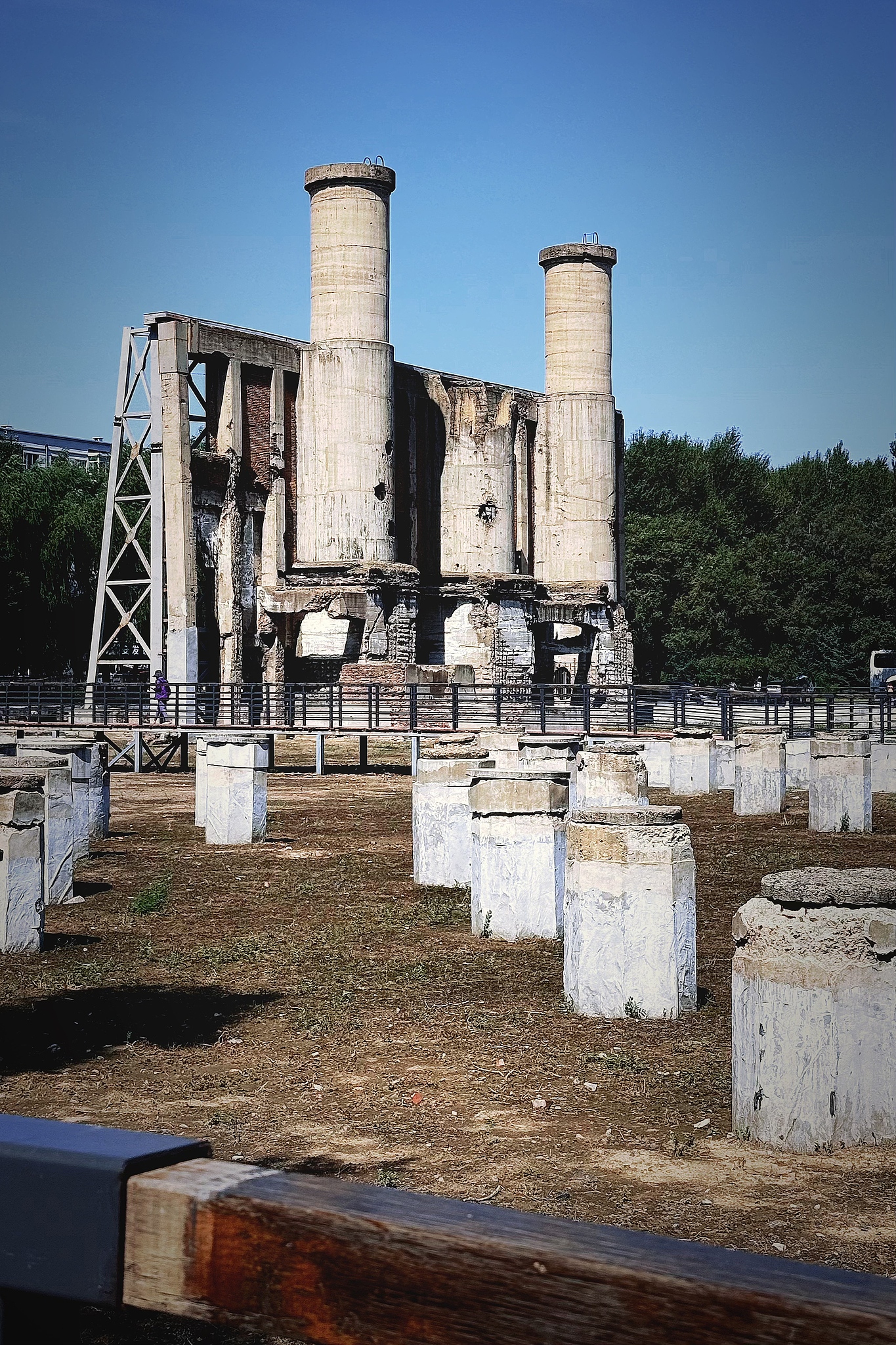
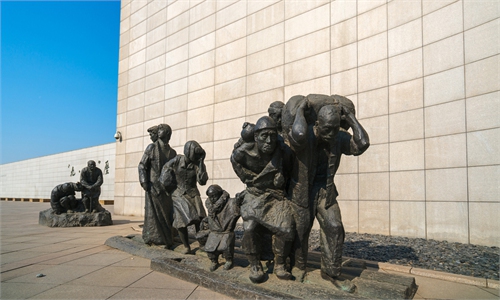
A view of the former site of Unit 731 in Harbin, Northeast China's Heilongjiang Province Photo: VCG
Truth can never be completely erased
Channel NewsAsia (CNA) recently produced and aired a documentary series titled Inside Unit 731: Japan's Secret Human Experiments, which sparked strong reactions worldwide. The evidence of Unit 731's crimes in China and Southeast Asia is ironclad.
Why, then, has Japan long seen phenomena of denial, evasion, or even glorification of this history? Hironaka told the Global Times that one major reason, in his view, is that after the war, Ishii used Unit 731's human experiment and germ weapon development data as a bargaining chip to strike a secret deal with the US, escaping war crimes prosecution. This deal not only allowed most Unit 731 members to avoid accountability but also ensured that a vast number of war crimes were deliberately concealed. Consequently, these perpetrators never truly reflected on their war guilt.
Hironaka explained that after returning to Japan, these individuals faced no punishment. Instead, they leveraged the "research results" and "medical experience" they brought back from Unit 731 to secure prominent positions in Japan's medical, political, and business circles, forming a deeply entrenched network of interests. A few former members who were troubled by their consciences mostly chose to live out their lives in silence.
The documentary mentions Juro Wada, a former Unit 731 member who could not come to terms with the war crimes. In his later years, he handed over his small shipbuilding company to his son and devoted the rest of his life to investigating the truth about Unit 731.
He wrote repeatedly to other former members, pleading with them to testify and provide historical materials. Those who replied, however, said they "did not want to recall the past," while others bluntly stated, "I run a hospital now; I don't want to talk about those days."
On the eve of defeat, Unit 731 deliberately destroyed facilities and burned documents to erase evidence. Despite this, over the 80-plus years since the war, new photographs, diaries, and materials have continued to surface.
"Historical truth can never be completely erased," Hironaka said. Crimes against humanity on the scale of Unit 731 - massive, organized, and systematic - can never have all their evidence destroyed.
The documentary ends by posing a question: As more and more photographs and archives of those who lived through that era come to light, what lessons should we, living in an age of peace, draw from them?
Hironaka stated that Japan inflicted deep wounds of war on many Asian countries and bears an inescapable historical responsibility. Humanity cannot predict the future, but it can learn from history. The current military expansion in Japan is essentially a result of its long-standing neglect and avoidance of its history of aggression.
RELATED ARTICLES