Illustration: Chen Xia/GT
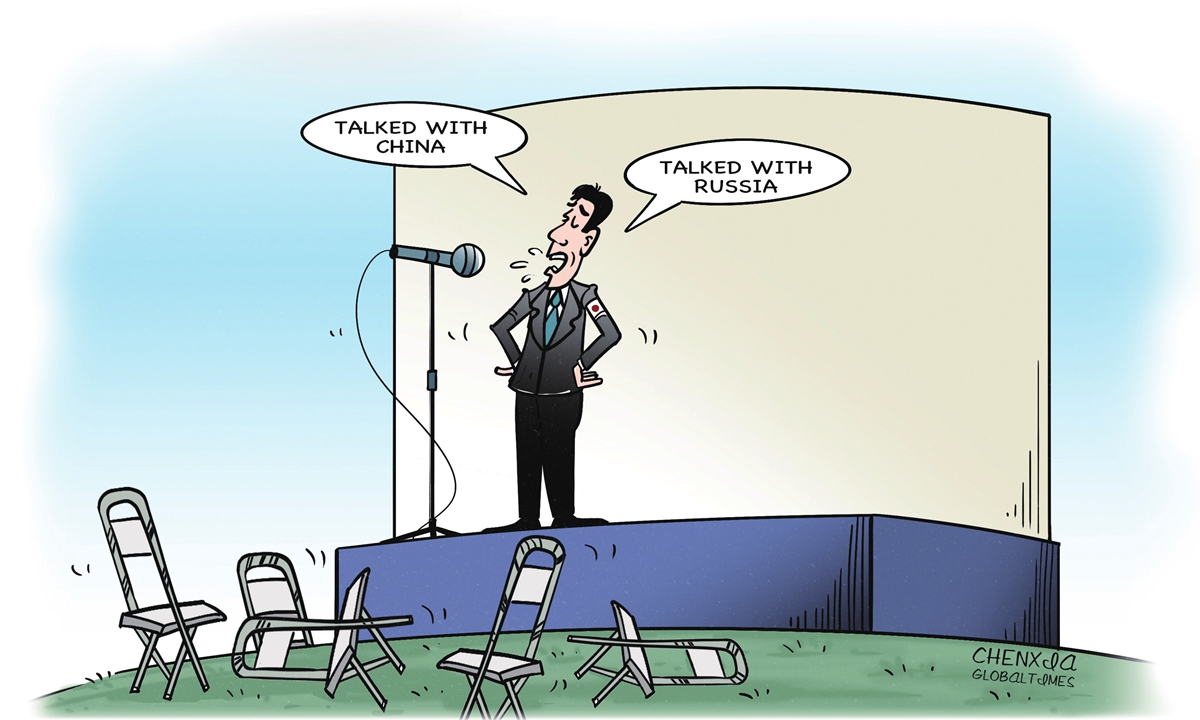
Has Japanese diplomacy really sunk so low that a hallway brush-past and a polite nod now count as "diplomatic dialogue"?At his recent press conference, Japanese Foreign Minister Toshimitsu Motegi claimed he had spoken with Chinese Foreign Minister Wang Yi and Russian Foreign Minister Sergey Lavrov while attending the ASEAN Foreign Ministers' Meeting. Touching upon China, Motegi said both sides spoke about bilateral relations, and Motegi reiterated that it is crucial to continue dialogue. With Russia, he also claimed the two sides exchanged opinions on bilateral ties and the regional situation. It sounded like two formal engagements.
Then reality intervened. Even though Motegi insisted the talk was real, the Chinese Foreign Ministry reaffirmed on Monday that Foreign Minister Wang had no arrangement for meeting with the Japanese side on his agenda during his recent stay in Manila, nor did he engage in any conversation with the Japanese side. Not to mention, as of press time, there has been no photo, no video, nothing about this talk.
And according to the official representative of the Russian Foreign Ministry, Maria Zakharova, Motegi approached Lavrov, greeted him and said some few words. Lavrov answered with a protocol phrase "without getting up, half-turned … That is all. There was no discussion of international affairs, the regional agenda or bilateral relations."
The truth brings an awkward question: Has Japanese diplomacy reached the point where chance encounters and small talk must be inflated into something resembling foreign policy moves?
Tokyo's calculation is easy enough to read. At home, it is performance: an attempt to show that "we are still managing the relationship." Even if ties are strained, at least Japan took the initiative, so any blame can be shifted outward. Abroad, it is a two-for-one move: signaling to Washington and its Western allies that Japan still has room to maneuver while sending a softer message to Beijing and Moscow - "We may provoke you often, but we can still talk."
It looks less like diplomacy. Tokyo only highlights its awkward position in the region: Lacking both the sincerity to change course and the weight to shape foreign relations, it can only manufacture the appearance of relevance.
China and Russia's reactions have already made their stance clear. For Moscow, Japan has not only followed Western sanctions but has continued to tighten NATO-Asia linkages, turning itself into a real variable in the Far East security equation. For Beijing, Japan's erroneous remarks on the Taiwan question, combined with its constant probing in the East and South China Seas, continue to fray regional stability.
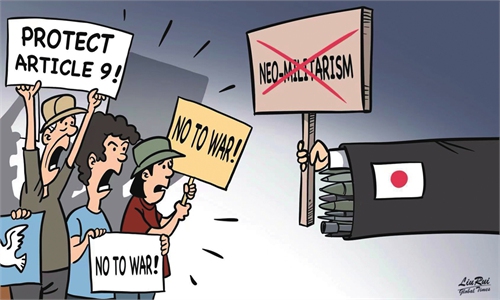
What concerns both even more is Japan's clear military expansion: defense budgets hitting successive historic highs, long-range missiles on order, hypersonic systems being accelerated, deeper US-Japan military integration, and increasingly open discussions about revising the pacifist constitution and discarding postwar restraints.
Tokyo cannot continue expanding its military capabilities and heightening regional tensions, then expect a brief corridor encounter or a polite greeting to steady relations. That is not diplomacy - it is self-deception.
Diplomacy runs on sincerity, not media stunts. If Tokyo truly wants dialogue, it needs to adopt a posture that makes dialogue possible - not merely an "open-for-talk" gesture in public while continuing obstruction in practice.
Japan went quiet after the denials. That silence says everything. Tokyo knew it was trying to fake a moment that never happened. Pushing the story only highlights the real issue: Japanese diplomacy has little substance left. When a country's main approach is small theatrics, getting nothing more than a cold nod should come as no surprise.
Instead of carefully mapping "chance encounter" routes through conference corridors, Tokyo should ask a harder question: Why can the Chinese and Russian foreign ministers sit down for hours with each other, yet spare Japan not even a minute of small talk?
International relations still reward substance over performance. When a hallway brush-past or a greeting has to be sold as diplomacy, the problem is already obvious.
RELATED ARTICLES