Illustration: Liu Xiangya/GT
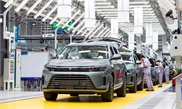
Volkswagen on Monday issued a statement denying media reports claiming that Volkswagen Group CEO Oliver Blume had urged the EU to impose higher tariffs on Chinese plug-in hybrid cars. Blume did not explicitly advocate for tariffs, but rather called for examining a wide range of potential solutions to ensure a level playing field between Europe and other regions of the world, according to a statement Volkswagen sent to the Global Times.
This swift clarification not only responded to market unease but also highlighted the carmaker's caution regarding an issue with profound trade implications.
Since 2024, the EU has imposed an additional tariff of up to 35.3 percent on imported electric vehicles (EVs) made in China on top of the EU's standard 10 percent import duty for cars. Several media reports suggested recently that the European Commission planned to impose countervailing duties on Chinese plug-in hybrid cars.
In terms of market performance, plug-in hybrid cars have already outperformed EVs in the European market. Although sales of fully electric cars made up 22.6 percent of cars registered in the EU in December 2025, surpassing those of fuel-only vehicles in the EU for the first time, hybrid cars continued to lead the market with a 44 percent share, according to data from the auto industry group ACEA.
The rapid expansion of Chinese hybrid brands in Europe has been particularly remarkable. Manufacturers including BYD Co and Chery Automobile Co grabbed a record 34 percent share of plug-in hybrid deliveries in June, according to data from analysts at Dataforce.
While this robust performance is partly attributable to the fact that plug‑in hybrids currently face the standard 10 percent EU import duty without extra tariffs, what deserves greater attention is the rapid rise in consumer acceptance. European buyers are finding that plug‑in hybrids effectively address their demands for lower carbon emissions and economic practicality. If the EU arbitrarily imposed additional tariffs on plug‑in hybrids, it would deliver a direct blow to a growing market demand by directly raising the purchase cost for European consumers.
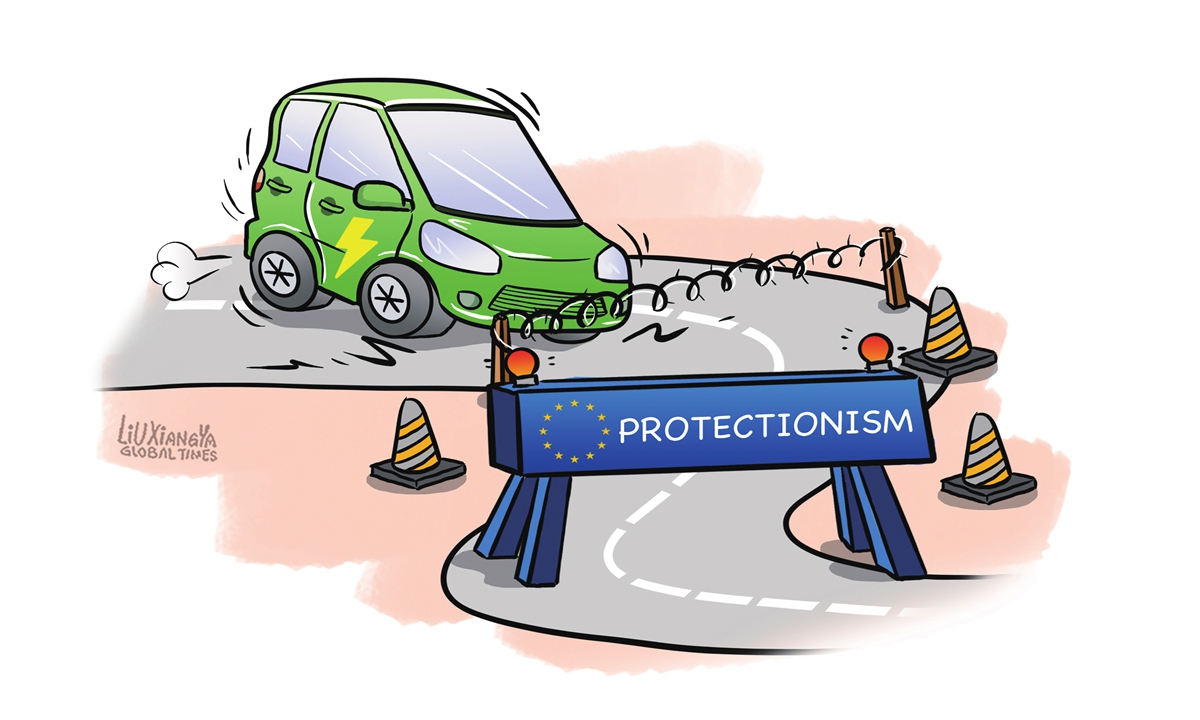
Any EU attempt to adopt tariff barriers in the name of "fair competition" will essentially constitute trade protectionism that distorts market rules. For the domestic auto industry, substituting competition with tariff walls would, on the surface, appear to protect local players, but in the long run, it would weaken European automakers' motivation to catch up in the plug‑in hybrids track and hinder the overall progress of Europe's energy transition.
Furthermore, the deep-rooted industrial bond between China and Europe makes unilateral protectionist moves extremely risky. German automakers have long been deeply embedded in the Chinese market, leveraging China's complete industrial supply chain and vast consumer base to secure massive revenues. The automotive industries of the two sides have formed a mutually beneficial and complementary ecosystem. Therefore, despite competitive pressures in the European market, they are unwilling to see protectionist measures undermine years of cooperative foundation in China.
China's stance on trade issues with the EU has always been clear. "China is not the root cause of Europe's economic and trade problems, but a partner that can help solve them. Protectionism leads nowhere; win-win cooperation is the right path," Lin Weilong, an official of the Ministry of Commerce (MOFCOM), said on Tuesday at a press conference.
Apparently, from Volkswagen's clarification to the MOFCOM's comments, and from actual consumer demand to intertwined industrial ties, all signs serve as unmistakable reminder that the EU needs to exercise caution before making any trade measure decision. Protectionist impulses may temporarily appease certain political demands, but they cannot override market laws. What the EU needs is not new barriers, but to listen to more rational voices from the market before it is too late.
RELATED ARTICLES