Illustration: Chen Xia/GT
Recently, IAEA Director General Rafael Grossi, former Chilean president Michelle Bachelet, Secretary-General of UN Trade and Development Rebeca Grynspan, former Senegalese President Macky Sall, former Ecuadorian foreign minister María Fernanda Espinosa and Guyana's Permanent Representative to the UN Carolyn Rodrigues-Birkett visited China one after another. Chinese Foreign Minister Wang Yi held separate meetings with each of them. They all share one common identity: candidates for the next UN secretary-general.The UN secretary-general is one of the most high-profile figures on the international stage, often called the "world's chief diplomat." The post involves attending major international conferences, traveling between countries to deliver speeches, mediating disputes and promoting cooperation. Current Secretary-General António Guterres will conclude his 10-year term at the end of this year. Who will succeed him and lead this most universal, authoritative and representative intergovernmental organization has drawn widespread attention.
The six individuals mentioned above have all received formal nominations, along with the recently nominated former Ugandan foreign minister Olara Otunnu. Looking at their resumes, every one of them is a seasoned international politician or diplomat with extensive bilateral experience. Videos of their interactive dialogues with the UN General Assembly show candidates full of passion for the multilateral cause, vowing to lead the UN toward a better future.
Born from the ruins of World War II, the UN has now traversed 80 years. As it stands at the threshold of its next 80 years, what kind of leader does the organization need?
In May this year, while chairing a UNSC meeting in New York, Chinese Foreign Minister Wang Yi set out China's expectations for the next secretary-general: First, to be firmly committed to upholding the purposes and principles of the UN Charter. Second, to have rich diplomatic and political experience and strong coordination capability. Third, to be able to uphold justice on major issues, in particular, to pay attention to the interests and aspirations of developing countries. Fourth, to be able to keep the UN reform on the right track to increase efficiency and effectiveness. These four criteria can be summed up as: "commitment to the UN Charter; outstanding competency; integrity and impartiality; and initiative to take responsibility and deliver."
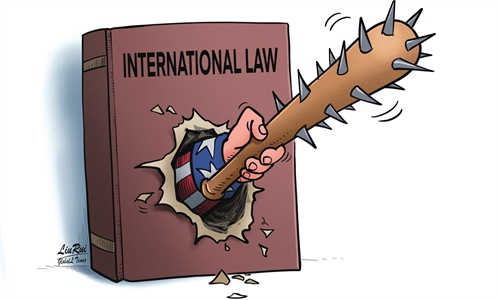
Upholding the Charter is the foremost duty. The UN Charter establishes the principles of sovereign equality, non-interference in internal affairs and the prohibition of the threat or use of force. The secretary-general is the primary practitioner and guardian of these principles, legally responsible for conducting UN affairs and advancing multilateral governance in accordance with the Charter. The vitality of the Charter is deeply bound up with this role. Today, the authority of the Charter as the cornerstone of the postwar international order is under challenge, and its core principles are repeatedly trampled by certain major powers. The next secretary-general must firmly defend the Charter, promote its spirit and maintain its authority.
Outstanding capability is essential for the weight of the office. Managing more than 30,000 staff, engaging with 193 member states, and confronting global challenges such as war, hunger and climate change demands exceptional talent and unyielding determination. Beyond basic political and diplomatic literacy, multilingual skills and cross-cultural competence, the secretary-general must possess the stature to speak credibly with all parties, the experience to handle complex problems and delicate relationships, and a pragmatic spirit that turns commitments into tangible results.
Fairness and integrity are the shared expectation of member states. Former secretary-general Ban Ki-moon once stated bluntly that the UN secretary-general must be impartial, but not neutral. As the most representative international organization, the UN should balance the concerns of countries at different stages of development. Yet developing countries, which form the majority of the membership, remain relatively weak in terms of participation, voice and decision-making power, and their positions on many issues are often overlooked. The next secretary-general should be objective and fair-minded, and listen more attentively to the legitimate voices of developing countries.
Fulfilling responsibilities with resolve is an urgent need for reform. Over the past 80 years, the UN has made indelible contributions to world peace and development, yet it inevitably suffers from overlapping functions, redundant mandates and other "big-company diseases." The refusal of some member states to pay their assessed contributions has further exposed the organization's difficulties. Guterres has already launched the "UN80 Initiative" aimed at cutting costs, improving efficiency and revitalizing the organization. This reform agenda will inevitably be passed on to the next secretary-general. Whether the new leader can correctly grasp the direction of reform and guide the UN through its challenges is a question that must be answered well.
Although the UN's political credibility has faced questions in recent years, a Pew Research Center survey covering 25 countries found that 61 percent of respondents still hold a positive view of the Organization, showing that most of the public continues to recognize its role in global governance.
In reality, the international community's expectations of the UN and its secretary-general are quite straightforward: Can the new leader help reduce regional conflicts and speed up economic recovery? Can he or she uphold principles on issues of right and wrong? Can he or she take proper account of the legitimate concerns and interests of all parties?
Whoever is elected, one red line must be clearly understood: the one-China principle. UNGA Resolution 2758 must remain the guiding standard for the secretary-general and the secretariat under his or her leadership. Previous secretaries-general have all recognized the sensitivity of the Taiwan question. An official legal opinion of the UN Office of Legal Affairs has also made clear that "Taiwan, as a province of China, has no independent status." There is every reason to believe that the current candidates will not make mistakes on this matter.
The next UN secretary-general is expected to be selected before the end of this year and to take office at the beginning of next year. In his memoirs, the first secretary-general, Trygve Lie, recalled greeting his successor Dag Hammarskjöld at the airport and reflecting that the post of UN secretary-general is "the most impossible job in the world." Nevertheless, we remain confident that the new secretary-general will live up to expectations, actively address the complex international situation and various crises and challenges, and lead the UN in playing an important role in the common cause of promoting peace and development for all humanity.
The author is an observer on international affairs. opinion@globaltimes.com.cn
RELATED ARTICLES