Illustration: Xia Qing/GT
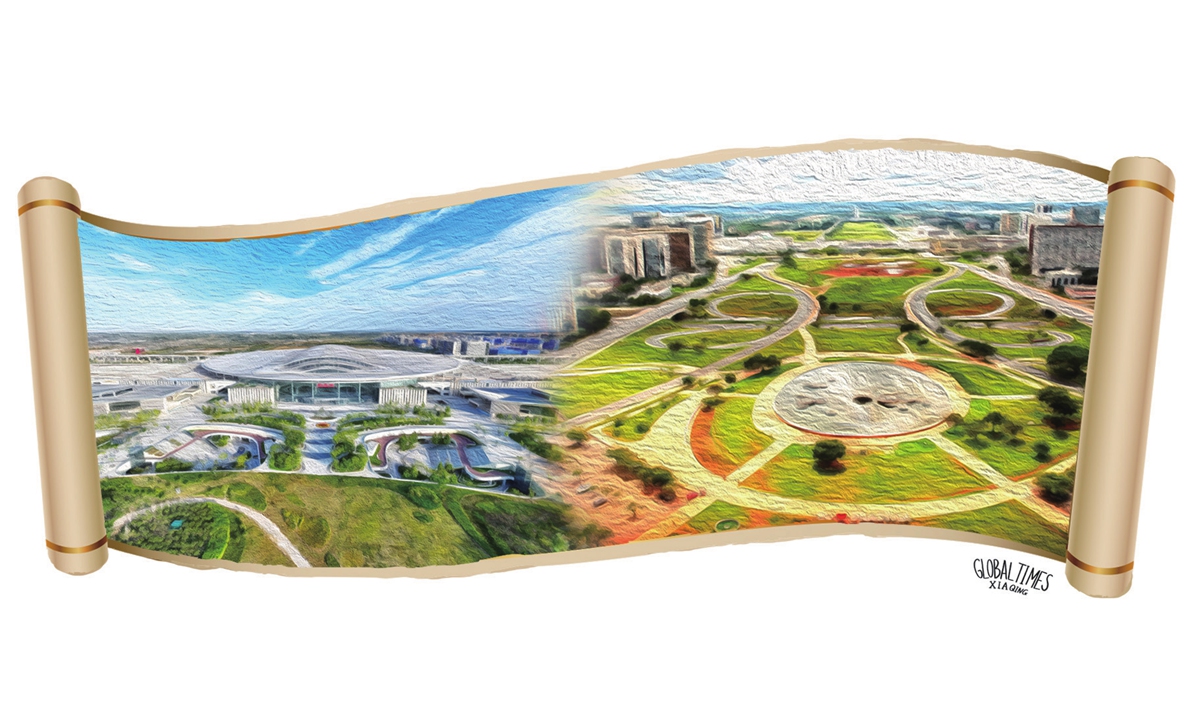
Recently, my Brazilian friend Leo returned from a visit to China's Xiong'an New Area and texted me a single note: "I was amazed."As he wandered through what is widely known as China's "city of the future," the entire scene reminded him strongly of his home country's capital. "It feels like Brasilia in many ways," he told me.
The wide, orderly avenues, the top-down master planning, and the sense of building an entirely new urban landscape from scratch all echoed the bold vision behind Brazil's capital. Brasilia, Brazil's planned capital developed in the late 1950s by Lúcio Costa, Oscar Niemeyer, and Joaquim Cardozo, was built from a national ambition to shift the political center inland from Rio de Janeiro.
Brasilia's bold modernist architecture and innovative urban design earned it UNESCO World Heritage status in 1987 and later recognition as a UNESCO Creative City of Design. More than six decades on, Brasilia remains a living, evolving capital. Its continuous population growth demands thoughtful modernization, particularly in the constant upgrading of infrastructure, public services, and urban livability.
Originally planned for roughly one million residents, the Brasilia metropolitan area now houses around three million people. This growth makes continuous investment in infrastructure essential, particularly in public transportation and, above all, the expansion of the metro system.
It is against this backdrop that Leo sees some reference value in Xiong'an, especially in terms of smart urban planning, green development, intelligent infrastructure, and high-quality community services.
In his eyes, the two cities share deep similarities. Both emerged from national moments of optimism and ambition, embodying their countries' confidence in shaping a better future. Both feature expansive artificial lakes that enhance beauty and integrate urban life with nature.
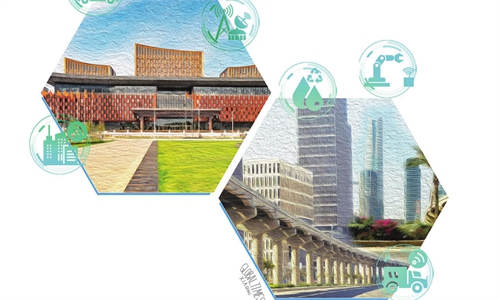
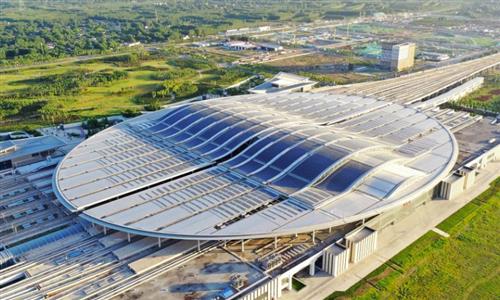
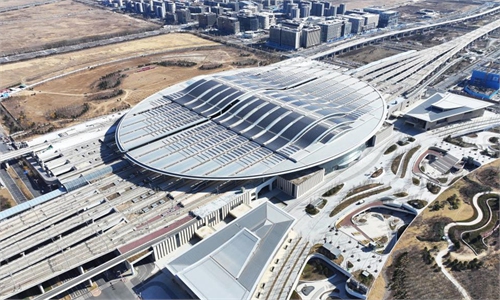
I visited Xiong'an shortly after Leo's trip. Like him, I arrived prepared for monumental construction and left moved by how thoughtfully the city is coming together. What struck me most wasn't merely the staggering pace of building a new urban center for millions from farmland in under a decade, but the invisible systems that make daily life smoother, more sustainable, and quietly humane.
As our car glided along wide, tree-lined avenues during a summer rain, I noticed the absence of overhead wires and utility poles. Xiong'an had prioritized building its utility infrastructure first. During the downpour, the city's "sponge city" design sprang into action - permeable pavements, rain gardens, and wetlands absorbed, filtered, and stored rainwater for later reuse, with embedded sensors monitoring levels in real time.
Then there's the 15-minute life circle. Community canteens, clinics, schools, supermarkets, parks, and senior centers are all within walking or biking distance. Digital platforms connect services seamlessly, while sensors manage traffic, waste, and energy. The city feels vibrant yet remarkably calm — alive with purpose but free of the usual urban frenzy.
These innovations carry clear practical implications for Brasilia's ongoing modernization. As the capital invests in metro expansion and urban upgrades to accommodate its growing population, the experience of Xiong'an offers proven lessons: prioritizing underground utilities and integrating smart systems early. Its ecological "sponge" approaches and human-scale neighborhood planning provide practical models for creating more resilient, livable districts without the disruptions of later retrofits.
Walking through exhibition centers, I saw models and simulations revealing a deeper philosophy. Xiong'an is being cultivated as a smart, green, and innovative ecosystem, not merely constructed.
These elements highlight what connects Xiong'an and Brasilia across decades and continents: the courage to imagine and build anew when capitals strain under their own success. Both projects embody a nation's desire to redistribute opportunity and relieve pressure on historic centers. Time and technology, however, create meaningful differences. Xiong'an layers in advanced systems from day one - underground logistics, real-time AI oversight, and ecological integration that learns from past urban challenges worldwide - providing timely lessons for Brasilia as it continues to grow and modernize.
Leo pointed out one meaningful distinction: Brasilia is mature, while Xiong'an is still emerging with cutting-edge transportation and smart-city tools. "In fact, I think Brasilia and Xiong'an should become sister cities, creating opportunities to exchange experiences and best practices in sustainable urban development and improving the quality of life of their citizens," Leo suggested.
Standing on a quiet bridge overlooking one of new lakes in Xiong'an, I felt a quiet hope. Cities are never finished; they are ongoing stories. Xiong'an writes its chapter by drawing wisdom from past experiments - including the successes and lessons of places like Brasilia - while weaving intelligent systems that evolve with people's needs.
For all planned cities dreaming of tomorrow, the message is clear: The most visionary cities are not those that merely impress on paper, but those that quietly, intelligently, work for the people who call them home.
The author is director of the In-depth Department of the Global Times. The article was originally published in Brasil 247. xiewenting@globaltimes.com.cn
RELATED ARTICLES