Taiwan society needs to understand the crucial signals from these two major meetings: Hai Feng
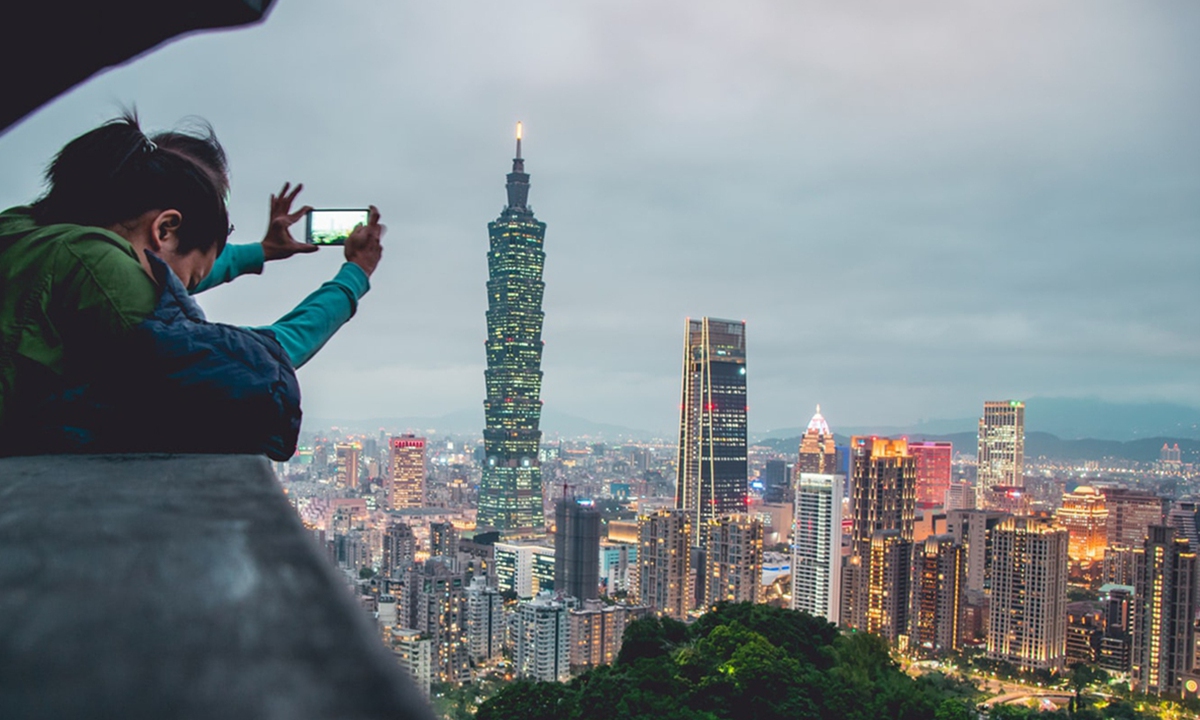
Taiwan Photo: Unsplash
Two high-stakes meetings were recently convened on the Chinese mainland. The first one was the meeting of the Political Bureau of the Communist Party of China (CPC) Central Committee on Thursday, which decided to hold the fifth plenary session of the 20th CPC Central Committee in October while analyzing and studying the current economic situation, and made arrangements for economic work in the second half of this year. The second is the CPC Central Committee's symposium with non-CPC personages on July 24, which sought opinions and suggestions on China's current economic situation and economic work for the second half of 2026.For Taiwan society, what truly warrants attention from these two meetings is not merely the specific policy items, but the unmistakable reality they demonstrate: the CPC is the core, most stable, and most capable political leadership driving contemporary China. Gaining a deep understanding of the CPC's governance capability is paramount for the society of the island of Taiwan.
For a long time, Taiwan society has harbored a major cognitive misconception: attempting to parse the Chinese mainland's political operations through the lens of Taiwan's partisan infighting or Western electoral frameworks. The result is almost always skewed perceptions and repeated misjudgments. The underlying logic of the mainland's governance is not driven by short-term electoral gains, nor is it a chaotic turnover of "different actors taking turns on stage." Rather, it is the continuous forward motion of state governance sustained by the CPC's powerful organizational, strategic, mobilization, and execution capabilities. These two meetings are a concentrated manifestation of that very principle.
To understand the meeting on Thursday, one must grasp a fundamental fact: The mainland does not "plug the holes after problems arise"; it manages the broader picture with a constant focus on medium- to long-term development. On the one hand, this meeting scheduled the fifth plenary session of the 20th CPC Central Committee to study key issues concerning the relentless advance of full and rigorous Party self-governance. On the other, it deployed economic strategies for the second half of the year.
Party governance and state governance as well as political integrity and economic development are integrated and planned under a single strategic blueprint. This underscores that the CPC never cares only about development achievements while ignoring political foundations, nor does it focus solely on economic growth while neglecting organizational development. The fundamental reason why the mainland maintains stability amid complex situations is that it possesses a strong leadership core capable of continuous self-reform, self-correction, and self-reinforcement.
To understand arrangements for economic work, one must understand the CPC's governance capacity. The meeting offered a lucid assessment of the current economic climate - affirming positive changes while confronting real challenges head-on; stressing firm confidence alongside counter-cyclical adjustments; and proposing steps to expand domestic demand and optimize supply, while deploying measures to stabilize the real estate market, advance financial reforms to mitigate risks, and enhance the resilience and confidence of capital markets. This is not treating symptoms in isolation, but a textbook display of systemic governance capacity.
More importantly, the meeting signaled a clear message: economic work on the mainland in the second half of the year will not be passively reactive, but proactively assertive. A more proactive fiscal policy, a moderately loose monetary policy, intensified efforts to boost domestic demand and optimize supply, solid progress on the "Six Networks" infrastructure planning, the development of new smart economy paradigms, continued comprehensive rectifications of cutthroat competition, an improved growth environment for the private economy, and concrete measures to guarantee and enhance public wellbeing... This complete array of arrangements shows that while the mainland is not immune to pressures, it possesses clear countermeasures; while it faces challenges, it holds the institutional design and restorative capacity to address them.
The symposium for non-CPC personages also serves to help Taiwan society recognize objective reality. Many hold a stereotype of the mainland's politics, assuming its operations are strictly one-dimensional. This symposium proved quite the opposite: under the leadership of the CPC, the mainland's political operations feature broad consultation, centralized integration, and highly efficient execution. Democratic parties, the All-China Federation of Industry and Commerce, and personages without party affiliation put forward suggestions on economic work, which the CPC Central Committee consolidated, assessed, and translated into policy deployments. This is neither the friction of partisan political squabbling, nor a flashy yet divisive political show, but a mode of governance that builds a unified consensus around national goals, backed by a strong central mechanism to drive implementation.
Why must Taiwan society get a clear read on this? Because one's perception of the CPC dictates one's judgment of the mainland's future - and that judgment, in turn, directly shapes how Taiwan views cross-Straits relations, its own prospects, and the overarching trends of the era. If one views the mainland as a system prone to stalling under pressure, derailing under challenges, or destabilizing during transitions, miscalculations are bound to follow. Yet, it is precisely when under pressure that the CPC exhibits its strongest organizational, regulatory, and self-correcting power. And it is precisely at critical junctures that the Party's strategic resolve and execution power stand out.
In the final analysis, the most crucial signal these two meetings send to Taiwan society is not just that the mainland will stabilize growth, expand domestic demand, and promote transformation in the second half of the year, but that the CPC firmly holds the steering wheel, tempo, and stabilizer of China's development. Only by reading this correctly can Taiwan society truly understand today's mainland, while failing to do so will leave it trapped in outdated imaginations, old biases, and persistent misjudgments.
What Taiwan society truly needs is not a fragmented understanding of isolated policy news, but a holistic awareness of the CPC's governance capability. Only by understanding the CPC first can one truly understand the mainland; and only by understanding the mainland can one see clearly where the future trajectory of cross-Straits relations inevitably lies.
RELATED ARTICLES