Both sides of the Taiwan Straits and both sides of the Pacific need to understand the CPC through these two important speeches: Hai Feng

A view of the Taiwan Straits is seen from Xiamen port in East China's Fujian Province. Photo: IC
On July 1, President Xi Jinping, general secretary of the Communist Party of China (CPC) Central Committee, addressed a gathering in celebration of the 105th anniversary of the founding of the Party. The sentence, "Time stops for no one, and neither does history," resonated profoundly and inspiringly.Just six days later, Xi made the remarks at a meeting in Beijing that brought together the national science and technology award conference, the general assemblies of the members of the Chinese Academy of Sciences and the Chinese Academy of Engineering, and the 11th national congress of the China Association for Science and Technology. Faced with the new round of sci-tech revolution and industrial transformation, which is profoundly changing the way humanity produces and lives, as well as the landscape of global development, he made another weighty remark: "The situation urges and compels us."
When these two sentences are viewed together, many issues become clear.
Why does the CPC always manage to determine the correct direction at critical moments? Why does it remain neither hesitant nor restless amid major changes? Why does it not become complacent in the face of achievements, shy away from problems or retreat in the face of risks? The answers lie within these two important speeches.
The statement "Time stops for no one, and neither does history" refers to the position in history - the great rejuvenation of the Chinese nation cannot be delayed. The statement "The situation urges and compels us" indicates that we cannot fall behind in the wave of sci-tech revolution. Together, they embody the most distinctive governing stance of the CPC today: always standing at the forefront of the times, always remaining extraordinarily sober.
This is also the reality that both sides of the Taiwan Straits and both sides of the Pacific must understand today.
When discussing cross-Straits issues today, one cannot focus solely on both sides of the Taiwan Straits but must also consider both sides of the Pacific and understand the broader context of China-US competition, East Asia, North America and even global geopolitical shifts. In other words, the Taiwan question is no longer just about China's reunification; it is closely related to national comprehensive strength, strategic determination, technological capabilities and security building. Those who fail to grasp this will fail to understand today's CPC.
Let's look at the first important speech.
The speech commemorating the 105th anniversary of the Party's founding summarized the key secret behind "why the CPC can succeed."
It is because the CPC remains committed to seeking truth and always adheres to the right direction; it is deeply rooted in the people, and always boasts a solid foundation; it courageously rises to its historic missions and always keeps a strategic initiative in hand; it follows the development trend, and always remains at the forefront of the times; it has the courage and ability to fight and is always confident about winning; it focuses on constant self-improvement, and is always full of vitality.
Particularly noteworthy are two points: "always remains at the forefront of the times" and "always full of vitality." The CPC is never a party that relies solely on historical inertia; it is a party that continually adjusts, reinforces and renews itself in response to changing times. Its most admirable trait isn't just its size, organization or mobilization capacity, but that it never sees its success as the endpoint. The more successful it is, the more it is aware that problems lie ahead; the closer it gets to its goals, the more it understands that risks never fully disappear.
Thus, the speech ends with a warning and an inspiring reminder: "Time stops for no one, and neither does history." This phrase conveys a sense of urgency as well as political judgment. The process of national rejuvenation must "race against time, seize opportunities and accelerate the pace." Because every day of delay diminishes the chance; every slow step risks losing initiative. This reflects the historical sobriety of the CPC today.
Now, let's turn to the second important speech.
At the national science and technology award conference, the speech appeared to focus on science and technology, but in reality, it was about the future of the nation. Xi provided a comprehensive overview of artificial intelligence: Currently, artificial intelligence is flourishing, driven by key elements such as data, computing power and algorithms, and grounded in theoretical breakthroughs and interdisciplinary integration across fields like neuroscience, cognitive science, computational science and mathematics. Characterized by collective breakthroughs in cutting-edge intelligent technologies and their widespread, empowering application, it exhibits distinctive features such as data-driven operations, the interconnection of all things, human-machine collaboration and cross-sector integration.
This is a message to the entire Party, the nation and even the world: The CPC regards AI and the new wave of sci-tech revolution as crucial variables determining the future of the country.
The following phrase, "The situation urges and compels us," warrants careful analysis.
The word "urge" indicates that opportunities are already present; "compel" shows that competition will not wait, and blockades will not stop. Those who cannot grasp AI will miss the industries of the future; those who do not master core technologies will lose control over development; those who fall behind in this revolution will become passive in national competition.
Viewing these two speeches together, the first answers the question: "What enables a century-old Party to keep moving forward?" The second answers: "What allows a century-old Party to win the future?" The former focuses on direction; the latter on the means of implementation.
This is the background of today's situation across the Taiwan Straits. When it comes to this region, many often focus on arms sales, military exercises or political statements. But the true determinants of the future of the Taiwan Straits are not just tactical moves, but more the strategic arrangements behind the scenes. The CPC is integrating China's reunification, technological strength, industrial upgrading, maritime governance, military modernization and international competition capacity into a unified strategic blueprint, advancing them in tandem.
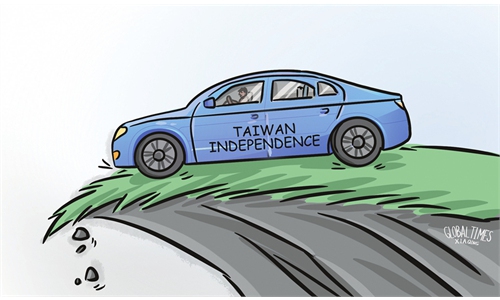
This is the most important reality that both sides of the Taiwan Straits and both sides of the Pacific must recognize. To this day, certain forces on the island remain delusional, believing they can buy time by relying on the US to seek "Taiwan independence." They imagine that by stalling cross-Straits relations, slowing down the mainland's pace of development and drawing in external forces as much as possible, they can push the prospect of reunification further and further away. On the contrary, it is very clear from these two speeches that neither time nor the situation is on the side of "Taiwan independence" separatist forces. Time accelerates the process of national rejuvenation, and the changing circumstances push for the upgrading of national capabilities. Both factors are squeezing the strategic space for "Taiwan independence" separatist forces.
The Taiwan question has become a contest of comprehensive strength. Maritime law enforcement, military deterrence, technological breakthroughs, industrial resilience, youth talent reserves and institutional mobilization are all concrete expressions of strength. Why are the US and Japan becoming more anxious? Not because they suddenly care about the livelihoods of the people in Taiwan, but because they are increasingly aware that once China completes simultaneous leaps in technology, industry, military power, maritime rights and regional order, the initiative regarding the situation in the Taiwan Straits will be firmly in China's hands.
Behind these two speeches lies a clear Chinese logic: Draw political steadfastness from the Party's century-long history and shape strategic initiative through the technological revolution; anchor national goals in the national rejuvenation and drive capability upgrades through real-world struggles; align our course with historic mission and accelerate our pace in the face of contemporary challenges.
Today, the CPC's most distinctive trait is not only its strength but also its sobriety; not merely steadfastness, but steadfastness grounded in sobriety; not merely self-confidence, but self-confidence grounded in sobriety; and not merely the courage to struggle, but a sober understanding of the direction in which to struggle and the capabilities required to do so.
Understanding this point is key to understanding why the CPC has come this far and how it will move forward. A Party that always stands at the forefront of the times and remains highly sober is an essential force that both sides of the Taiwan Straits and both sides of the Pacific must take seriously.
RELATED ARTICLES