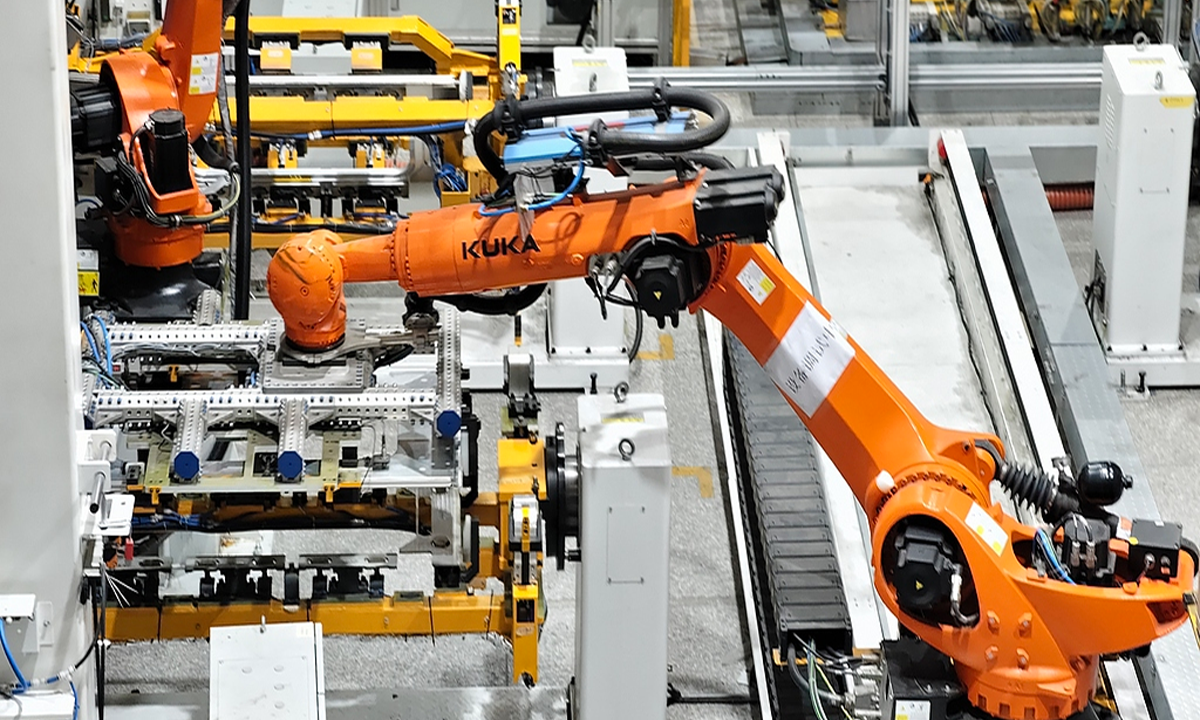
Robotic arms perform precision operations at an intelligent factory in Nanjing, East China's Jiangsu Province, on September 20, 2025. Photo: VCG
The "new new three" — artificial intelligence (AI), robotics and innovative medicine — have rapidly gaining momentum and are poised to become the new pillars of China's overall growth. Amid global supply chain shift and growing tech competition, these sectors not only shoulder the important task of shifting the engines of growth but also mark China's manufacturing transition from quantitative expansion to qualitative leap.
Unlike the "Old Three," new industrial sectors represented by robotics have from the very outset led the country to build up ecosystems and technological leadership, taking on the strategic mission of evolving from exporting products to exporting solutions, and from a single market to global collaboration.
In 2025, China's industrial robotics sector achieved a historic turning point, with annual exports surpassing imports for the first time. By June of this year, export momentum has remained strong, with industrial robots export growing 18.6 percent year-on-year, and surgical robots export soaring by 3.3 times. The overseas market footprint expanded rapidly from 23 countries and regions to 49, covering both developed countries and emerging market economies.
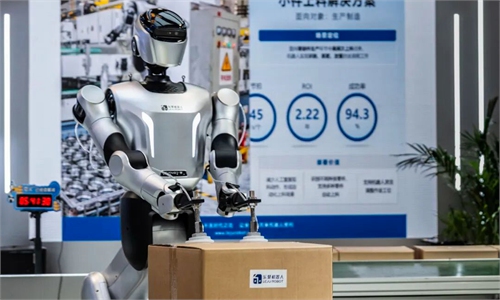
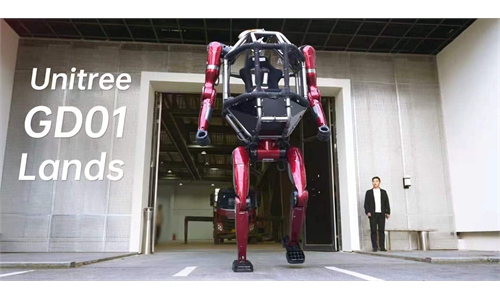
In niche segments, domestically produced quadruped robots now account for nearly 70 percent of global sales, while humanoid robots make up more than half of global shipments.
China's robotics industry is going global at an unprecedented pace — the fruit of years of technology buildup and industrial upgrading, resulting from the "Intelligent Manufacturing in China" initiative. It is a vivid testament to the vitality of the new quality productive forces.
China didn't become a robotics export powerhouse overnight — it's the result of many years of indigenous market building and continuous iteration.
The world's largest industrial manufacturing system, the most diverse services landscape, and the most diverse application scenarios in the country have provided a natural testing ground for domestically developed robotics technology.
From auto welding and electronics assembly to warehouse sorting, medical aid, and emergency response, all kinds of tech approaches can be tested, iterated, and refined through real-world problem-solving — culminating in dependable, market-oriented smart solutions.
Collaborative robots illustrate the point. Domestic makers, working closely with flexible 3C and appliance lines, can go from requirements to prototype delivery in six months — far faster than their global rivals. This "homegrown testing" approach enables quick adaptation overseas: humanoid robots at Tokyo's Haneda and quadruped robots inspecting steps at Mexico's World Cup venues. In Southeast Asian factories, Middle Eastern oilfields, or South American mines, local conditions and habits can be readily accommodated with tailored hardware-software tuning.
By contrast, established overseas brands are typically designed for standard Western factory settings and struggle with high heat, humidity, or unstable power grids — often floundering in emerging markets. This edge gave Chinese robotics companies their first overseas foothold and is now driving real order growth.
This strong adaptability stems not just from "homegrown training" but also from China's deep industrial ecosystem. Over more than a decade, China has built a full-chain system covering core components, chips, sensors, operating systems, and system integration — with robotics now serving 71 industry categories and 241 sub-categories. At the same time, rising localization of key components has made the supply chain increasingly resilient and self-reliant.
A single product can break through, but taking an entire industry global demands systematic collaboration across the supply chain — R&D, capacity, and after-sales working in concert. This ecosystem is the true engine behind the collective rise of China's robotics sector.
China's massive production scale keeps R&D and manufacturing costs low, while a robust supply chain shortens delivery times. High-quality machines, bundled with maintenance, training, and software services, amplify the synergy. These three competitive edges stack up to form a solid launchpad for global expansion. The shift from import reliance to global reach marks the culmination of systemic capabilities maturing from quantity to quality — and a key milestone for "Intelligent Manufacturing in China" on the world stage.
As China's manufacturing capability rises, the global push is shifting from "selling products" to "selling solutions" and from "spot sales" to "ecosystem building." Domestic firms now offer overseas clients full-process custom solutions — line planning, automation, integration, remote maintenance, software updates — while bringing parts suppliers, integrators, and training services abroad to build localized service networks in target markets.
In a Thai auto parts plant, Chinese robots handle welding and logistics while at the same time optimizing the entire line via digital twins. At a German logistics hub, Chinese AMRs integrate seamlessly with local systems to boost efficiency. These solutions and ecosystems bear the new hallmark of "Intelligent Manufacturing in China."
This shift stems from sound policy-market interplay. China has designated embodied intelligence and other strategic sectors as priorities for new quality productive forces, issuing multiple plans — rather than the "market distortion" criticism sometimes raised in Western discourse, but a classic export-oriented nurturing model. Policy cuts early costs and provides a home platform, but competitiveness must be proven in global markets. Through facing gaps, gaining experience, and finding their path, Chinese robotics firms have broken new ground. Robotics, in short, captures the essence of "Intelligent Manufacturing in China" going global and standing firm.
Each Chinese robot going global marks a new chapter in China's industrial ascent — proof that a latecomer can climb the value chain, relying on indigenous innovation, and global engagement. The "new new three" are expanding worldwide, and "Intelligent Manufacturing in China" will keep fueling global modernization, fostering inclusive, sustainable growth, and shaping a more prosperous future through shared progress.
Lu Xinhong is a research fellow at the China Center for International Economic Exchanges with Chinese Academy of Social Sciences. bizopinion@globaltimes.com.cn
RELATED ARTICLES