Illustration: Xia Qing/GT
Recently, Chen Pei-chi, the wife of Ko Wen-je, former chairperson of Taiwan's People's Party, traveled to the Chinese mainland with their son. After returning to Taiwan, she shared her experiences on social media, sparking heated debate across the island.Chen's mainland trip has struck a raw nerve with the Democratic Progressive Party (DPP). What rankles the DPP is not her visits to Shanghai, Hangzhou and Beijing, nor her quick assistance to a child suffering a sudden illness aboard a high‑speed train. Rather, it is the fact that, coming from a profile hardly expected to grab the spotlight, she has effortlessly dismantled the "anti‑mainland fear‑mongering" narrative that the green camp has assiduously built over the years.
As a doctor, Chen traveled to the mainland for a nine‑day, eight‑night trip in July, accompanied by her son. Upon her return, she jotted down a few casual observations on Facebook: just two yuan to ride the bus, stumbling upon self‑driving taxis, giving on‑the‑spot help to a sick passenger on a high‑speed train, and full, transparent disclosure of her travel expenses…
What was an ordinary family trip to the mainland quickly morphed into a political smear campaign on the island: from investigating "who footed the bill" to questioning whether "it was all scripted," and finally labeling her a "united‑front showcase." A regular leisure trip to the mainland has ended up subject to multi‑layer scrutiny by Taiwan authorities over funding, motives and contacts. This shows that what the DPP fears most is ordinary Taiwan residents visiting the mainland in person - because the reality of the mainland would expose the lies the DPP has been weaving for years as baseless.
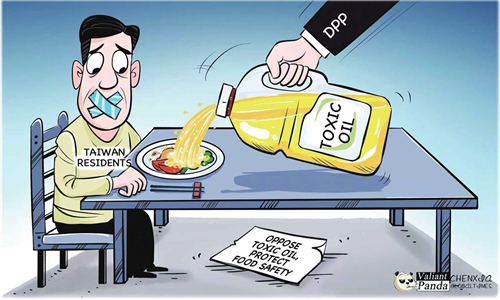
Over the years, the green camp's core political ploy has been to frame the Chinese mainland as a fictional foe to be feared, shunned and confronted. It seeks to convince the Taiwan public that the mainland is "dangerous," "backward" and "unfree," and that going there could even result in "disappearance" or "organ harvesting."
What the DPP is truly bent on doing is cementing an information echo chamber. The further apart the two sides of the Taiwan Straits are kept, and the more blurred Taiwan residents' understanding becomes, the longer the political racket of "resisting the Chinese mainland to protect Taiwan" can keep running.
Chen didn't say, "The mainland is wonderful"; instead, she let the real-life details speak for themselves: public transportation costing just two or three yuan, seamless QR code payments, self-driving taxis, on-the-spot rescues on trains, easily verifiable travel itineraries and photos, and more.
These everyday details are free of ideology, yet they are most effective at breaking down ideological barriers. The pan‑green camp can repeat a hundred times that the mainland is "terrifying," yet it cannot stop an ordinary Taiwan resident from taking a real trip there.
Chen is not the "pro-unification figure" the green camp imagines; in fact, she had even long been viewed as someone with "pan‑green leanings." It is precisely this identity that lends her observations greater persuasive force. Had such remarks come from an outspoken pan‑blue figure, the pan‑green camp could have resorted to its usual playbook: slapping labels and dismissing them as "premeditated." Yet here is someone who was never part of their narrative script, dismantling the fabricated "horror‑story version of the Chinese mainland" through first‑hand experiences.
The fiercer the "Bluebird" trolls lash out at Chen, the clearer it becomes that their fear is not directed at her personally, but the growing number of ordinary people in Taiwan behind her: those who no longer imagine the mainland solely through the distorting lens of green media, but verify reality for themselves; those who refuse to be trapped within perceptions fabricated by online troll armies and instead take the initiative to tell fact from fiction.
The real challenge confronting the DPP today is no longer whether "a certain individual has visited the Chinese mainland." Rather, a growing number of compatriots across the Straits are voting with their feet. In the first half of 2026, cross-Straits personnel exchanges hit 3.12 million visits, including 2.85 million visits by Taiwan compatriots to the mainland, representing year‑on‑year increases of 22.1 percent and 24.9 percent, respectively.
This demonstrates that no matter how much the DPP authorities try to intimidate, smear or impose restrictions, the actual flow of people, goods, capital and information across the Straits will not stagnate. On the contrary, it continues to grow stronger. They may besiege one Chen Pei-chi, yet they cannot contain millions of cross‑Straits trips; they may use one person as a scapegoat, but they cannot stop the growing number of Taiwan compatriots from going to verify the reality for themselves.
When viewed together, recent events paint a much more vivid picture. Dear You premiered at the Taoyuan Film Festival; Kinmen clan members returned to Xiamen to update their genealogy and pay respects to their ancestors; young people from Kinmen and Matsu took part in Xiamen‑Kinmen study tours; and hundreds of people sang in unison at the Minnan‑language Music Festival…
Genuine cross‑Straits interactions are rooted in shared culture, blood ties, people‑to‑people livelihoods and market connections. To imagine these deep‑seated bonds can be severed through sporadic political intimidation, online smear campaigns and administrative barriers is nothing short of wishful thinking.
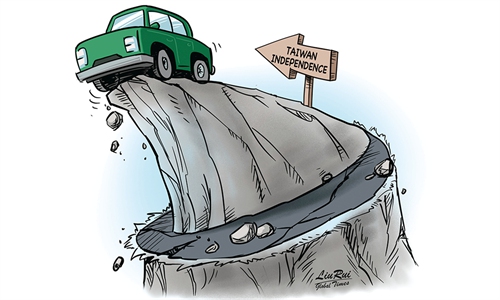
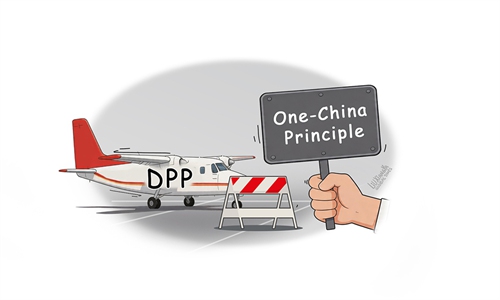
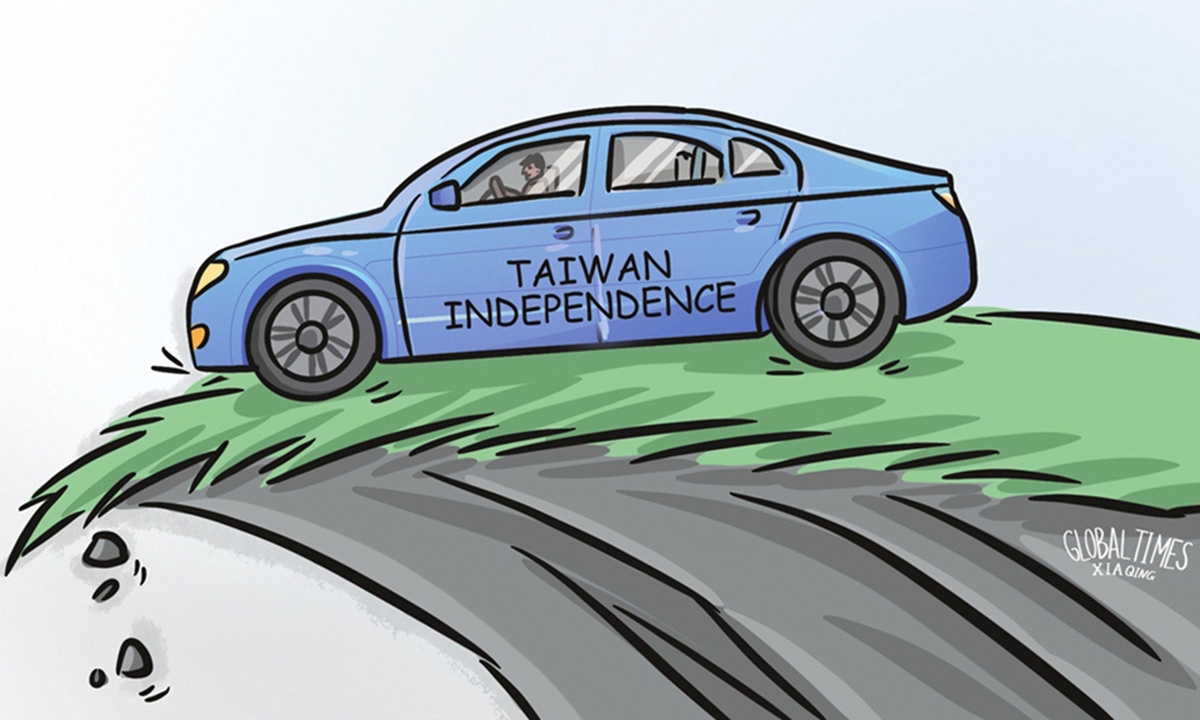
This is precisely where the DPP finds itself in its most awkward and dangerous position today: While vociferously chanting "resisting the mainland to protect Taiwan," it is increasingly unable to curb Taiwan society's growing, genuine and intense curiosity about the mainland; while desperately politicizing cross-Straits exchanges, it stands by helplessly as "visiting the mainland" becomes an everyday occurrence in the eyes of more and more Taiwan compatriots.
The more it tries to monopolize the narrative, the more it will drive ordinary people to break through the barriers; the more it tries to perpetuate fear, the more it will drive people to verify the truth for themselves.
Shaping the momentum toward reunification and advancing the cause of reunification calls for steady, step‑by‑step progress. When "traveling to the mainland" is no longer a taboo on the island, when "understanding the mainland" no longer requires justification, and when "reunification" transforms from a forbidden term back into a realistic issue open to rational discussion, change has, in fact, already taken place.
Chen's trip reveals a simple truth: The political lies spun by the DPP are most vulnerable to the subtle, imperceptible corrections brought by real‑life experience. Once our Taiwan compatriots see the true face of the mainland with their own eyes, the DPP's lies will be broken, and its scare tactics will lose their value; once cross‑Straits travel becomes routine for our Taiwan compatriots, the political racket sustained through isolation, smearing and demonization will lose its appeal.
When mainland visits by people like Chen Pei-chi multiply - from one individual to crowds, from a single trip to millions upon millions - the thin veneer shielding the DPP will be pierced.
RELATED ARTICLES