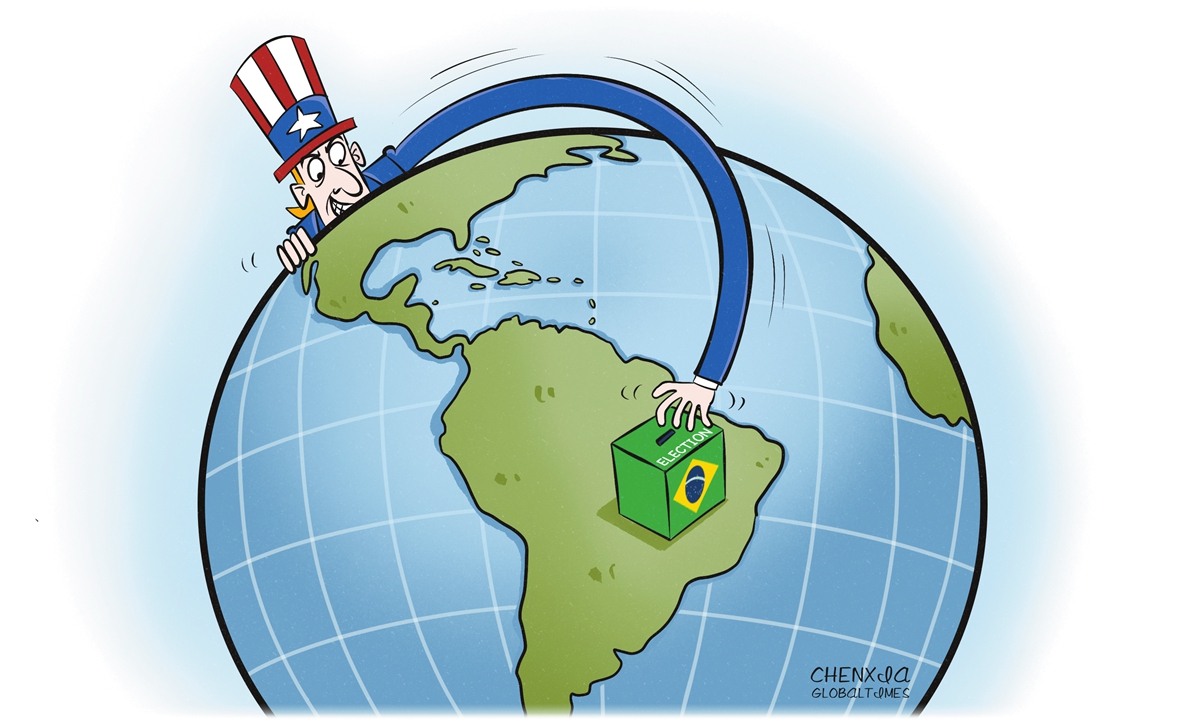
Illustration: Chen Xia/GT
The US was the first country to recognize Brazil's independence in 1822. More than 200 years later, Washington appears to still have not fully understood what it means to "recognize" a country's "independence."
The headlines across the Americas have been dominated by diplomatic tensions between the US and Brazil over the past few weeks. On Tuesday local time, the US revoked the visa of the Brazilian ambassador to Washington, further pushing the escalating diplomatic dispute to a new peak.
Even though the US claimed that it was a "reciprocal measure" after Brazil delayed approval of US ambassador nominee Danny Perez, it is not merely a procedural disagreement, but a contest over national sovereignty.
Since July, the US has slapped a 25 percent tariff on Brazilian imports over alleged "unfair trade practices," added another 12.5 percent duty related to forced labor on Brazilian goods, and sought to dispatch officials to Brazil to question the "fairness and integrity" of the country's electoral system.
"The current tensions between the US and Brazil are not merely a tit-for-tat diplomatic dispute, but reflect Washington's attempt to use economic pressure and diplomatic leverage to influence another country's electoral process," noted Jiang Shixue, a professor at the Center for Latin American Studies at Shanghai University.
The Brazilian left-wing government's emphasis on anti-hegemonism and an independent foreign policy approach stands in contrast to the "America First" agenda pursued by Washington, Jiang said. As Brazil's October presidential election approaches, the US' attempt to exert influence through economic and diplomatic means has exposed its long-standing hegemonic mindset of interfering in other countries' domestic affairs. Such actions constitute an infringement on national sovereignty and run counter to the international principle of non-interference in internal affairs.
Ultimately, the diplomatic dispute represents a direct clash between Brazil's pursuit of strategic autonomy and the deeply rooted US "backyard" mentality. More broadly, it reflects a structural tension between the growing desire for autonomy among Global South countries and the US' attempt to preserve its traditional sphere of hegemonic influence.
This isn't new in US relations with Latin America. Since the Monroe Doctrine in the early 19th century, Washington has long viewed the Americas as its own sphere of influence. From direct military intervention in the past to tariffs, sanctions, visa restrictions and diplomatic pressure nowadays, the US still assumes it has the right to shape the political choices of other nations in the region.
However, the 21st century is no longer the world it once was.
Brazil has taken a series of measures in response: requesting WTO consultations over US tariffs, denying entry to US officials over concerns of election interference, withholding formal approval of the US ambassador nominee for US breaching diplomatic norms without seeking Brazil's consent in advance, and issuing statement to swiftly condemn the US action as part of a deliberate campaign to influence the election. Brazil has demonstrated how a Global South country can defend its sovereignty and pursue independent development using legitimate diplomatic tools available under the modern international order.
The size of a country or the strength of its economy does not determine the degree of sovereignty it possesses. Brazil's growing cooperation with other BRICS members and Global South countries reflects an increasingly evident trend: Nations want greater autonomy in making their own choices within the international system, rather than having their development paths dictated by external forces.
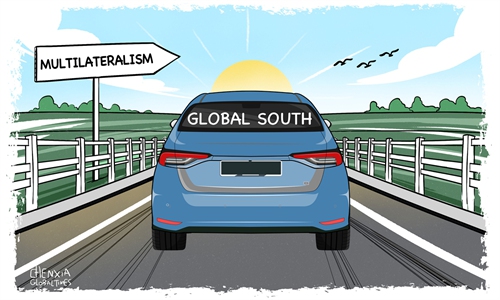
"Brazil for Brazilians" is gradually overshadowing the decades-old effort promoted by Washington that "Americas for America." Principles including sovereign equality, multilateralism and the right of nations to choose their own paths have become widely recognized norms, particularly among Global South countries.
The political pendulum in Latin America may continue to swing, but one principle remains constant: Regardless of political orientation, protecting national sovereignty, security and development interests lies at the heart of every country's foreign policy. The US needs to recognize that the world has changed. Global South countries are no longer passive recipients of either economic coercion or political interference. They now seek respect for their independence, sovereignty and the right to make their own choices - and they now possess an updated and diverse toolkit to safeguard these principles.
RELATED ARTICLES