Taiwan regional travelers with so-called ‘passports’ denied entry to Uganda; mainland expert says separatist pursuits keep narrowing island’s international space
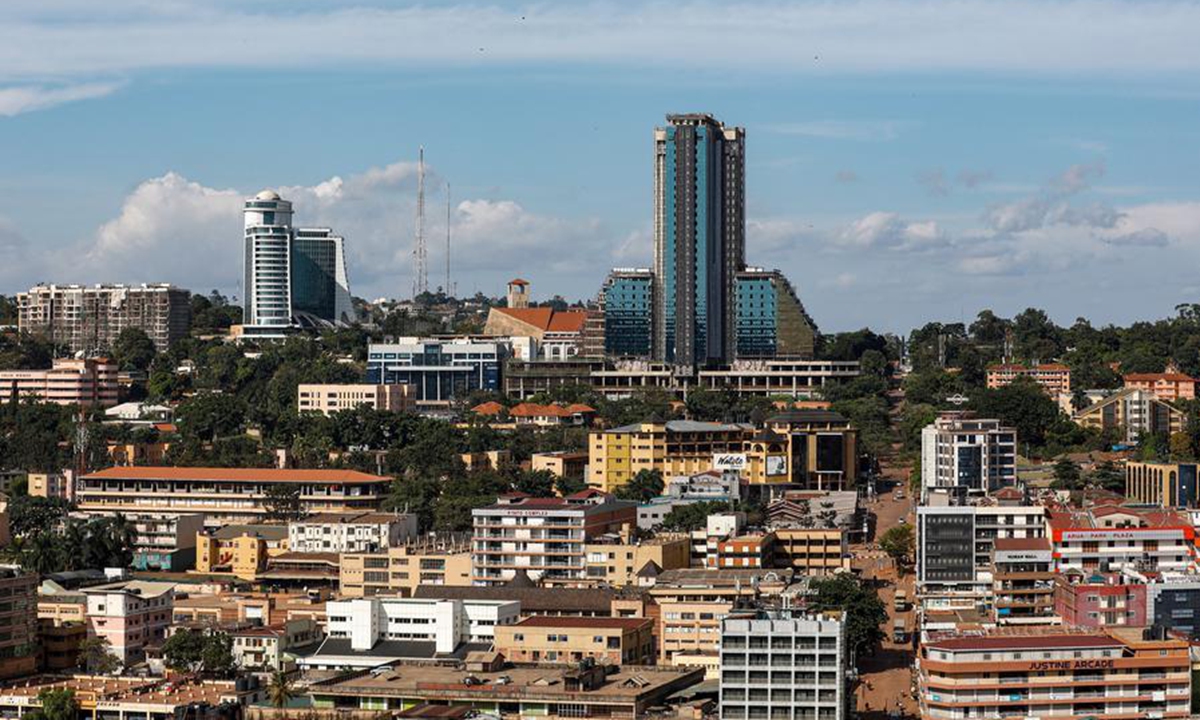
This photo shows a city view of Kampala, Uganda. Photo: Xinhua
Travelers from the Taiwan region are being cautioned against traveling to Uganda after reports that several Taiwan residents had their travel documents issued by the Taiwan authorities seized or were denied entry in early August. A mainland expert noted that the more "Taiwan independence" forces seek international space, the narrower their room for maneuver will become.According to Taiwan regional media outlet United Daily News (UDN) on Saturday, a Taiwan resident holding a valid Ugandan work permit had his so-called "passport" confiscated by Ugandan immigration officials on August 3 after arriving at Entebbe International Airport (EBB) on a domestic flight. The officials cited a "new policy" but have yet to return the "passport."
In a separate but similar incident, another Taiwan regional resident was also denied entry by Ugandan immigration officials at EBB and deported on the same flight, according to UDN.
The two incidents occurred at the same airport within a short period of time, with the authorities' actions escalating from the confiscation of travel documents to outright denial of entry and deportation, a travel agency was quoted by the report as saying.
The developments suggest that the measures being taken by Ugandan authorities may go beyond isolated incidents and could represent a systematic pattern of enforcement targeting people from the region, with signs that the situation is "continuing to escalate," per the report by UDN.
However, so-called Taiwan regional foreign affairs authorities stated that the relevant cases may be connected with the measure rolled out by the Taiwan region to temporarily suspend visa issuance to Ugandan nationals and bar their entry amid the worsening Ebola epidemic, according to Taiwan's local media CNA, adding it will keep negotiating with Uganda and offer support to impacted people.
Prior to this incident, several African countries had already adjusted their wording and entry policies concerning Taiwan region. According to a previous UDN report in July, on the registration page for South Africa's Electronic Travel Authorization (ETA) system, Taiwan is listed as "Taiwan, China" in the dropdown menu for place of issue of travel documents. Similarly, the international dialing code +886 is marked "Taiwan, China" under the phone number section.
That same month, the Moroccan Embassy in Japan suspended its Visa Confirmation Letter (VCL) review process for travelers from Taiwan region starting July 23, while the regional authorities stopped accepting visa applications from Moroccan nationals in retaliation, according to CNA.
But some netizens from the island commented that they had "gotten used to this situation." One remarked, "It was Papua New Guinea a few days ago, and now Morocco again. Taiwan's foreign affairs department sure has an easier job these days."
Earlier in April, three African countries, Seychelles, Mauritius, and Madagascar revoked flight permit to cross their countries without prior warnings before regional leader Lai Ching-te's planned trip to Eswatini.
Zheng Jian, a professor at the Graduate Institute for Taiwan Studies at Xiamen University in East China's Fujian Province, told the Global Times that the Democratic Progressive Party (DPP) has pushed to internationalize the Taiwan question and expand "Taiwan independence" activities abroad, however, it only faces the narrower room for maneuver.
RELATED ARTICLES