Illustration: Xia Qing/GT
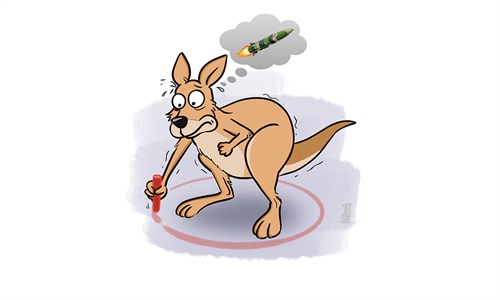
Former Australian ambassador to China Graham Fletcher recently wrote in a report for the Lowy Institute that Australia-China relations "remain fragile" and vulnerable to shocks. He believes that "stability will remain a goal, not a given."What makes some Australians believe that China-Australia relations "remain fragile"? The answer does not lie with China.
In his article, Fletcher refers to "the various challenges posed by China." He also partly attributes this fragility to concerns about China's "influence activities" and argues, citing the wide differences in the two countries "worldviews and national security," that "this relationship is unlikely ever to become genuinely close."
Some of Fletcher's judgments reflect a misconception prevalent in Australia: equating normal economic and trade exchanges and the accumulation of influence with potential threats, treating cooperation initiatives as "traps" that need to be guarded against, and turning difference into irreconcilable confrontation. But he is right about one thing: The relationship could enter another downward spiral if there were an "accumulation of serious disagreements that cannot be successfully managed."
Yet "fragility" is not innate; it is the result of human choices.
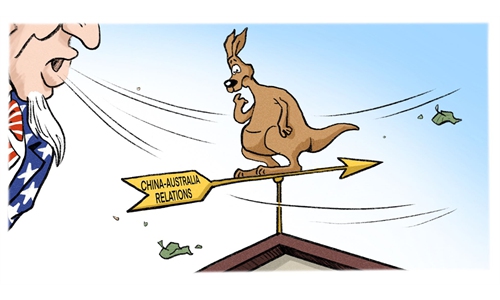
Some of Australia's recent moves have in fact continued to create and amplify the "fragility" - erecting barriers in areas where history has shown that cooperation is possible, tilting strategically toward Washington.
Recently, the US reportedly provided a $400 million loan to an Australian rare earths company in an attempt to unlock "non-Chinese supplies of a rare earth" used in energy and defense applications. This move is seen as an important part of Washington's strategy. For Australia, it may appear to be a choice aimed at "reducing dependence and enhancing security." However, from a broader perspective, it represents a form of strategic binding - embedding Australia's resource advantages into a supply chain system led by the US.
Moreover, the Port of Darwin operating project was awarded through a normal, open market bidding process; yet over the past decade, it has been subjected, without due cause, to several political and security reviews, while Australian officials continue to call for it to be "taken back."
Elsewhere, a new report funded by Australia's Department of Defense has groundlessly accused China and several other countries of alleged undersea cable attacks in recent years, claiming that threats to undersea cables are increasing.
The logic behind these developments is clear but dangerous. Australia has continued aligning closely with the US in both rhetoric and practice while maintains caution in its interactions with China. Frictions that could originally have been managed through dialogue and pragmatic cooperation have gradually evolved into structural mutual distrust. The fragility of the relationship is being deepened little by little through this very reinforcement by Australia.
Australia claims to seek "stability" while taking steps that undermine its foundations; it warns against the accumulation of "influence" while voluntarily embracing another, more dominant form of influence.
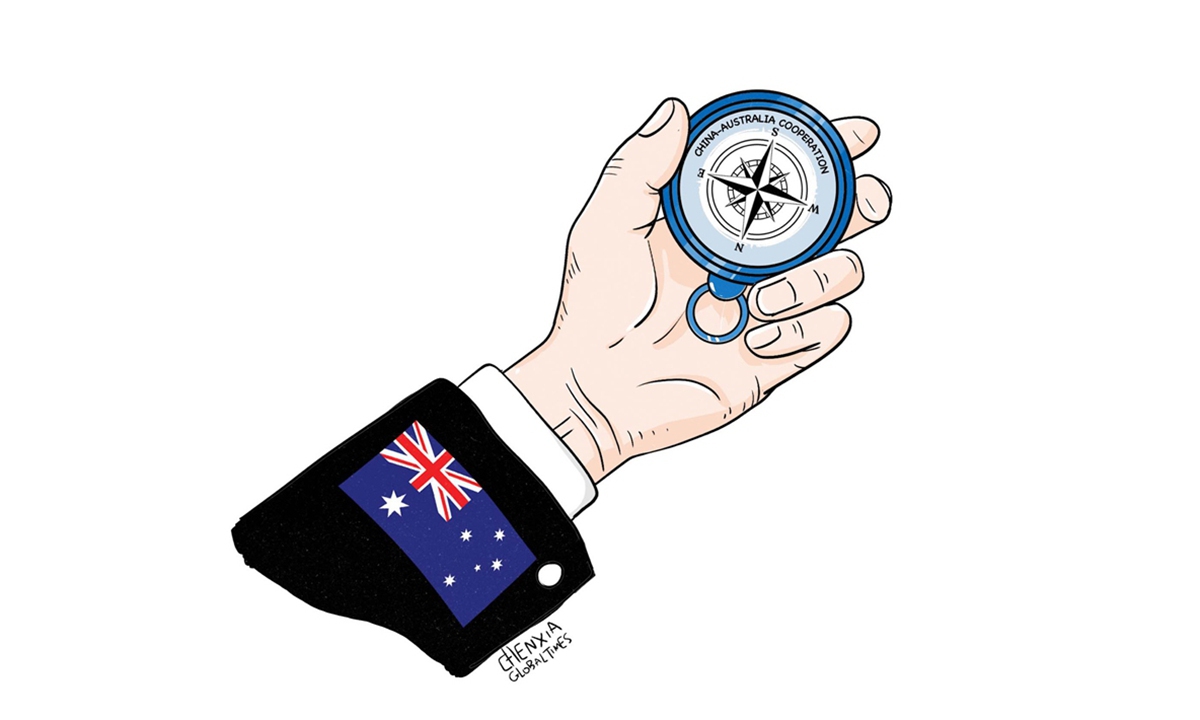
At the end of his article, Fletcher notes, "China remains a key partner for Australia. The relationship warrants the effort it receives." This is the direction Australia should recognize as the right one.
China and Australia do have a positive history of shared development and growth. China has been Australia's largest trading partner, export market and source of imports for 16 consecutive years. Tourism, resources and agriculture are highly complementary. After China-Australia relations began to "thaw" in 2022, the two countries worked to restore communication and exchanges. In 2025, China-Australia relations entered their second decade as a comprehensive strategic partnership. In the 2022-23 financial year, trade with China increased Australian households' annual disposable income by A$2,600 and created nearly 600,000 jobs in Australia. There were more than 200,000 Chinese students in Australia. In early 2025, giant pandas Xingqiu and Yilan arrived in Australia and were warmly welcomed by local community.
These facts demonstrate that there are many possibilities for China and Australia. If China-Australia relations are to move beyond fragility, the key lies with Australia: reducing its blind reliance on a single external power and approaching its relations with China in a more independent and balanced manner. Only then will stability become a sustainable reality rather than merely a goal.
RELATED ARTICLES