Japanese scholar uncovers new evidence of Japanese military’s human experiments on mentally-ill soldiers during invasion of China

Unit 731 members conduct an experiment on a live prisoner in Northeast China Photo: VCG
New research by Japanese scholar Seiya Matsuno suggests that military doctors at the Japanese Army Medical School conducted human experiments on Japanese soldiers with mental illnesses during Japan’s invasion of China, deliberately infecting them with malaria. The practice reflected the Japanese army medical corps’ horrible view of people as “research material,” bearing similarities to the human experimentation conducted by Unit 731, the Xinhua News Agency reported on Monday.
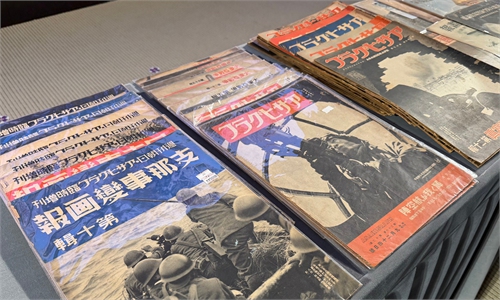
Seiya Matsuno, a researcher at the International Peace Research Institute of Meiji Gakuin University, uncovered the relevant records in papers published in the official journal of the Japanese Army Medical Corps.
The paper shows that the experiment was conducted in 1940 at the then Kohnodai Army Hospital (now the National Kohnodai Medical Center) in Ichikawa, Chiba Prefecture, with the stated aim of preventing the spread of malaria in Japan.
Researchers used mosquitoes that had fed on malaria-infected soldiers from battlefields in China and then allowed them to bite 10 Japanese soldiers hospitalized with mental illnesses. Several of the 10 participants eventually developed malaria, with symptoms including fevers above 40 C, headaches, body aches and loss of appetite.
The paper also shows that Shiro Ishii, head of Unit 731, was involved in overseeing the experiment.
According to Matsuno, the experiment involved serious ethical violations, Xinhua reported.
Matsuno particularly noted that the subjects of the experiments were not prisoners of war, but Japanese soldiers themselves. This reveals a chilling mindset that anyone unable to contribute to the state or the war effort could be used as an experimental subject, regardless of nationality. It also reflects a way of thinking that reduced people to nothing more than research material, China Central Television reported, citing Matsuno.
Because the participants had mental illnesses and may not have been able to fully understand the nature of the experiment or its risks, the study could be considered coercive human experimentation, according to Xinhua.
Global Times
RELATED ARTICLES