China and the West need to develop a more accurate mutual understanding: Hai Feng
China and the West need to develop a more accurate mutual understanding
China US Photo:VCG
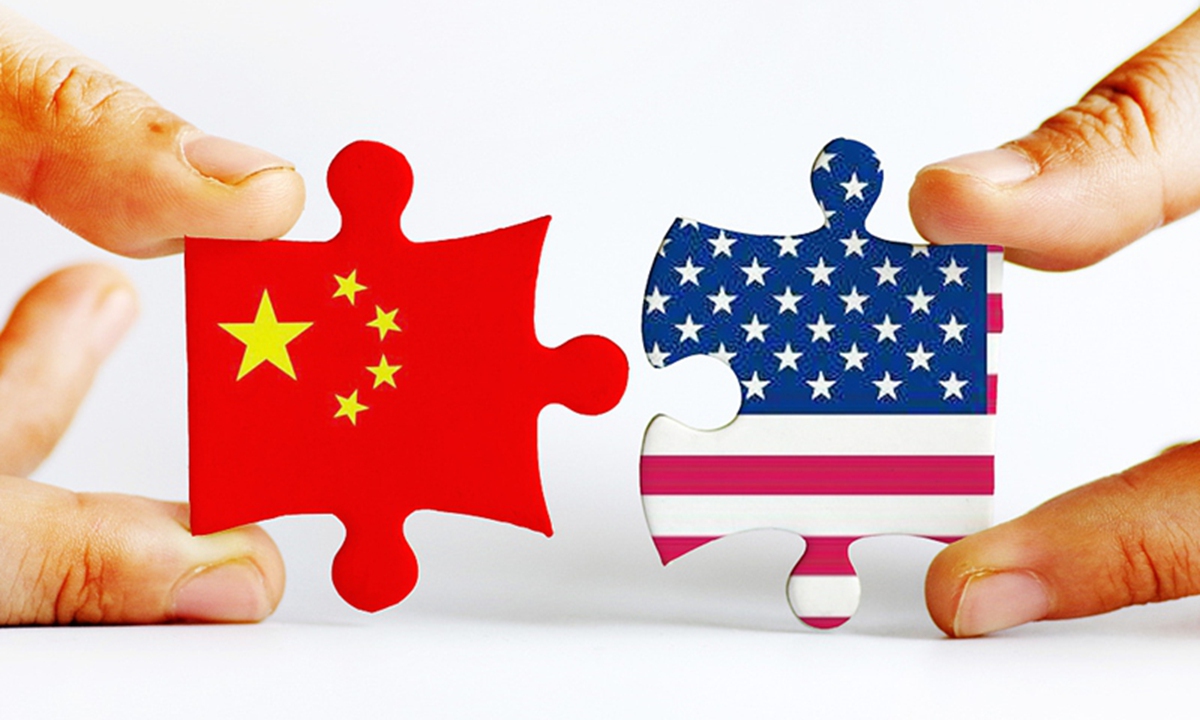
The development of China-US relations has reached a point where, on the surface, the contradictions stem from clashes of interests, competition for relative strength, and differences in values. But at a deeper level, and perhaps more dangerously, one of the key problems is that the two sides suffer from serious misperceptions.
On August 24, Wang Huning, a member of the Standing Committee of the Political Bureau of the Communist Party of China Central Committee and chairman of the National Committee of the Chinese People's Political Consultative Conference, met in Beijing with US delegates attending the third China-US Track 1.5 Dialogue. Wang said China is ready to work with the US to fully and faithfully implement the important consensus reached by the two heads of state, foster correct mutual understanding, respect each other's core interests, strengthen practical cooperation across various fields, properly manage differences, and actively build a constructive China-US relationship of strategic stability.
The two sides maintain extensive communication, but it is undeniable that outdated perceptions, ideas and prejudices continue to interfere with mutual understanding.
Today, one fact is becoming increasingly difficult for US strategists to avoid: China has not developed along the path that the West once expected it to follow. Instead, it has been exploring its own path of Chinese modernization. For decades, Western observers of China have often viewed the country through a condescending lens, assuming that marketization would ultimately lead to comprehensive Westernization and treating China's current development as a "transitional period" before its integration into the Western order. The underlying assumption was that there was only one path and one model of modernization, with Western institutions representing the "end point" of human social development.
After the end of the Cold War, this view was once widely embraced in the West. China, however, did not follow the Western development path, yet it continued to make breakthroughs in industrial capacity, technological innovation, infrastructure and national governance, developing a rare combination of comprehensive capabilities for a country of its enormous scale. China's development experience has delivered a powerful real-world challenge to the West's linear theory of modernization.
Francis Fukuyama's change is a particularly symbolic signal. As the proponent of the "End of History" thesis, he once argued that liberal democracy combined with a market economy represented the ultimate form of human institutional evolution. Today, however, Fukuyama acknowledge that China has "created a pretty impressive system," and that if China maintains its development momentum, it could even become a "real alternative" to Western democracy.
If Fukuyama's changing attitude signals the erosion of the old confidence within Western academia, John Thornton's assessment represents a more pragmatic current within Western business and strategic circles. Having maintained deep and long-term engagement with China, Thornton's understanding is rooted in reality. Over the past several decades, the most important structural fact in the world has been China's rise. The US and the rest of the world must adjust to the changing international balance of power brought about by China's rise, rather than resist the emergence of a new equilibrium. He opposes calls for "decoupling" and rejects reducing China-US relations to a zero-sum struggle in which one side's gain must mean the other's loss. He argues that US policy toward China should be based on the real China, rather than an imagined one.
This assessment goes straight to the heart of the matter. One of the major problems in US policy toward China today is the tendency to treat the "imagined China" as the "real China." Some people do not study China first and then form their judgments. Instead, they first construct an adversarial narrative and then force China into that narrative. When China develops rapidly, it is labeled a "threat"; when China achieves significant governance outcomes, they are dismissed as "unsustainable"; when China proposes initiatives for international cooperation, they are misrepresented as "tools of expansion." This way of thinking is not analysis based on reality, but falsehoods.
Former Australian prime minister and president of the Asia Society Kevin Rudd has elevated this kind of "cognitive distortion" to the level of strategic risk. As one of the few figures in Western politics who understands Chinese, has studied China for decades, and has been deeply involved in diplomatic processes, he has repeatedly emphasized that relations with China should not be reduced to a binary choice between being "pro-China" and "anti-China." Instead, countries should pursue a "third way": acknowledge the objective reality of China-US competition and use rules, communication and red-line management to keep that competition within controllable bounds. His core argument can be summed up in one point: the greatest risk between China and the US is not competition itself, but competing on the basis of erroneous perceptions. And the risk of such strategic miscalculation is most concentrated in the Taiwan question.
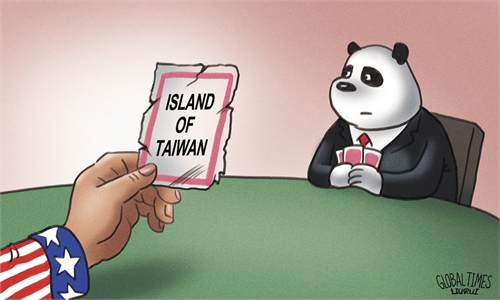
The Taiwan question lies at the very core of China's core interests and is the most sensitive and untouchable red line in China-US relations. If US strategists continue to regard Taiwan as a geopolitical bargaining chip or a tool for "using Taiwan to contain China," they will fundamentally misjudge China's political will, strategic red lines and historical logic. If such miscalculations continue to accumulate, the situation across the Taiwan Straits could shift from "high-risk but manageable" to "high-risk and uncontrollable." Once a crisis erupts, not only would China-US relations suffer a severe blow, but the entire Asia-Pacific security order and even the global economic system could face incalculable ripple effects.
It is therefore clear that enhancing accurate mutual understanding is a practical prerequisite for preventing strategic loss of control between major powers. It is also a strategic reminder: in the next stage of China-US relations, what most needs to be corrected may not be a particular policy detail, but the very way the two sides view each other. Truly responsible strategic stability must begin with an accurate understanding of one another.
For the West, the first step is to genuinely recognize that China is neither a replica of the Soviet Union nor an aberration from the Western path of modernization. China is a civilizational state with a profound historical tradition, a vast social structure, strong state capacity and the ability to pursue long-term strategic planning. Viewing China through a Cold War mindset or an ideological lens, or using the short political cycles of Western countries to assess China's long-term national strategy, is bound to produce one misjudgment after another.
At the same time, China should recognize that rational voices still exist within Western societies. Figures such as Fukuyama, Thornton and Rudd have shown willingness to move beyond old narratives and understand China based on facts rather than emotions, and on long-term considerations rather than electoral cycles. While firmly safeguarding its core interests, China should also do more to communicate its story to the world, enabling the international community to understand the internal logic of China's development and clearly recognize the boundaries of the red lines China is determined to uphold.
The world is entering a period in which the old order is loosening and a new order is being reshaped. As two major powers with global influence, China and the US cannot shape the future without affecting each other, nor can they afford to move toward direct confrontation based on mistaken assumptions. The West needs to reassess China, while China needs to continue helping the world develop a more genuine understanding of China. Only communication and competition grounded in accurate, reality-based perceptions can remain manageable; only interaction and strategic competition grounded in respect for each other's core interests can remain stable.
RELATED ARTICLES