Why the Taiwan question could have far-reaching implications for China-US relations: Hai Feng
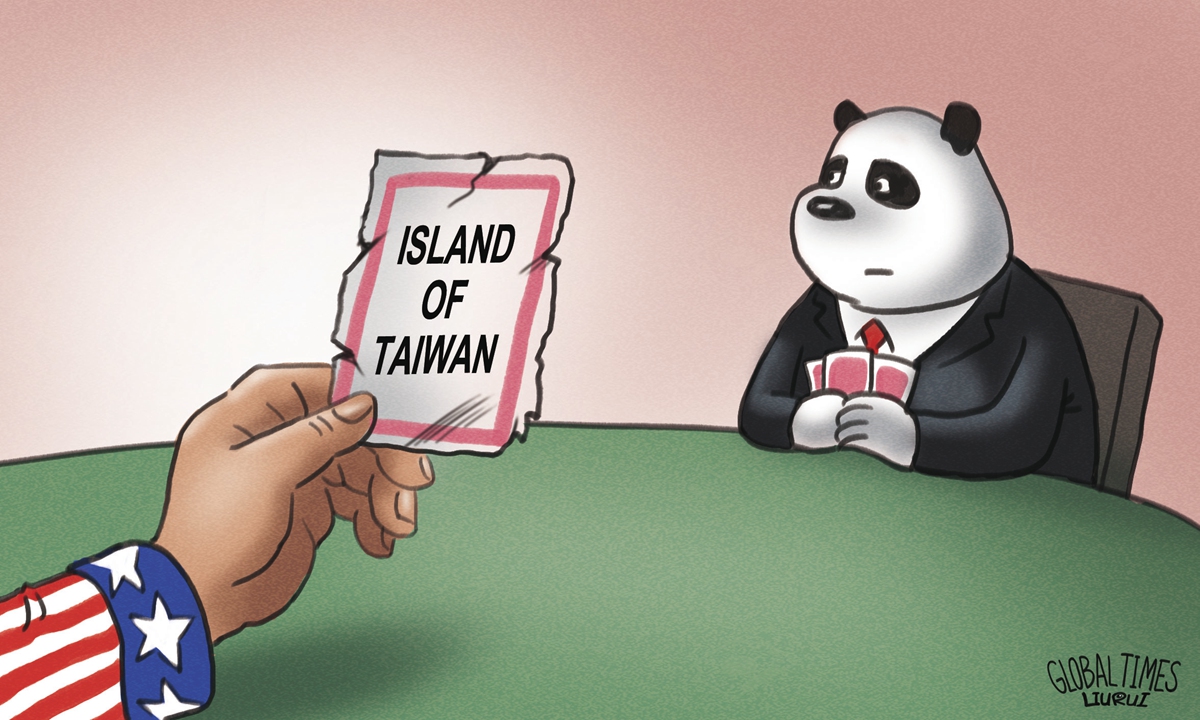
US, China, Taiwan island Illustration: Liu Rui/GT
The China-US summit on May 14 attracted worldwide attention. In particular, the two sides reached a consensus on building a "constructive China-US relationship of strategic stability," bringing some relief to a world already marked by turbulence and uncertainty. For today's world, if China and the US can keep competition within an appropriate range and differences within controllable boundaries, that in itself serves as an important pillar of global stability and certainty.It is precisely for this reason that, during the recent phone call between the top diplomats of China and the US, Chinese Foreign Minister Wang Yi explicitly pointed out that "the Taiwan question is a highly sensitive issue that may have far-reaching implications." This statement carries clear practical relevance and policy direction. It serves both as a reminder to the US side and as a clear delineation of China's red line: The prerequisite for stable China-US relations is that the US must truly handle Taiwan-related affairs properly. Otherwise, the "constructive China-US relationship of strategic stability" will lose its important foundation.
Why does the Taiwan question carry such weight in China-US relations? The fundamental reason is that it is the most important and the most sensitive core issue between Beijing and Washington. Unlike issues such as trade, technology or arms control, the Taiwan question leaves absolutely no room for compromise, concession or bargaining. This is because it directly concerns China's sovereignty and territorial integrity, touches upon China's core interests, affects the national sentiments of more than 1.4 billion Chinese people, and concerns the political bottom line of the Communist Party of China and the Chinese government on the issue of national reunification.
From a historical perspective, it was only after the US acknowledged that there is but one China and Taiwan is part of China that China-US relations were normalized. In other words, the bilateral relations were established from the very beginning on the basis that the Taiwan question was properly handled. If Washington talks about "constructive strategic stability" while continuously provoking the Taiwan question, it equals hollowing out the foundation of China-US relations. When the foundation is unstable, the whole structure shakes.
This is also why Chinese Foreign Minister Wang specifically emphasized that "the Taiwan question is a highly sensitive issue that may have far-reaching implications." What he meant is that any US action on the Taiwan question - even a single arms sale, one official contact, one "transit" arrangement or one political statement - could affect the overall China-US relationship. From China's perspective, this is a matter of principle that is not open to negotiation and a bottom-line issue on which there can be no retreat.
More importantly, Wang's remarks were well targeted and made against a clear real-world backdrop. Since the China-US summit in mid-May, little more than a month has passed, yet the US side has already displayed a series of actions and signals on Taiwan-related affairs that warrant vigilance.
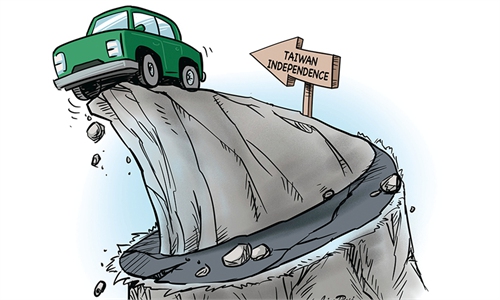
First, pressure and anticipations regarding arms sales to the Taiwan region have remained constant. Chinese scholars have clearly warned that if the Trump administration resumes or advances a new round of arms sales to Taiwan, then the framework of the "constructive China-US relationship of strategic stability" will cease to exist. This is a clear red line. Arms sales have never been merely commercial transactions; they are inherently political and security-related actions. Every batch of weapons the US sells to Taiwan essentially sends the wrong signal to "Taiwan independence" separatist forces, increases instability in the Taiwan Straits and directly undermines the political foundation of China-US relations.
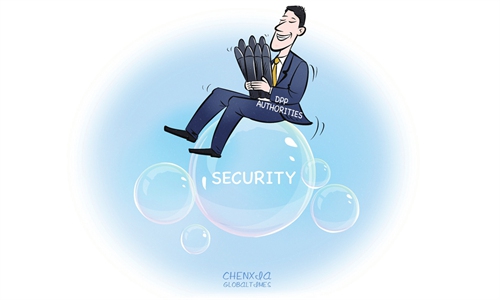
Second, "noise" at the level of official interaction and political contacts has continued. For example, some political figures from the Taiwan authorities made provocative visits to the US and met with senior American politicians; the American Institute in Taiwan has continued to promote its "Taiwan Security Cooperation Initiative"; and Taiwan leader Lai Ching-te still harbors the intention of making a "transit" visit to the US. When assessing the US on Taiwan-related affairs, one should not only listen to what it says but also observe what it does. Saying one thing while doing another is absolutely unacceptable on the Taiwan question.
Third, the US strategic and political communities have continued to send negative signals. Some US figures, represented by Raymond Greene, director of the American Institute in Taiwan, have repeatedly advocated turning Taiwan into a "hedgehog" and a "beehive," attempting to further embed the island into the US strategic chain of containing China and even distort cross-Straits relations. Such statements appear to be assessments of trends, but in reality they seek to shape those trends and provide new rhetorical justification for stronger US intervention in the Taiwan Straits. China, of course, cannot turn a blind eye to such dangerous developments.
Fourth, US policy toward China itself remains highly uncertain. Although US Secretary of State Marco Rubio, during his phone call with Wang, also spoke about the importance of building a "constructive relationship of strategic stability," the US has yet to form a genuine strategic consensus domestically. In contrast, many members of Congress and figures in the US strategic community believe that the US' current China policy has made "too many concessions" to China. This means that even if the White House expresses a willingness to stabilize China-US relations, pro-Taiwan hardline forces within the US will continue to emerge, attempting to recreate tensions, pressure China through playing the "Taiwan card" and even serve domestic electoral needs.
Therefore, China's emphasis that "the Taiwan question is a highly sensitive issue that may have far-reaching implications" is essentially intended as a preventive warning to the US side while also setting the rules for the next stage of China-US interactions. According to analysis, there will be at least three more important interactions between the Chinese and US heads of state. Whether these can proceed smoothly depends on whether the US side can exercise restraint and stay within boundaries on the Taiwan question. China has consistently emphasized that competition must have bottom lines and strategic rivalry must not cross red lines. The Taiwan question is precisely the clearest and most untouchable red line in China-US relations.
Viewed from a broader international landscape, the Taiwan question attracts such close global attention in the context of China-US relations because it is not merely a bilateral diplomatic disagreement between the two countries but also a key factor affecting regional peace and global stability. If China and the US lose control over the Taiwan question, not only would bilateral relations suffer severe damage, but regional security, global supply chains, financial markets and even the international order of peace would all experience severe shocks. Therefore, the Taiwan question is extraordinarily sensitive and extraordinarily important.
For today's Trump administration, the real question is whether it can truly restrain its impulses regarding Taiwan, curb "Taiwan independence" separatist activities, and stop all wrong signals to "Taiwan independence" separatist forces. Otherwise, no matter how cordial China-US relations appear on the surface, their underlying logic will remain unstable. China is not only listening to what the US says; it is also watching what it does. Whether the "constructive China-US relationship of strategic stability" can steadily move forward and whether interactions between the two heads of state can proceed smoothly will, to a large extent, be determined by how the US handles the Taiwan question.
The author is a commentator on international affairs. opinion@globaltimes.com.cn
RELATED ARTICLES