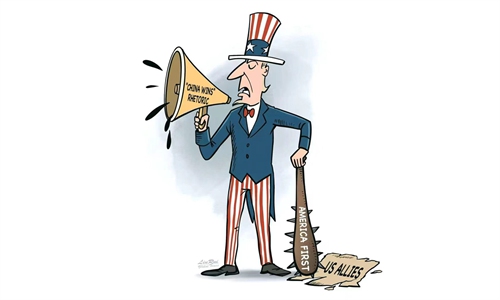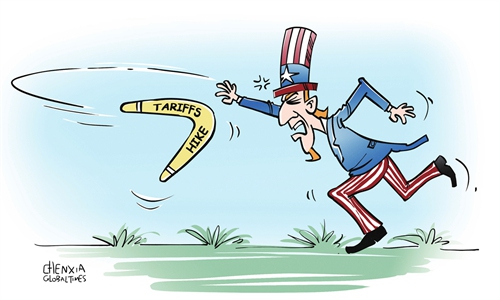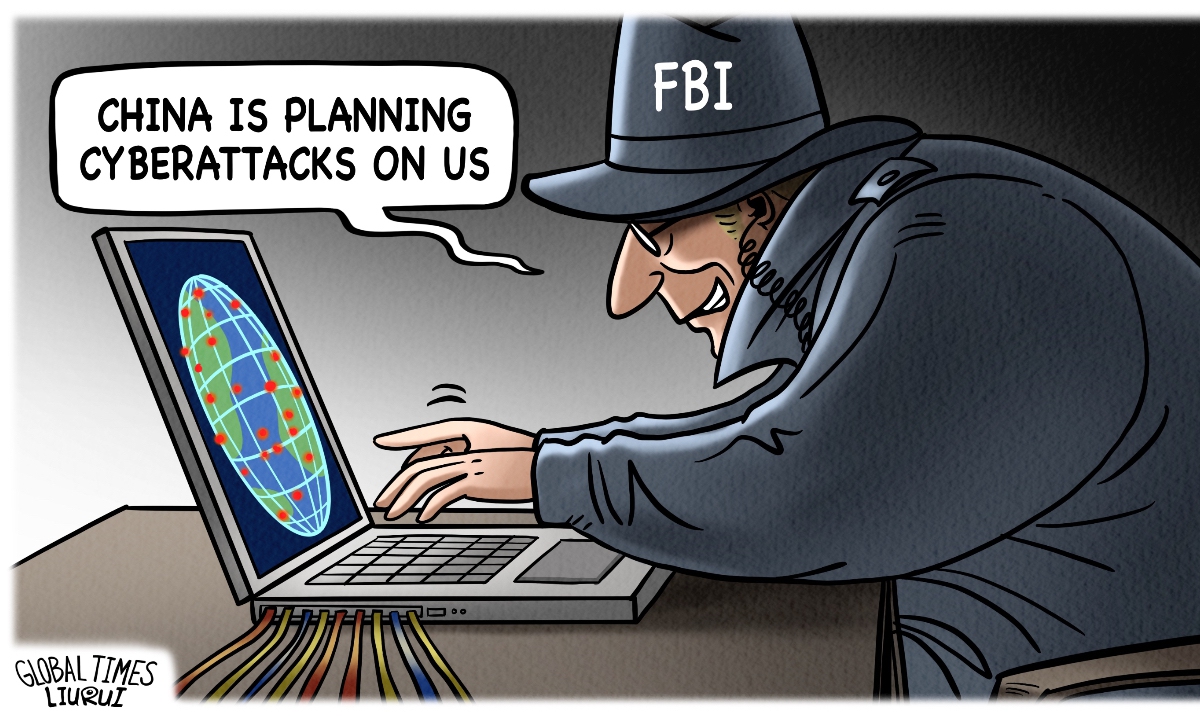
Cartoon: GT
On Wednesday, the US Department of Justice claimed that it had thwarted an alleged cyberattack carried out by Chinese "hackers." The whole story was presented with an air of certainty, claiming that the intrusion campaign had been underway since at least 2018 and that a wide range of US government institutions, including the Department of Justice, the US Senate, NASA and the Federal Reserve, were among the "victims." The allegations sound serious, and specific names were even cited. But on closer inspection, there is not even a shred of basic evidence.
The US document is filled with speculative language from beginning to end. The so-called "victim organizations" are either unnamed or referred to only vaguely. Even CNBC pointed out an awkward fact: the US Department of Justice did not explain what specific damage the alleged intrusions caused these institutions. Washington has made high-profile accusations while refusing to provide a complete chain of evidence that can be publicly verified or withstand independent technical scrutiny. Is this really law enforcement at work, or a political performance of "shoot first, draw the target later," with silence whenever the evidence runs thin?
By contrast, other countries' accusations of US cyber intrusions around the world have been backed by hard evidence - from the surveillance of allies to attacks on critical infrastructure in other countries. In 2024, China released several reports based on extensive data and empirical research, exposing the US-orchestrated "Volt Typhoon" affair as essentially a cyberattack coupled with a false narrative. Last October, China uncovered a major cyberattack by the US National Security Agency targeting China's National Time Service Center, reconstructing the timeline of the escalating attacks over more than two years and obtaining solid evidence. As one of the world's "best-known" sources of cyberattacks, what standing does Washington have to keep wielding the "cybersecurity" stick and lecturing others?
The US has long been well practiced at hyping up the supposedly nonexistent "Chinese hacker threat." At its core, there may be only two objectives: first, US intelligence agencies can use such claims to secure bigger budgets; second, certain politicians can gain yet another talking point for their efforts to suppress China's technology sector.
Repeating a lie a thousand times does not make it true. The more frequently Washington recycles these evidence-free accusations, the more it exposes its own unease and anxiety. As the Chinese Embassy in Panama once put it in response to similar claims, for those whose minds are filled only with geopolitical calculations, they might even suspect that there is a listening device in a shaomai dumpling.
Cybersecurity is a global issue. Instead of repeatedly putting on a "thief crying 'thief'" act, the US should first put its own cyber activities in order.
RELATED ARTICLES