Why is Taiwan region growing more anxious as September begins?: Hai Feng
Why is Taiwan region growing more anxious as September begins?
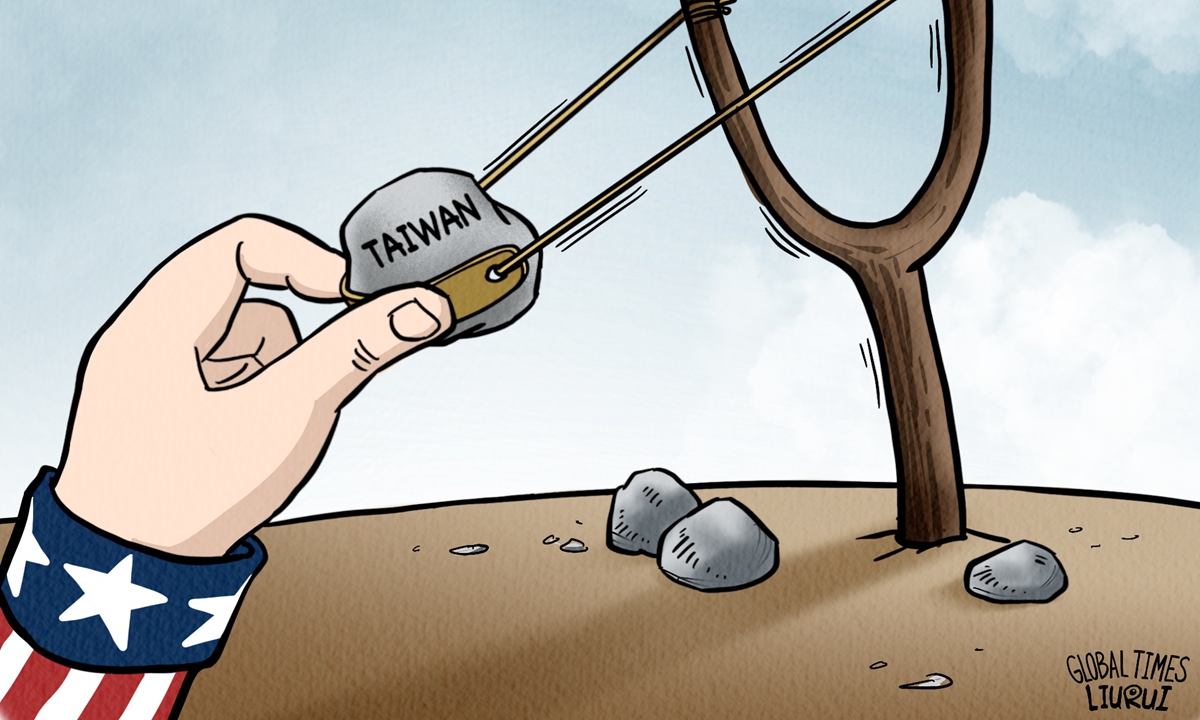
US and the island of Taiwan. Illustration: Liu Rui/GT
September has just begun, yet Taiwan society is already experiencing a heightened sense of tension and anxiety.At a deeper level, this stems from the fact that the external security assumptions on which the island of Taiwan has long relied are being steadily squeezed by reality.
As September begins, the Chinese mainland's high-level diplomatic activities are intensifying, with one highlight after another. The Shanghai Cooperation Organisation (SCO) has sent new signals of cooperation, while a visit to Egypt has brought the historical significance of the Cairo Declaration back into focus. Meanwhile, a speculated meeting between the Chinese and US leaders is drawing ever closer and attracting worldwide attention.
But what truly worries Taiwan society is where the island will be positioned amid competition between major powers.
Growing doubts about the US
Amid global expectations for a second meeting between the Chinese and US leaders this year, Taiwan media outlet China Times published a commentary on September 1 arguing that strategic competition between China and the US will not disappear, but both sides have a practical need to reduce friction and maintain stability, making it possible for the two sides to find areas of temporary convergence.
For the Chinese side, the Taiwan question lies at the very core of its core interests. As China and the US work toward a "constructive relationship of strategic stability," the Taiwan question will become the most sensitive and difficult core issue to avoid. What truly concerns people on the island are often the far-reaching "small adjustments" the two sides may make regarding Taiwan region. Even if such changes do not amount to a major shift in US policy toward the island of Taiwan, they could still be enough to shake public expectations on the island.
Whether Taiwan region is willing to acknowledge it or not, the cold reality is there: To the US, the island is merely a bargaining chip in its strategic competition with China. This is the root of the growing "doubts about the US" on the island.
US not center of the world
If the potential China-US leaders' meeting is making pro-US forces on the island uneasy, the SCO summit is creating another, deeper source of pressure.
On Tuesday, President Xi Jinping delivered an important speech during the 26th Meeting of the Council of Heads of State of the SCO in Bishkek, Kyrgyzstan. He put forward a four-point proposal centered on putting development first, taking security as a key goal, putting people first, and promoting dialogue and consultation. China also announced new cooperation initiatives in areas including artificial intelligence, science and technology, security and people-to-people exchanges. The member states jointly issued the Bishkek Declaration and ultimately adopted 28 outcome documents.
This multilateral meeting is significant. As the SCO marks its 25th anniversary, China once again emphasized the principles of "non-alignment, non-confrontation and non-targeting of any third party," as well as multilateralism, global governance and greater representation for the Global South. The message is clear: Amid the intertwining of unilateralism, protectionism and geopolitical conflicts, China has consistently adhered to an independent and self-reliant, all-round, peaceful foreign policy, deepening friendly cooperation with countries around the world on the basis of equality and mutual benefit.
Relations with the US are important, but China's diplomacy will not revolve around the US. The global landscape is changing, and China seeks to help shape not merely China-US relations, but a broader multipolar order.
This is what Taiwan cannot afford to ignore. In the past, some on the island were accustomed to viewing the Taiwan question through the lens of "whether the US will firmly support Taiwan island." Today, however, signals from Washington have changed. As more countries avoid choosing sides between China and the US, the narrative that the island of Taiwan can rely on "US support" will inevitably face increasingly serious questions from reality.
Cairo's historical significance
President Xi's visit to Egypt has drawn particular attention on the island because of the historical significance of the Cairo Declaration. The Taiwan question has a clear and profound historical context.
In 1943, the Cairo Declaration was issued by the Chinese, US and UK governments, stipulating that Japan should return to China all the territories it had stolen from China, including Taiwan and the Penghu islands. Article 8 of the subsequent Potsdam Proclamation reaffirmed that the terms of the Cairo Declaration must be carried out. In August 1945, Japan accepted the Potsdam Proclamation and announced its unconditional surrender, thereby firmly establishing the international legal basis for Taiwan island's return to China.
Today, when the Cairo Declaration is once again brought into the diplomatic spotlight, what it evokes is not merely historical memory, but also a strong reaffirmation of the postwar order, the one-China principle and the view that the Taiwan question is China's internal affair. For those on the island who seek to distort history and reshape Taiwan's identity, this stark historical reminder is particularly jarring.
'Relying on US' no longer effective
The island of Taiwan is realizing that the China-US competition will continue, but competition does not mean the US will assume unlimited risks on Taiwan's behalf. External support still exists, but such support has never been unconditional, cost-free, or permanently guaranteed.
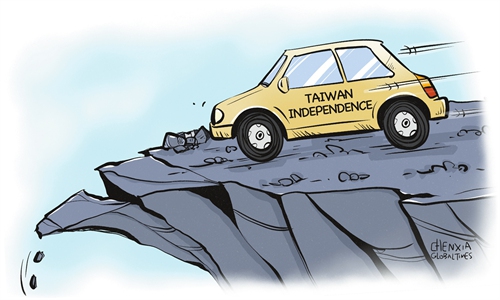
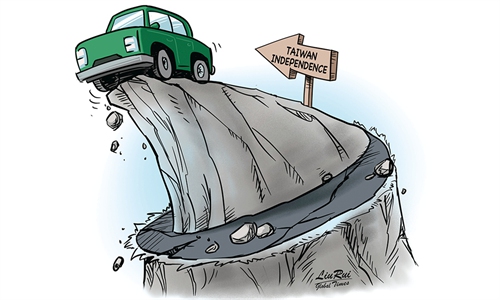
This is the deeper reason why the old playbook of "relying on the US to seek independence" is losing its effectiveness. The Taiwan Straits is not the US' only strategic card, nor is it a political resource that Taiwan's authorities can draw on indefinitely. Entrusting security to external commitments and Taiwan's future to great-power rivalry will ultimately leave the island bearing the consequences of repeated strategic adjustments.
As old perceptions are being challenged by new international realities, what Taiwan society should truly consider is how to avoid becoming the front line of conflict, a bargaining chip in great-power rivalry or a sacrificial pawn. Only by recognizing the broader trend can Taiwan find a way forward; returning to the path of peaceful reunification is the direction Taiwan should cherish most.
RELATED ARTICLES