Any act provoking the one-China principle will inevitably face retribution!: Hai Feng
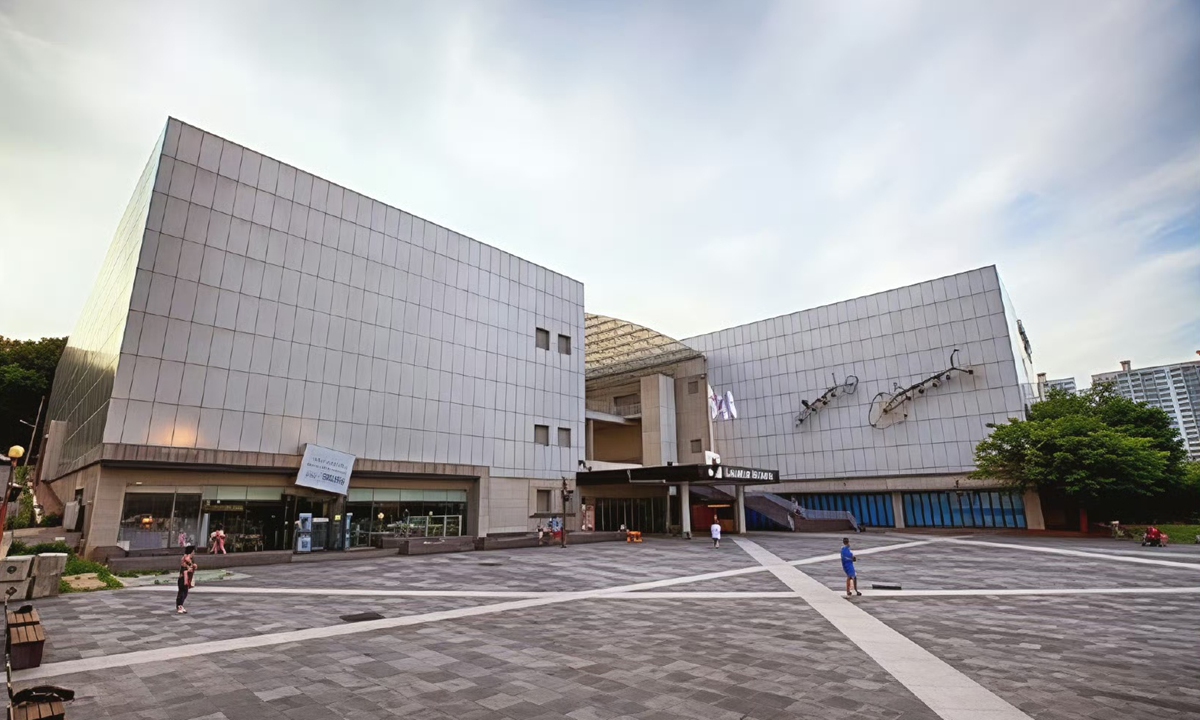
Photo: Sina Weibo
On Thursday, a symposium marking the 81st anniversary of the victory of the Chinese People's War of Resistance Against Japanese Aggression and the World Anti-Fascist War was held in Beijing.Eighty-one years ago, facing the iron-shod hooves of invaders, the Chinese people forged a new Great Wall with their flesh and blood, winning through arduous and bitter struggle the first complete victory in modern times against foreign aggression. This victory not only powerfully defended national independence and dignity, but also profoundly shaped the post-war international order. The legal and factual foundation for Taiwan island's return to the motherland was thus solidly laid - leaving no room for equivocation or distortion.
Yet for various reasons, to this day, some still attempt to play word games, manufacture political stunts, and test China's bottom line on the Taiwan question. They must understand that the Taiwan question is by no means an arbitrary "cultural issue" to be painted over, nor a "nomenclature issue" to be bargained with, and least of all, a chip to be used for political posturing and selfish gains. It concerns China's sovereignty and territorial integrity, the post-war international order, and, most importantly, the non-negotiable bottom line of the more than 1.4 billion Chinese people.
Any act that provokes the one-China principle will inevitably face retribution.
Political provocation rather than an 'artistic arrangement'
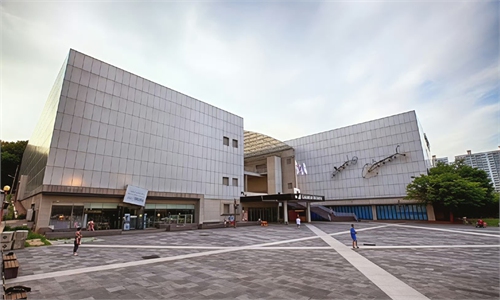
As the 16th Gwangju Biennale in South Korea approaches, its organizers have repeatedly tested the waters: first adjusting the name of Taiwan region's participating entity to the "National Taiwan Museum of Fine Arts," and then reverting to the so-called "Taiwan Pavilion" following "protests" from Taiwan regional authorities.
Changes in nomenclature are by no means trivial matters. From the foot-stomping protests of the Taiwan authorities to the cooperative posturing of the organizers, this is, in reality, a meticulously packaged political provocation.
Cultural exchange, serving as an important bridge to enhance understanding and bring hearts closer, should never become a shoddy stage for separatist forces to "use exhibitions to seek independence" or for some individuals to "use art to meddle in politics." Especially when the Chinese side has repeatedly communicated on this matter and clearly stated its principled position, the organizers' persistent insistence on pursuing a wrong course can hardly be excused as the "lack of awareness" they claim; rather, it is a deliberate violation - knowing full well it crosses the line.
The statements issued by the Chinese Embassy in South Korea and the Chinese Consulate General in Gwangju have made it abundantly clear: The participation of China's Taiwan region in multilateral activities must be handled in accordance with the one-China principle. The decision by the Chinese participants to withdraw from the exhibition stands as a firm and resolute response to such erroneous practices.
On matters of principle, there is no room for the slightest ambiguity - no concept of "close enough," and certainly no "playing on the edge." Whoever attempts to turn cultural exchanges into a springboard for political provocation will bear the consequences of damaging the exhibition's reputation, disrupting the atmosphere of cooperation, and impacting bilateral relations.
One-China principle a red line that cannot be tested
Taiwan is an inalienable part of China's territory, and the Taiwan question is purely China's internal affair. This fact is grounded in historical logic and legal basis, and it constitutes a broad international consensus. Precisely for this reason, the one-China principle has long served as the political foundation for China to establish and develop relations with other countries, as well as the inviolable bottom line for safeguarding regional peace and stability.
Yet, there are always forces who refuse to face reality. Some substitute concepts under the guise of "cultural exchanges," others manufacture illusions through "international participation," some engage in political theater under the banner of "grassroots activities," while others willingly serve as megaphones and pawns for external forces playing the "Taiwan card." Their calculation is hardly complex: first slice away a portion in terminology, then carve another slice in public perception, and finally attempt to "slice" the fissures of independence into China's territorial integrity.
However, they have miscalculated. Having endured a shattered land and national crisis, the Chinese people deeply understand how precious national independence and unity truly are. Precisely because of this, today's China possesses greater capacity, firmer resolve, and stronger will than ever before to defend its core national interests.
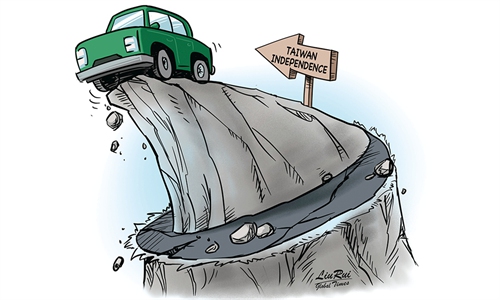
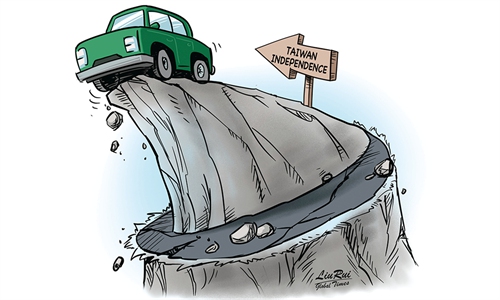
Playing the "salami-slicing" tactic on the Taiwan question will carve out no space for "Taiwan independence," and skirting the one-China principle will only collide head-on with China's unyielding bottom line.
Verbal reiteration must be followed by corrective action
It is worth noting that the Gwangju city government has publicly apologized for the erroneous nomenclature and reiterated its adherence to the one-China principle. The South Korean government has also stated on multiple occasions recently that its position of respecting the one-China principle remains unchanged. These expressions deserve attention.
However, it must be recognized that genuine respect lies not in empty words, but in concrete actions. Since the one-China principle is acknowledged, it must be strictly observed in practical affairs; since bilateral ties with China are valued, a tiny handful of politicians and groups cannot be tolerated for exploiting Taiwan-related issues to stir up trouble and undermine mutual trust.
Returning China-South Korea relations to the track of sound development serves the common interests of both sides. This path has not come easily and must be cherished with utmost care. If anyone attempts to undermine the political foundation of bilateral relations for selfish gains, the ultimate casualty will not merely be the reputation of a single exhibition or city, but the trust jointly cultivated by the two peoples.
The Chinese side's attitude is equally clear: China's resolve to safeguard its core interests and oppose "Taiwan independence" separatist forces remains unshakable. No person and no force attempting to hijack bilateral ties by playing the "Taiwan card" will ever succeed.
What needs to be corrected must be corrected immediately; those responsible must bear the consequences.
Defending sovereignty has become a systematic action
On that very same day, a fleet of the China Coast Guard vessel Putuoshan conducted routine law-enforcement patrols in the waters east of China's Taiwan island in accordance with the law. Previously, the Second Institute of Oceanography under the Ministry of Natural Resources also completed a comprehensive marine geophysical survey in the waters east of Taiwan island, collecting fundamental data on the seafloor environment, including seabed topography, sedimentary strata and deep geological structures.
From routine law-enforcement patrols to marine scientific surveys; from diplomatic representations to the resolute withdrawal from the cultural exhibition, China's actions to safeguard its national sovereignty, security, and development interests have never been mere rhetoric. China's will to defend its territorial sovereignty will not waver, its struggle against "Taiwan independence" separatism and external interference will not slacken, and the reunification has in fact entered a new phase characterized by systematic, normalized, and all-around advancement.
If China's restraint is misread as weakness, its appreciation for peace is misread as vulnerability, or its goodwill in promoting exchange and cooperation is misread as an invitation to breach the bottom line, such miscalculations are as dangerous as they are foolish.
China has consistently advocated peaceful development, but peace is never built on unprincipled concessions. It has always welcomed dialogue and consultation, but dialogue by no means implies that red lines can be touched.
Provokers will ultimately pay the price as history unfolds
Eighty-one years ago, the Chinese people declared with victory that the Chinese nation would never bow to foreign aggression and power politics. Eighty-one years later, any force attempting to split China's territory, interfere in its internal affairs, or obstruct national rejuvenation will find itself equally doomed to failure.
The turbulence surrounding the Gwangju Biennale once again demonstrates that on the question of the one-China principle, there are no gray areas, no middle ground, and no so-called cultural exception zones. Respecting the one-China principle provides the foundation for exchange and cooperation, while challenging it will inevitably bring bitter self-inflicted consequences.
History has long delivered its answer, reality continues to prove it, and the future leaves no room for wishful thinking. No one can block the historically inevitable trend toward the complete reunification of the motherland.
RELATED ARTICLES