SCO Illustration: Liu Rui/GT
At 25, the Shanghai Cooperation Organisation (SCO) has demonstrated more than institutional endurance. It has built a durable platform where countries with different political systems, development models and strategic priorities can manage differences and pursue common interests. What distinguishes the SCO is the Shanghai Spirit: mutual trust, mutual benefit, equality, consultation, respect for cultural diversity and common development.
The SCO's non-alliance, non-confrontational and non-targeted nature allows countries with divergent interests to remain at the same table and seek practical cooperation. This flexibility is particularly valuable for Central Asian states, which seek diversified partnerships, stronger connectivity and sufficient space to pursue balanced foreign policies.
Contrary to earlier skepticism among outside observers that the SCO could become a forum for empty rhetoric, strategies and declarations, its recent summits have increasingly demonstrated that political consensus can be translated into practical mechanisms and action.
The 2024 Astana summit adopted the SCO Development Strategy until 2035, an energy cooperation strategy through 2030, programs against terrorism and drug trafficking, and an initiative on world unity for a just peace, harmony and development. The first SCO+ meeting broadened engagement with partner countries and institutions, while Belarus became the organization's 10th member, showing that enlargement can go hand in hand with a practical agenda.
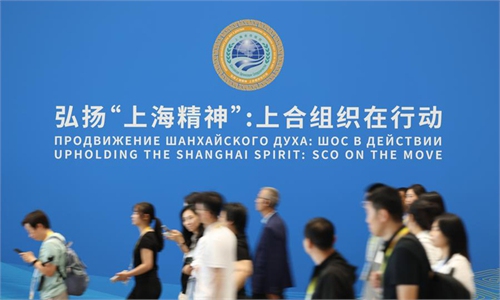
The 2025 Tianjin summit carried this momentum forward under the theme "Advancing the Shanghai Spirit: SCO in Action." Its outcomes included a 10-year development strategy, stronger mechanisms to combat transnational crime, cyber threats and narcotics, support for multilateral trade, and greater attention to sustainable development and investment. The message was clear: The SCO should increasingly be judged by implementation.
The Bishkek summit offers another opportunity to consolidate this trajectory. The leaders adopted 28 outcome documents covering security, economic cooperation, people-to-people exchanges and institutional development, while approving amendments to the SCO Charter and regulations related to new mechanisms for addressing security challenges and combating drugs. China's proposals to establish an SCO AI application cooperation center, a China-SCO port economy cooperation center in Tianjin and 100 technological cooperation projects over three years further add a practical dimension to the agenda.
The future path is increasingly clear: from consensus to mechanisms, and from mechanisms to implementation. What began as a regional organization focused primarily on security and stability is evolving into a broader platform for economic cooperation, connectivity and shared development with measurable and tangible results. This evolution is already taking concrete shape. The Regional Anti-Terrorist Structure has facilitated information sharing, cooperation programs and joint counterterrorism exercises, while regular mechanisms connect security councils, defense and interior ministries, prosecutors and other competent authorities. Cooperation has also expanded into economic and technological fields. In the year following the 2025 Tianjin summit, seven platforms covering green industry, the digital economy, technological innovation, energy, education and artificial intelligence generated more than 160 projects.
This evolution is particularly significant for Central Asia, where the SCO began. Central Asian states are not merely a geographical bridge between the organization's larger members. They are sovereign actors with their own priorities, from economic diversification and connectivity to water and energy security and balanced foreign policies. As the SCO continues to deepen cooperation, there is growing potential for Central Asian countries to play an even more active role in shaping the organization's agenda and translating regional opportunities into tangible development gains.
For Central Asian countries, the next phase of SCO cooperation can place greater emphasis on connectivity projects that deliver visible and lasting benefits. Railways, roads and dry ports can strengthen connectivity, while new corridors can also support local manufacturing, agricultural processing, logistics services and market access for small and medium-sized businesses. Digital customs documents, compatible standards, predictable tariffs and more efficient border procedures can further turn connectivity into broader economic opportunities. In this way, the SCO can help Central Asia move beyond being a transit corridor and become an increasingly important hub for trade, production, innovation and regional cooperation.
That is the task ahead. The Shanghai Spirit has helped its members manage differences for a quarter-century. Now it must help them build together. For Central Asia, this means stronger regional agency and visible development gains. For the wider Global South, it offers a model based not on uniformity, but on negotiated interests, mutual respect and shared results. If the Bishkek summit helps turn more initiatives into measurable outcomes, the Shanghai Spirit will demonstrate its continued relevance not only for Eurasia, but for the wider Global South.
The author is a chief research fellow of the Kazakhstan Institute for Strategic Studies. opinion@globaltimes.com.cn
RELATED ARTICLES