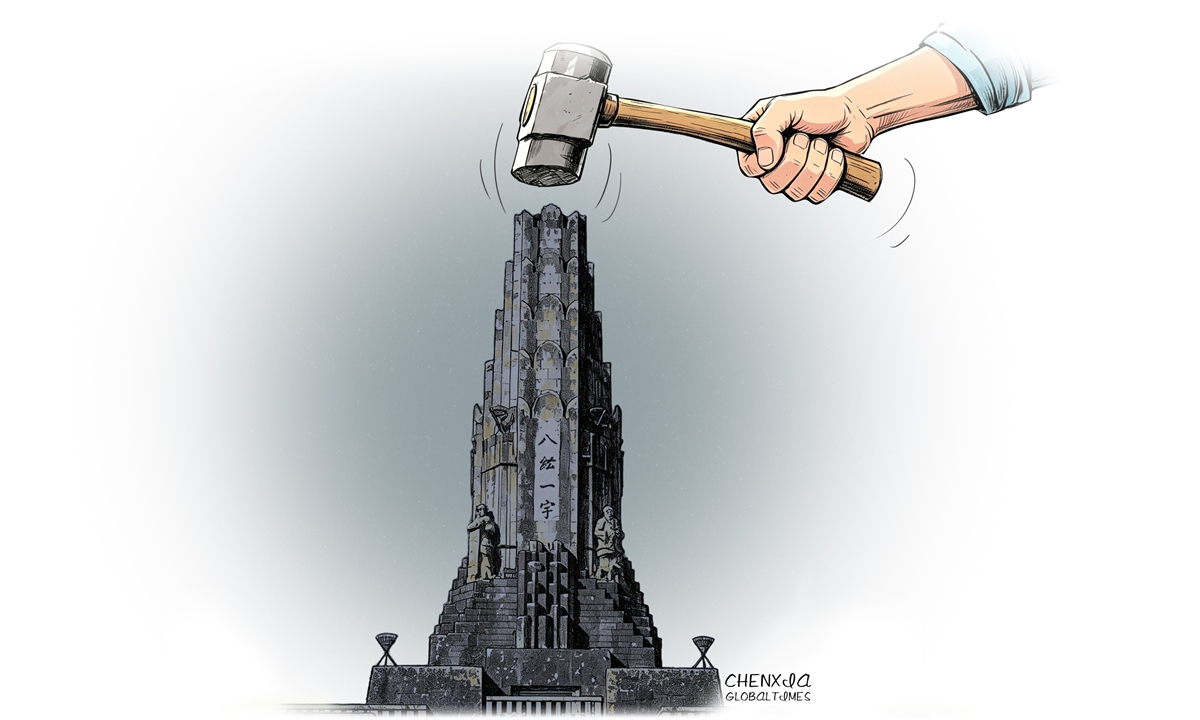
Japan, tear down your evil 'Hakko Ichiu Tower' first. Illustration: Chen Xia/GT
On Saturday, Japanese Prime Minister Sanae Takaichi posted a message in both Japanese and Russian on social media claiming that a memorial monument in Khabarovsk, Russia, themed around "victory over militaristic Japan," was "completely unacceptable" and "affected the feelings of the Japanese people," and demanded that the Russian side dismantle it. The Japanese Ministry of Foreign Affairs also issued a statement declaring that the monument was "unacceptable and extremely regrettable in terms of Japanese national sentiment."
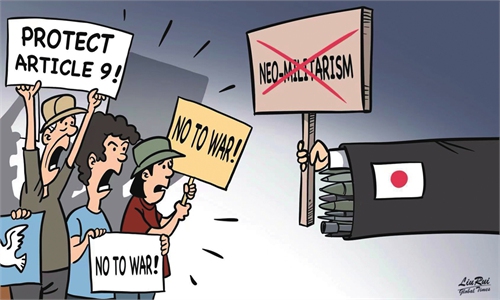
How exactly did this monument "hurt" Takaichi's "feelings"? Presumably because the boundary stone being smashed by a Soviet Red Army soldier in the sculpture is a replica of the one erected by Japanese troops on Sakhalin Island. The chrysanthemum crest carved into the stone is not only a symbol of the Japanese imperial family, but also a hallmark of the Japanese militarism that committed monstrous crimes back then. The fact that Tokyo views militarist Japan as a "sentimental attachment" worthy of cherishing vividly demonstrates just how pressing a real-world threat neo-militarism has become.
Beneath Takaichi's social media post, a netizen posted a photo of Japan's "Hakko Ichiu Tower," questioning why the Japanese government still preserves this evil monument stained with the blood and tears of invaded nations. Indeed, before pointing fingers at Russia, Japan should tear down its own crime-laden "Hakko Ichiu Tower" first. The phrase "hakko ichiu," literally meaning "the whole world under one roof," was in reality a delirious, malevolent doctrine used by Japanese militarism to fuel its ambition of "conquering the world." Built in 1940 during Japan's frenzied external expansion and aggression, the tower was constructed from 1,789 stones, hundreds of which were plundered from sites such as the Ming Palace in Nanjing and the Great Wall, China, as well as the Korean Peninsula. Trampling the dignity of victimized nations underfoot while building a tower out of looted spoils - this sinful structure should have been demolished long ago.
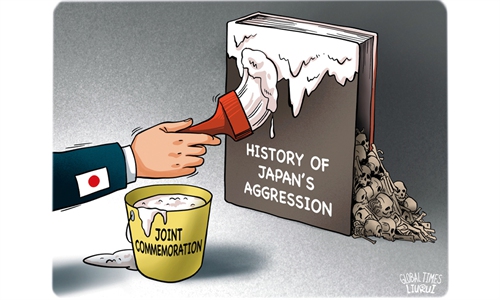
It is not just the "Hakko Ichiu Tower"; shrines of all sizes across Japan enshrining war criminals, along with a wide array of so-called "memorial steles" and "holy war monuments," all deserve a thorough cleanup. In the wake of World War II (WWII), the Japanese right wing preserved numerous buildings and sites laden with militarist symbolism. Beyond the most notorious Yasukuni Shrine, there are monuments dedicated to Class-A war criminals like Hideki Tojo, alongside the whitewashing of Hashima Island, where forced laborers were brutally exploited, into an "industrial heritage" site. The "Hakko Ichiu Tower" and other relics of militarist crimes, saturated with militarist toxins, continue to attract large numbers of Japanese youth every year for "study tours," functioning as tools to indoctrinate the younger generation with distorted historical views.
Around September 3 this year, a number of Japanese politicians and right-wing figures launched diplomatic tirades across multiple fronts: bombarding the official social media account of the US Embassy in Japan for posting images marking Japan's unconditional surrender in WWII, pressuring Russia to dismantle the "war victory over Japan" monument, and even fanatically declaring that "next time, we will definitely win." If Japan wants to project a "peaceful image," what it needs to do is not issue "diplomatic protests," but start by clearing away various symbols and rhetoric that summon the ghosts of past aggression.
RELATED ARTICLES