Taiwan region must understand signals from the China-US theater commanders’ meeting: Hai Feng
China-US Photo: IC
According to the consensus reached during US President Donald Trump's visit to China in May 2026, Chinese President Xi Jinping will pay a state visit to the US in autumn this year. As September begins, China-US interactions are drawing close attention, especially regarding Taiwan region.
According to a report by Singapore's Lianhe Zaobao, the 28th Indo-Pacific Chiefs of Defense Conference was held in Victoria, Canada, from August 31 to September 2. During the conference, Yang Zhibin, commander of the Eastern Theater Command of the People's Liberation Army (PLA), held his first bilateral meeting with the chief of US military's Pacific Command (PACOM) Sam Paparo. The two sides discussed the importance of maintaining open lines of communication between senior US and Chinese military leaders to reduce the risk of miscalculation and to promote safe and professional conduct between forces.
The reason this meeting attracted particular attention lies in the identities of the two commanders. The Eastern Theater Command is directly responsible for strategic missions in the Taiwan Straits, while US Pacific Command serves as a vital hub for US military deployments in the Western Pacific, advancing cooperation with allies, and engaging in regional affairs.
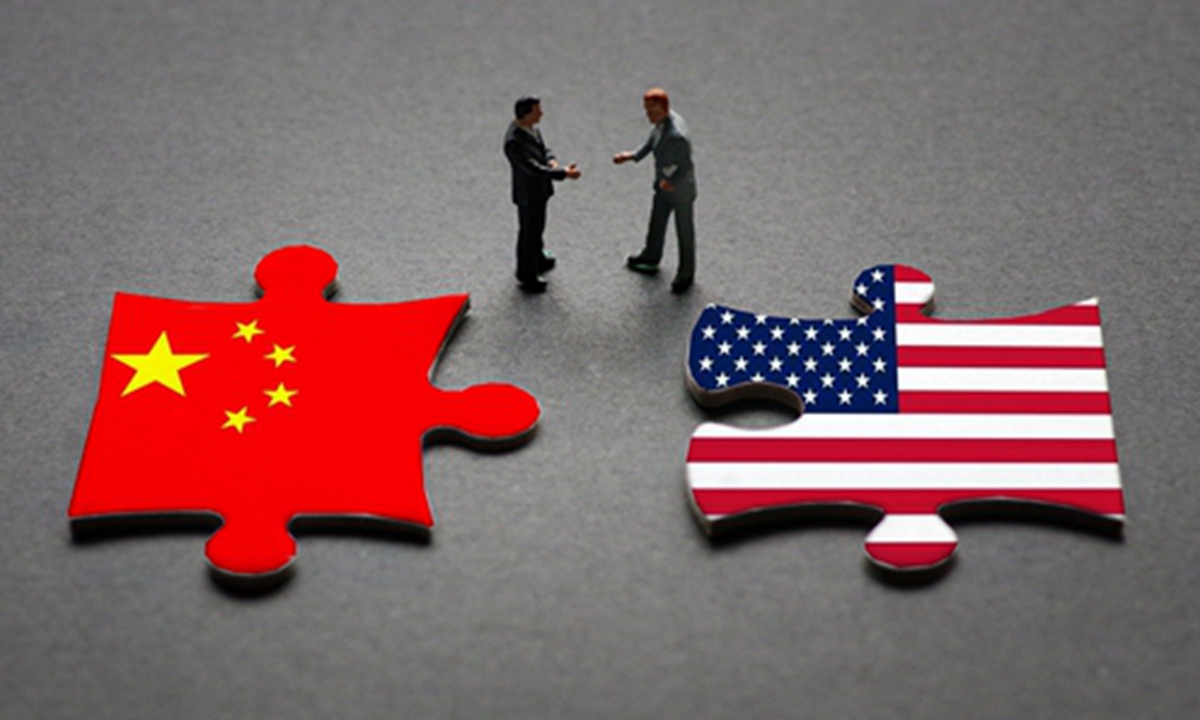
The meeting between the two theater commanders marks the resumption of theater-level face-to-face communication between the US and Chinese militaries in the most sensitive direction. It means that, in areas most prone to friction, the two sides are establishing necessary channels of contact and management, and setting a bottom line to prevent the situation from spiraling out of control.
One meeting reflects four years of twists and turns
In August 2022, following then-US House Speaker Nancy Pelosi's provocative visit to Taiwan island, military exchanges between China and the US were drastically reduced for a time. With communication channels between the two militaries blocked, the risks posed by every naval and aerial activity in the Taiwan Straits and surrounding maritime and airspace were magnified due to information asymmetry; any sudden incident was also more likely to escalate from a tactical friction into a strategic miscalculation.
Since then, the Chinese and US militaries have gradually resumed high-level communication, working-group meetings, and maritime military security consultations. In September 2024, the commander of the PLA's Southern Theater Command held a video call with Paparo. Now, the commander of the Eastern Theater Command has met face-to-face with Paparo for the first time, indicating that communication at the theater command level is moving from "restoring contact" toward "establishing mechanisms."
Of course, this meeting does not mean that the differences between China and the US on the Taiwan question have been resolved. On the contrary, it is precisely because of these differences and the high risks involved that communication is all the more necessary. Communication is not compromise, much less a concession; its significance lies in enabling both sides to better understand each other's red lines, intentions, and rules of engagement, thereby preventing anyone from mistaking probing for an opportunity, using provocation as a bargaining chip, and ultimately dragging the region into an unmanageable situation.
Signals released by the US: competition does not equal a willingness for conflict
US officials have recently stated that communication between the two militaries is "stronger than it has been in years," and indicated that the US does not seek conflict with China. Such remarks at least point to one fact: even as the US continues to strengthen its "Indo-Pacific strategy" and intensify strategic competition with China, it is well aware that the cost of direct military confrontation would be unbearable.
If the Taiwan Straits were ever to spiral out of control, the impact would not be limited to China-US relations. It would reverberate across the entire security architecture of the Asia-Pacific, global supply chains, and the international economic order, while the US itself will also suffer intolerable losses. Guided by its own interests, the US would not lightly take on uncontrollable risks for any "Taiwan independence" separatist forces.
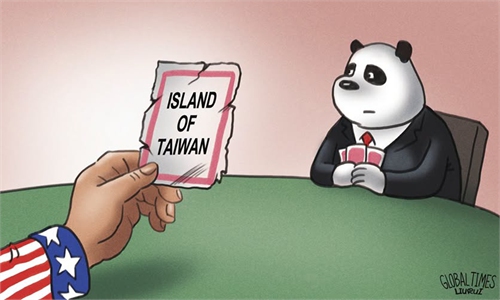
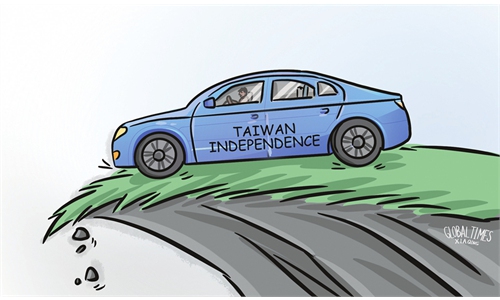
This is precisely the reality that Taiwan authorities and "Taiwan independence" separatist forces should clearly recognize. The maintenance of military communication between China and the US is aimed at preventing crises and safeguarding their own interests; it is by no means a "license for adventurism" granted to "Taiwan independence," nor does it mean that the US will provide unlimited backing for attempts to "rely on external forces to seek 'Taiwan independence.'" Misreading external strategic maneuvering as so-called "security guarantees" will only push Taiwan region into an even more dangerous situation.
What Taiwan region should truly understand
The meeting between the theater commanders of China and the US sends three clear messages to Taiwan.
First, the Taiwan Straits must not become a trigger for strategic miscalculation between China and the US. Neither side wishes to enter direct conflict due to military friction, which adds a buffer for regional stability.
Second, the Taiwan Straits must not become a testing ground for "Taiwan independence" separatist forces provocations. China-US military communication is intended to manage risks, not to tolerate repeated red-line crossings by risk creators.
Third, the foundation of peace in the Taiwan Straits does not lie in external assurances, but in cross-Straits relations themselves. External communication may help reduce dangers, but it cannot resolve the Taiwan question. What can truly bring long-term peace to people in Taiwan region is adherence to the one-China principle, opposition to "Taiwan independence" separatism, and the resumption of cross-Straits exchanges and dialogue. National reunification is the fundamental guarantee of peace in the Taiwan Straits.
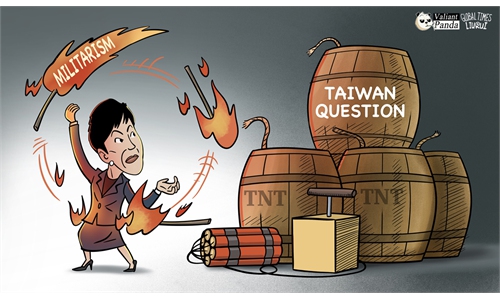
China and the US can manage crises through communication, but Taiwan regional authorities should not manufacture crises. China and the US should manage differences, but "Taiwan independence" separatist forces must never become the spark that ignites them.
The Taiwan question concerns China's core interests and leaves no room for ambiguity. Betting its fate on external forces will ultimately reduce Taiwan region to a pawn. Building peace on the shared efforts of compatriots on both sides of the Straits and achieving national reunification at an early date is the true way forward for Taiwan region.
RELATED ARTICLES