Exclusive: OPCW’s visit to China offers an objective view of Japan’s so-called ‘huge sacrifices’ and ‘contributions’ to disposal of abandoned chemical weapons, sources say
By Chen Zishuai and Published: Sep 07, 2026 04:57 PM

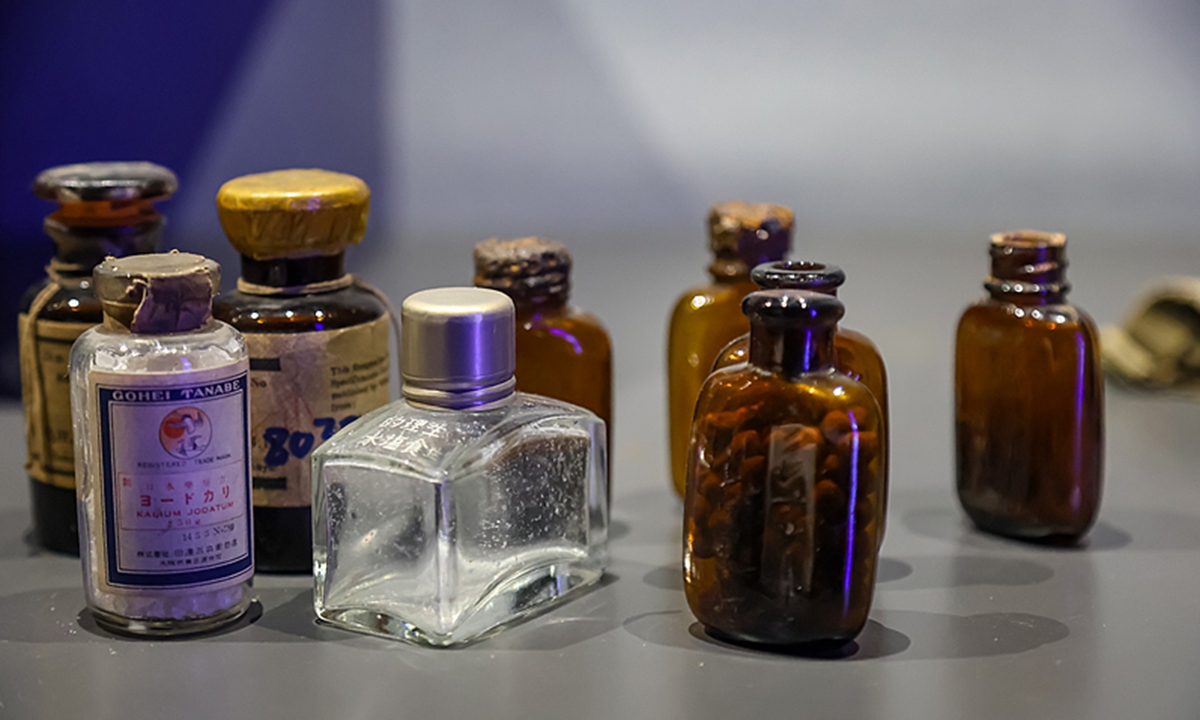
Chemical agent bottles manufactured by Japan displayed at the Museum of the Imperial Palace of "Manchukuo" in Changchun, Northeast China's Jilin Province, on February 27, 2025, as part of an exhibition documenting evidence of biological warfare conducted by invading Japanese army
The Director-General of the Organisation for the Prohibition of Chemical Weapons (OPCW) and a delegation from its Executive Council recently visited Hunchun, Haerbaling and Dunhua in Northeast China's Jilin Province to inspect sites where chemical weapons abandoned by Japan in China are being excavated, recovered and destroyed. A source told the Global Times that the visit provided participants with a clearer understanding of the grave and ongoing threat posed by the abandoned chemical weapons to the lives and property of the Chinese people and to the environment, as well as a more objective view of Japan's claims regarding its so-called "huge sacrifices" and "contributions."
The source said that participants supported the OPCW in urging Japan, in accordance with the Chemical Weapons Convention (CWC), to earnestly fulfill its obligations and responsibilities to completely, thoroughly and cleanly destroy all chemical weapons it abandoned in China at an early date, so that the Chinese people can be freed from this lingering threat as soon as possible.
The Global Times learned that, to assist the OPCW in exercising its supervisory role over the destruction of chemical weapons abandoned by Japan in China, China has invited Executive Council delegations to visit the country and inspect the disposal process since 2013.
A source told the Global Times that the latest trip marked the seventh such visit by an OPCW delegation. The delegation comprised OPCW Director-General Sabrina Dallafior, the chairperson of the OPCW Executive Council - Morocco's permanent representative to the OPCW, and envoys from 12 other countries.
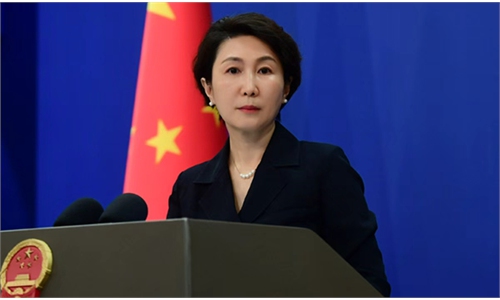
Mao Ning, spokesperson from China's Ministry of Foreign Affairs said on Monday that from August 31 to September 5, the Director-General of the OPCW, the Chairperson of the Executive Council, as well as permanent representatives and senior diplomats from 12 countries to the OPCW, visited China upon invitation. During the visit, they travelled to Hunchun, Dunhua and Haerbaling in Jilin Province to inspect the excavation, recovery and destruction of Japan's abandoned chemical weapons (ACWs).
Through the visit, the delegation gained a deeper understanding of the grave harm posed by Japan's ACWs to the lives and property of the Chinese people and to the country's ecological environment, and expressed support for the OPCW, in accordance with the Chemical Weapons Convention, in urging the Japanese side to earnestly fulfill its obligations by completely and thoroughly destroying its ACWs in China without further delay, so as to restore a safe habitat for the Chinese people at an early date and realize the noble goal of a world free of chemical weapons as envisaged by the Convention, Mao said.
"The seventh visit to China by a delegation from the OPCW Executive Council, including its on-site inspection of the disposal of chemical weapons abandoned by Japan in China, underscores the high level of concern and continued oversight by the organization and the international community regarding the issue," Zhang Gaosheng, an assistant research fellow at the Department of World Peace and Security under the China Institute of International Studies, told the Global Times.
"As the executive organ of the OPCW, the Executive Council's visit to China represents the concrete implementation of the supervisory and verification mechanisms under the Chemical Weapons Convention (CWC), with the aim of urging Japan to earnestly fulfill its obligations," Zhang said. "It also demonstrates a commitment to upholding the legal authority of the CWC."
Materials obtained by the Global Times show that chemical weapons abandoned by Japan in China have caused poisoning, injuries or deaths to more than 2,000 people since the end of World War II, posing a grave threat to the lives and property of the Chinese people as well as to ecological and environmental safety.
The CWC, which entered into force in 1997, explicitly stipulates that "each State Party undertakes to destroy all chemical weapons it abandoned on the territory of another State Party, in accordance with the provisions of this Convention." It also stipulates that "for the purpose of destroying abandoned chemical weapons, the Abandoning State Party shall provide all necessary financial, technical, expert, facility as well as other resources."
Under the Convention, Japan, as the Abandoning State Party, is also obligated to provide information on the locations where the chemical weapons were abandoned. The CWC further sets out a timeframe for their destruction. These provisions constitute the international legal basis for addressing the issue of chemical weapons abandoned by Japan in China.
Both China and Japan are State Parties to the CWC. In July 1999, the two countries also signed the memorandum between the governments of the People's Republic of China and the Japan on the destruction of Japanese ACWs in China. In the memorandum, the Japanese government acknowledged its responsibilities and obligations as the Abandoning State Party and committed to destroying all chemical weapons abandoned by Japan in China in accordance with the Convention.
As the Abandoning State Party, Japan should earnestly fulfill its international obligations and political responsibilities and, in accordance with relevant provisions of the CWC and decisions of the OPCW Executive Council, completely destroy the chemical weapons it abandoned in China at an early date under effective OPCW verification and supervision.
However, the Global Times has learned that although the CWC has been in force for nearly 30 years and some progress has been made in destroying chemical weapons abandoned by Japan in China, serious and pressing challenges remain. In particular, the destruction process is seriously delayed.
Under the Convention, Japan was required to complete the destruction of the abandoned chemical weapons by 2007, with a five-year grace period set. However, due to insufficient attention and inadequate investment by the Japanese side, the destruction plan has been overdue four times — in 2007, 2012, 2016 and 2022.
The destruction of abandoned chemical weapons is an obligation under international law that Japan must fulfill, Zhang said. Japan's repeated failure to meet its obligations, with the destruction work falling behind deadlines four times, exposes its strategic ambiguity and political calculations when it comes to fulfilling its obligations, and severely damages the international credibility it claims to uphold, he noted.
In addition, Japan has yet to provide comprehensive, detailed and accurate information on the locations of the chemical weapons it abandoned in China. The Global Times learned that such weapons can only be discovered by chance and then dealt with on an emergency basis, greatly increasing the risk of casualties and seriously slowing the disposal process. Excavation and recovery operations have yet to be completed in areas including Jiamusi, Mudanjiang, Shangzhi and Hunchun.
Japan has also failed to demonstrate sufficient political resolve to overcome technical bottlenecks in areas such as underwater detection and recovery and underground detection. On the issue of contaminated soil, the Japanese side has been even more evasive.
After remaining buried underground for decades, most of the abandoned chemical munitions have become severely corroded. Leakage of chemical agents and damage or rupture of chemical-agent containers have caused serious contamination of soil and water, among other environmental hazards, with the risks worsening year by year.
Zhang further noted that Japanese chemical weapons abandoned in China have so far been discovered in 18 provincial-level regions. Many of the munitions have corroded and leaked, posing an ongoing threat to public safety and causing environmental damage, including arsenic contamination of soil and water. The risks are particularly acute at large burial sites such as Haerbaling.
During their field visits, members of the delegation gained firsthand insight into the threats posed by the abandoned Japanese chemical weapons to human safety and the environment, and they recognized the urgent need to eliminate these hazards. They urged Japan to increase its investment in funds, technology and personnel, effectively implement its destruction plans, and work toward a fair resolution of the lingering harms caused by the war.
The issue of chemical weapons abandoned by Japan in China is a direct result of Japan's militarist aggression and is also widely regarded as an important test of whether Japan has genuinely reflected on its wartime history and is willing to fulfill its international responsibilities.
Zhang said that the failure to fully reckon with history has led to serious distortions in Japan's understanding of its wartime past, which is the fundamental reason Japan has failed to fulfill its responsibility to completely and thoroughly destroy the chemical weapons it abandoned in China.
During the postwar Tokyo Trials, crimes involving chemical warfare perpetrated by the Japanese military were not fully prosecuted amid the emerging Cold War, while large amounts of documentation related to Japan's chemical warfare activities were destroyed or concealed, Zhang said. He noted that denial and downplaying of the Japanese military's chemical warfare crimes have long persisted in Japanese society. Some actors have even pushed the false claim that the weapons were "handed over to the Chinese side rather than abandoned by Japan," in an attempt to evade state responsibility.
"This distorted understanding of history has carried over into the Japanese government's implementation of its obligations," Zhang said. "Japan has treated the destruction work as a diplomatic burden rather than a state obligation to atone for its wartime crimes. As a result, the project is assigned comparatively low priority in terms of budget and personnel allocation, and lacks the internal political impetus needed to accelerate the destruction process."
Although some Japanese war veterans have testified in court and confirmed that they took part in burying and abandoning chemical munitions during the war, such testimony has failed to alter the Japanese government's overall passive approach, Zhang pointed out. He argued that this also echoes the increasingly assertive activities of Japan's right wing in recent years and its push for a more concealed and deceptive form of "neo-militarism," reflecting a fundamental distortion of the history of World War II.
Zhang further stated that Japan should earnestly fulfill its promises, face up to both its responsibilities under international law and its historical culpability, and increase investment in funding, equipment and specialized personnel. Japan should also fully disclose archival materials concerning the wartime production, deployment and abandonment of chemical weapons to eliminate the dangers posed by Japanese abandoned chemical weapons at an early date.
At the same time, the international community should support the OPCW in carrying out its supervisory and verification functions to continuously track and assess the entire process of excavation, destruction and contamination remediation involving Japanese abandoned chemical weapons, while enhancing transparency in Japan's fulfillment of its obligations, Zhang said.
RELATED ARTICLES