Australia's Ambassador to Japan Andrew Shearer holds a press conference at the Japan National Press Club in Tokyo, on September 9, 2026. Photo: VCG
On Wednesday, Australian Ambassador to Japan Andrew Shearer spouted provocative remarks in Tokyo. While accusing China and other countries of leading missile-development capabilities by "very long margin," he defended Japan's aggressive development of hypersonic missiles, calling it a "modest, reasonable and appropriate" move. He also hyped up China's "economic coercion in the Asia-Pacific," using this as a "reason" to strengthen Japan-Australia relations.In all his ranting, the Australian ambassador failed to mention one thing Tokyo and Canberra have been actively working on recently: Japan and Australia are accelerating their military integration at an unprecedented pace. Japan, which should be bound by its pacifist Constitution, is using Australia's territory and military infrastructure to extend the reach of its military activities all the way south.
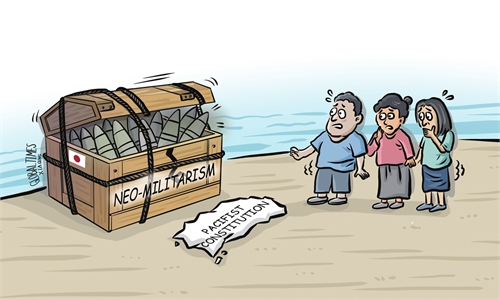
As a defeated nation in World War II, Japan is bound by international law including the Potsdam Proclamation and prohibited from rearming. Its development of offensive weapons such as hypersonic missiles constitutes a blatant breach of the postwar international order and the bottom line of regional security.
Shinjiro Koizumi has already visited Australia twice this year in his capacity as Japan's minister of defense, and the two sides have publicly proposed providing each other with "strategic depth." During the August visit, the Australian side agreed to allow Japan to use Australian test sites over the next decade to test long-range stand-off missiles; the two sides are also advancing cooperation in defense R&D, maintenance and support, and defense supply chains.
It should be noted that these are not isolated actions; under the framework of the "Indo-Pacific Strategy," Japan-Australia cooperation is becoming a key link in the US military system in the Asia-Pacific
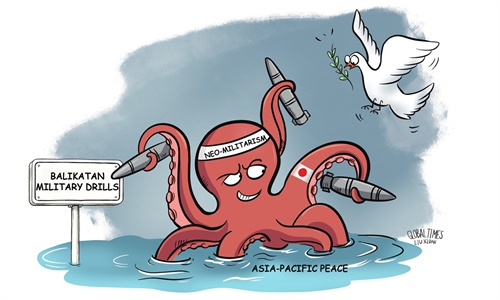
More than 80 years ago, the flames of Japanese militarism spread from Northeast Asia all the way to Southeast Asia and the Pacific. Today, by signing the Reciprocal Access Agreement with the Philippines, expanding joint exercises with Australia and courting Southeast Asian nations to broaden military cooperation, Japan is step by step laying the groundwork for its military ambitions and wooing regional countries to "back it up."
This right-wing Japanese government continues to resurrect militarism, relentlessly boosting long-range strike capabilities, expanding overseas military activities and advancing its "southward advance" strategy - the damage it will inflict on the regional security landscape is easy to calculate.
Shearer is one of the leading hardliners on China in Australian politics. After officially taking office as ambassador to Japan this August, he eagerly proposed that "middle powers" such as Australia, Japan, India and South Korea form a new security cooperation framework to "counterbalance" China's influence. He also expressed "appreciation" for the Takaichi administration's establishment of the Japanese National Intelligence Bureau this past July.
Whitewashing Japan's bid to circumvent the pacifist Constitution and develop hypersonic weapons amounts to betraying history and showing disregard for regional peace. Ambassador Shearer should stop stoking Japan's "neo-militarism" and avoid dragging Canberra onto the chariot of Tokyo's militaristic "southward advance." Otherwise, the arms race and risk of conflict that would ensue will bring real trouble to the Asia-Pacific region and eventually backfire on Australia itself.
RELATED ARTICLES