Translators’ Voices: SCO model a prototype for modern global governance, embodying concept of ‘community with a shared future for humanity’: Kyrgyz translator
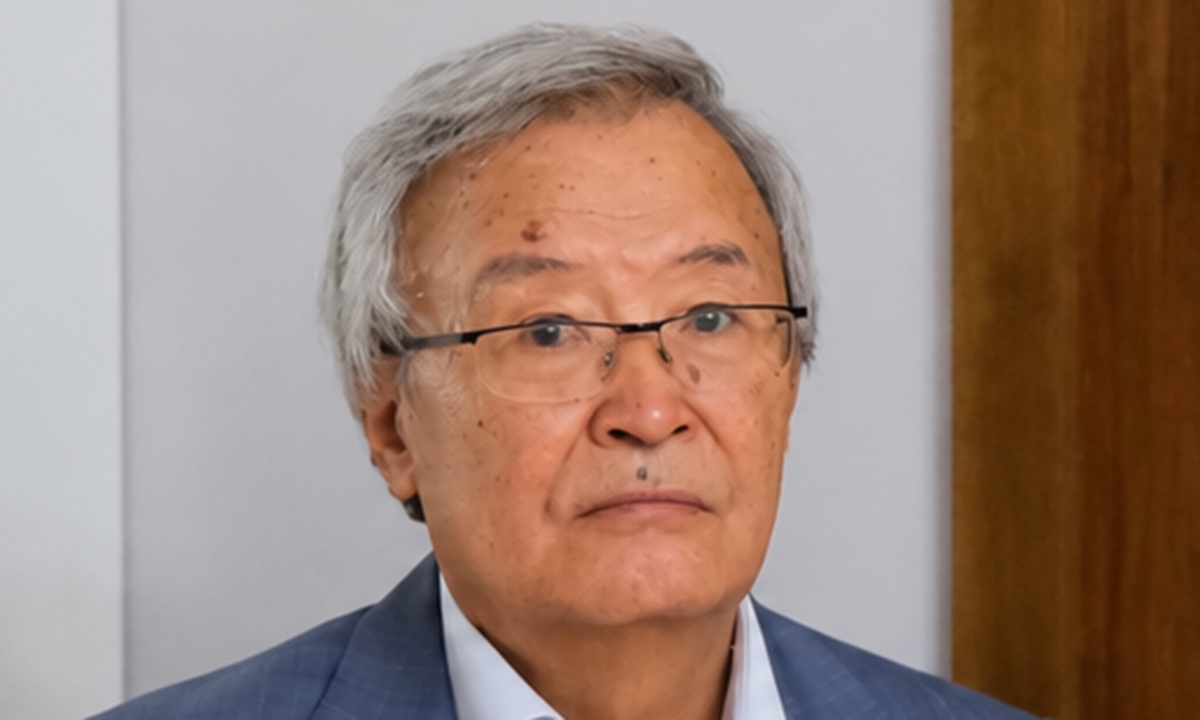
Esensbay Nurushev Photo: Courtesy of Nurushev
Editor's Note:
This year marks the 25th founding anniversary of the Shanghai Cooperation Organisation (SCO). The SCO Summit was held in Bishkek, the capital of Kyrgyzstan, from August 31 to September 1.
Chinese President Xi Jinping solemnly put forth the Global Governance Initiative (GGI) at the SCO Tianjin Summit held in September last year. Over a year, a series of practical measures have taken root, and the GGI is being translated from a Chinese proposal into international practice.
At the SCO Plus Meeting in Bishkek, President Xi pointed out that the SCO "takes it as its mission and responsibility to make the global governance system more just and equitable." How should we understand the substance and significance of the GGI in greater depth? How can the "Shanghai Spirit" be further strengthened to guide the reform and improvement of global governance?
In the 28th installment of the special series "Decoding the Book of Xi Jinping: The Governance of China," the Global Times, along with the People's Daily Overseas Edition, continues to invite Chinese and foreign scholars, translators of Xi's works, practitioners with firsthand experience and international readers to engage in in-depth discussions on the above-mentioned theme.
In the 28th article of the "Translators' Voices" column, the Global Times (GT) interviewed Esensbay Nurushev (Nurushev), translator of the Kyrgyz version of the book Xi Jinping: The Governance of China.
GT: This year marks the 25th anniversary of the SCO. Volume IV of Xi Jinping: The Governance of China notes that "the SCO has been guided by the Shanghai Spirit of mutual trust, mutual benefit, equality, consultation, respect for diversity of civilizations, and pursuit of common development. It has endeavored to promote world рeace, development and human progress, and it has explored new ground, both in theory and in practice, to build a new model of international relations and a global community of shared future." In your view, what is the contemporary value of the Shanghai Spirit in the current global landscape? What unique model of international relations does it offer?
Nurushev: Since 1996 - when five nations (China, Russia, and the Central Asian republics of Kazakhstan, Kyrgyzstan, and Tajikistan) first united to build military trust and demilitarize their borders - the Shanghai Spirit has undoubtedly strengthened and gained significant appeal. Today's SCO is no longer the "Shanghai Five," but represents nearly half of the world's population.
The Shanghai Spirit has proven to be unique: First, it enables small and medium-sized nations to engage in dialogue with major powers on an equal footing, without forcing them to take sides in global conflicts. Second, while the organization is diverse and contains internal disputes and contradictions, its members resolve these issues through discussion, much like a "big family" handling its own affairs.
The fundamental principles of the Shanghai Spirit remain steadfast; collectively, they reflect one of the defining trends of our time: the shift from a model of competing blocs to a system of multi-level partnerships. In the current global climate, the value of the Shanghai Spirit lies in its role as an alternative foundation for international relations - one rooted in equality, mutual trust, and the rejection of hegemonic ambitions. The task now is to transform the SCO into a priority area for implementing the Global Security Initiative, as Chinese President Xi Jinping stated at the recent Bishkek summit. Instead of unipolarity or bipolarity, the SCO proposes a multipolar model of world order.
GT: At last year's SCO summit, President Xi put forward the Global Governance Initiative aimed at building a more just and equitable global governance system. Against the backdrop of a crisis of confidence in the Western governance model, what specific deficits is this initiative primarily intended to address, and what are the SCO's unique advantages in implementing it?
Nurushev: The SCO does not have a ready-made, standardized governance model; each state has the right to choose its own path of development without having foreign values imposed upon it. In other words, the SCO shows full respect for the diversity of cultures and civilizations, including in the political sphere. The organization's very format brings countries with diverse interests to the same table, thereby ensuring regional and Eurasian stability.
The recent SCO summit in Bishkek provided fresh momentum for the organization's development. A number of important documents were adopted there, opening up new horizons of opportunity for the SCO. Above all, in my view, attention should be paid to the organization's institutional development. Furthermore, it is necessary to move from declarations to genuine institutions of multilateralism.
On a global scale, the SCO should strive to ensure adherence to international law, preventing situations where hegemonic states can violate the sovereignty of other countries with impunity for the sake of geopolitical interests. Particular attention must be paid to strengthening interstate political trust - a commodity in critically short supply in the current climate. By doing so, the SCO can make an even more significant contribution to building a safe, just, and prosperous world - not only across Eurasia but on a global scale.
The Shanghai Spirit is shaping a form of network-based diplomacy for the Global South - one that prioritizes state sovereignty. SCO initiatives enable Global South countries to play a more active role in reforming global rules.
GT: What is the primary source of cohesion within the SCO?
Nurushev: I would consider the most significant achievement to be the fact that the SCO has become a multilateral platform to successfully unite almost all the countries in the region. Across this vast area, a stable culture of multilateral cooperation is being established and strengthened - one based on equality, mutual respect, consideration of each other's interests, and the pursuit of consensus. To me, the SCO model itself appears to be a prototype for modern global governance, embodying the concept of "a community with a shared future for humanity" put forward by President Xi.
GT: Over the past 25 years, the SCO has expanded beyond the realm of security into trade, economics, and humanitarian affairs. What will be the next driver of growth for the SCO? Why?
Nurushev: At the Bishkek summit, Chinese President Xi Jinping identified four areas of cooperation within the SCO framework: the need to stay committed to putting development first, taking security as a key goal, a people-centered approach as well as dialogue and consultation. He also announced plans to implement 100 technological cooperation projects with other SCO countries in the next three years. These projects will likely serve as the next driver for the SCO. The recent opening of the China-Kyrgyzstan Institute of Outstanding Engineers in Bishkek marks the first step in the implementation of these initiatives.
RELATED ARTICLES