Translators’ Voices: China's pursuit of strength and self-reliance in science and technology presents an inspiring path

Erdem Ergen Photo: Courtesy of Ergen
Editor's Note:
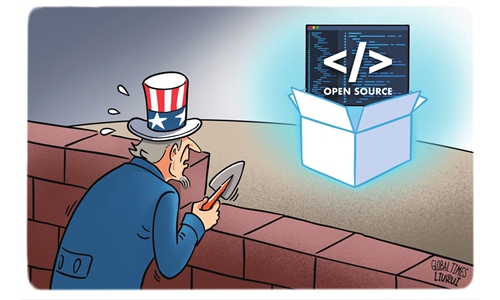
Ahead of the opening of the 2026 World AI Conference and High-Level Meeting on Global AI Governance, Chinese AI start-up Moonshot AI released its Kimi K3 large language model. As the world's largest open-source model by parameter count to date, this launch marks a significant step forward in the development of China's artificial intelligence models.
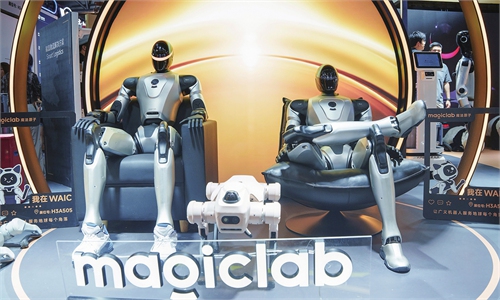
From the C919 airliner soaring into the skies to Unitree's humanoid robots stealing the show; from DeepSeek pushing the AI frontier to Moonshot AI's landmark unveiling of Kimi K3 - China's wave of homegrown innovations has dominated global headlines in recent years, delivering a steady stream of breakthroughs.
At a meeting in Beijing that brought together the national science and technology award conference, the general assemblies of the members of the Chinese Academy of Sciences (CAS) and the Chinese Academy of Engineering (CAE), and the 11th national congress of the China Association for Science and Technology in July, Chinese President Xi Jinping, also general secretary of the Communist Party of China (CPC) Central Committee and chairman of the Central Military Commission, stressed that the 15th Five-Year Plan period (2026-2030) is a critical phase for tackling tough challenges in building up the country's strength in science and technology.
"We must seize the historic opportunity, rise to the challenges of the times, accelerate efforts to achieve high-level self-reliance and strength in science and technology, and make steady progress toward the 2035 goal of becoming a leading country in science and technology," he said.
In the article "Strive for Greater Strength and Self-Reliance in Science and Technology" included in the fourth volume of Xi Jinping: The Governance of China, Xi pointed out, "Through years of endeavor, our country's overall strength in science and technology has improved substantially. We therefore have a solid foundation, and are fully confident in our ability to seize the opportunities offered by the new revolution in science, technology and industry to achieve greater results." The article also mentioned that "We should participate to the full in global science and technology governance, contribute Chinese wisdom, and shape a philosophy of technology for good purposes, so that science and technology better serve human wellbeing, and enable China's science and technology industry to contribute more to building a global community of shared future."
In the 27th installment of the special series "Decoding the Book Xi Jinping: The Governance of China," the Global Times, along with the People's Daily Overseas Edition, continues to invite Chinese and foreign scholars, translators of Xi's works, practitioners with firsthand experience, and international readers to focus on the theme of striving for greater strength and self-reliance in science and technology. Together, they share views on China's tech growth, governance principles, and global cooperation in science and technology.
In the 27th article of the "Translators' Voices" column, the Global Times (GT) interviewed Erdem Ergen (Ergen), translation editor of the Turkish-language edition of the book series Xi Jinping: The Governance of China and editor-in-chief of Nomos Kitap (Nomos Publishing).
GT: In Volume V of Xi Jinping: The Governance of China, Chinese President Xi Jinping emphasizes that "we must fully understand the role of science and technology as a strategic prerequisite and fundamental support," and calls for "strength and self-reliance in science and technology." How do you understand the strategic thinking behind placing scientific and technological innovation at the core of Chinese modernization? In your view, what institutional strengths have enabled China to achieve high-level self-reliance and strength in science and technology?
Ergen: Prioritizing scientific and technological innovation is a vital development of historical materialism. President Xi's strategic focus on self-reliant scientific and technological development will foster the development of new quality productive forces, shifting China from high-speed quantitative expansion to high-quality qualitative growth. In an era marked by geopolitical friction and Western economic hegemony, tech self-reliance is not merely an economic goal; it is a critical safeguard ensuring national sovereignty and independence against external containment.
China's institutional strengths in achieving this self-reliance stem from its socialist system with Chinese characteristics. Primary among these is the central leadership of the CPC, which enables long-term strategic planning free from the short-sighted, profit-driven cycles of capitalist market economies. The state can efficiently mobilize national resources, aligning state-owned enterprises, research institutes, and universities toward collective strategic goals. Furthermore, China's socialist market economy allows public capital to direct technological breakthroughs toward broader social needs, human well-being, and green development, rather than capital accumulation, demonstrating the superiority of socialist coordination in advancing scientific frontiers.
GT: China is steadily advancing toward its strategic goal of becoming a leading country in science and technology by 2035. President Xi said that the 15th Five-Year Plan period (2026-30) is a critical phase for tackling tough challenges in building up the country's strength in science and technology, and highlighted the need to promote the deep integration of sci-tech innovation with industrial innovation and cultivate young sci-tech talents. In your view, what does this reveal about China's approach to advancing scientific and technological innovation? What aspects of China's experience in fostering rapid innovation do you believe could offer valuable lessons for countries in the Global South?
Ergen: By integrating scientific research with industrial innovation, China ensures that technological progress serves production capacity rather than speculative financialization. The focus on cultivating young talent treats human labor as the primary engine of development, fostering a revolutionary generation of scientists capable of driving new quality productive forces. This approach demonstrates that scientific innovation under socialism is a consciously directed collective endeavor aimed at structural transformation.
For the Global South, China's model offers vital lessons in breaking away from Western techno-monopolies and peripheral dependency. First, it proves that targeted state leadership and comprehensive industrial planning can rapidly modernize productive forces without relying on Western neoliberal prescriptions. Second, by treating technological development as an important part of building independent industrial chains, China's pursuit of self-reliance and strength in science and technology presents an inspiring path toward national sovereignty. Ultimately, China demonstrates to developing nations that genuine tech self-reliance, backed by public investment in young workers and core infrastructure, is achievable. It offers a viable alternative to the unequal division of labor imposed by global capitalism.
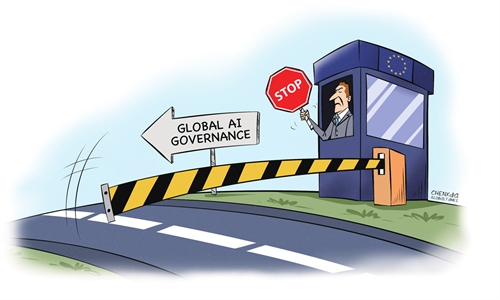
GT: The rapid development of frontier technologies including artificial intelligence (AI) has created enormous opportunities while also bringing new challenges related to safety and ethics. President Xi has stressed the need to strengthen governance over science and technology ethics and security, and to ensure that science and technology develop in a way that is positive and beneficial, safe and controllable, and conducive to the well-being of the people. How would you evaluate China's approach of giving equal priority to technological innovation and effective governance?
Ergen: China's approach of balancing technological innovation with robust governance embodies the belief that technology must serve collective human emancipation rather than private capital accumulation. Under capitalism, emerging technologies like AI are deployed primarily to maximize profit, often leading to worker displacement, algorithmic exploitation, and unbridled market monopolies. In contrast, China's emphasis on ethical, safe, and controllable technological development highlights a socialist commitment to placing human well-being and social stability at the center of technological progress.
By establishing proactive regulatory frameworks, the state ensures that technological advances do not alienate working people or exacerbate social inequalities. China's governance model treats AI and other frontier technologies as public goods, guiding their evolution toward public health, education, ecological sustainability, and socialist modernization. Internationally, this strategy provides a crucial alternative to Western tech monopolies, advocating for global AI governance that respects national sovereignty and prevents technological hegemony. Ultimately, China demonstrates that state oversight does not stifle innovation; rather, it directs human ingenuity toward sustainable, equitable, and people-centered development.
GT: In Volume V of Xi Jinping: The Governance of China, President Xi emphasizes that "we should act on the vision of a community with a shared future for humanity and promote international cooperation in science and technology." Against the backdrop of rising unilateralism and protectionism, how do you understand the intrinsic logic behind China's pursuit of sci-tech self-reliance alongside greater openness and cooperation? What opportunities do you believe China's scientific and technological innovation has created for Global South countries?
Ergen: The dual pursuit of tech self-reliance and international cooperation is a manifestation of dialectical materialism. Domestic tech self-reliance provides the necessary foundation for sovereign equality; without internal technological capability, participation in the global economy leads to subjection under Western monopoly capital. By strengthening its national productive forces, China creates the material baseline required to resist unilateral sanctions and protectionism, allowing it to engage in genuine, uncoerced international cooperation toward a "community with a shared future for humanity."
Through initiatives like the Belt and Road Initiative, China democratizes access to advanced green technologies, digital infrastructure, agricultural innovation, and satellite systems without onerous political conditionality or neoliberal structural adjustment programs. By sharing research and technology transfer as public goods, China aids developing nations in tackling shared crises like climate change and food insecurity. Ultimately, China's model breaks Western techno-hegemony, fostering multipolar cooperation grounded in mutual development and collective solidarity.
GT: In his keynote address at the opening ceremony of the 2026 World AI Conference and High-Level Meeting on Global AI Governance, President Xi stressed that "all countries should take a people-centered approach and develop AI for the positive and for good" and "we should join hands to build a just and equitable system for global AI governance." How would you assess China's leadership in advancing global AI governance and AI capacity building? In your view, how will China's continued provision of AI-related international public goods contribute to building a more just and equitable global AI governance framework?
Ergen: China's leadership in global AI governance represents a principled socialist effort to democratize technology against Western technological monopolies and promote broader accessibility and inclusiveness. Advanced technologies are often weaponized to enforce unequal development and concentrate wealth among Western tech oligopolies. In contrast, President Xi's call for a "people-centered" framework reflects the commitment that AI must serve collective human flourishing rather than private profit. China's Global AI Governance Initiative offers a sovereign, equitable alternative that rejects technological hegemony and unilateral sanctions.
Furthermore, China's provision of international public goods - such as offering 5,000 AI training opportunities to developing nations - substantially advances international solidarity. By building technological capacity across the Global South, China helps bridge the global digital divide, enabling developing nations to build independent productive forces rather than remaining mere consumers of foreign tech infrastructure. This approach treats AI as a shared heritage of humanity rather than a commodity for Western exploitation. By offering tangible resources, open standards, and capacity-building without political conditions, China establishes a material foundation for a multipolar global governance framework. Ultimately, this ensures that frontier technologies contribute to equitable development, national sovereignty, and social justice worldwide.
RELATED ARTICLES