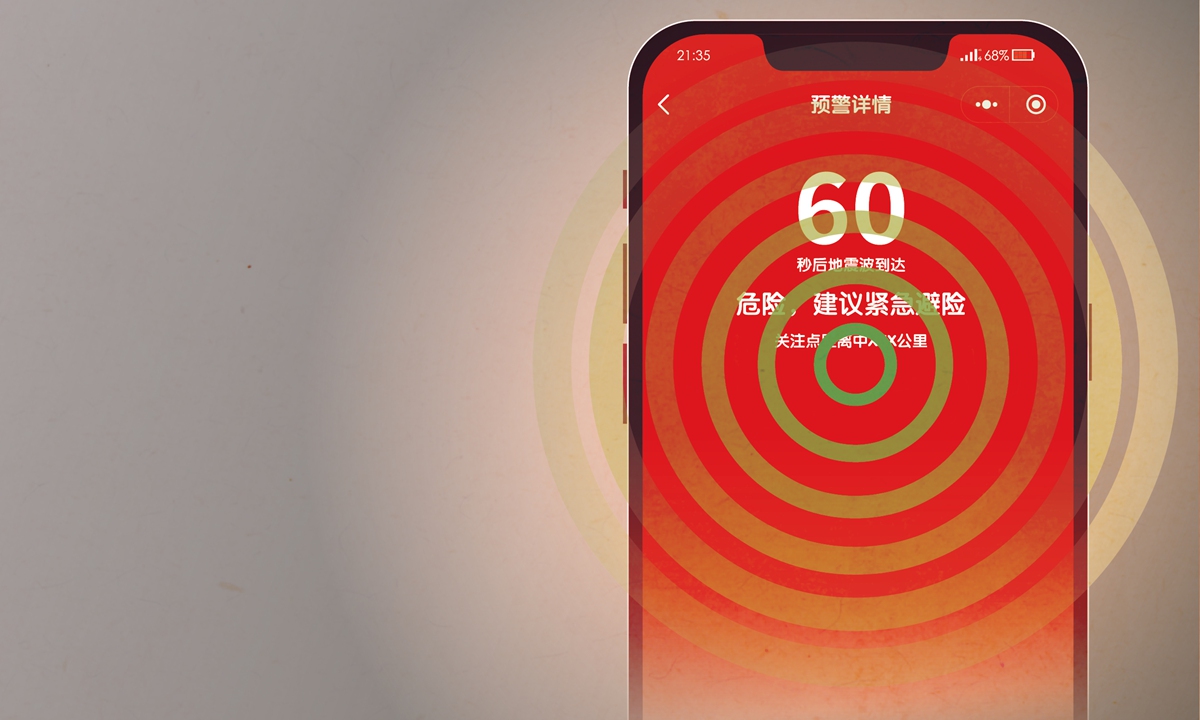
An illustration of an earthquake early-warning alert on a smartphone Photo: VCG
China's earthquake authority said it is in talks with Apple to accelerate efforts to bring official earthquake early-warning information to the iOS system, according to a recent response posted on the website of the China Earthquake Administration (CEA).The China Earthquake Networks Center (CENC) is communicating with Apple over the issue, the response said. It came after an internet user recently suggested accelerating the integration of China's official earthquake early-warning service into the iOS system, noting that other major smartphone brands, including Huawei, Xiaomi, OPPO and Vivo, already provide such alerts through built-in system functions.
CENC said that in the meantime iPhone users can receive earthquake early-warning information officially released by the administration through WeChat mini programs.
The administration also said earthquake early warnings delivered through cell broadcast technology are not restricted by smartphone brand. It is working with industry and information technology authorities to advance the integration of earthquake early-warning information into the cell broadcast system, with progress depending on ongoing technical verification, according to the administration's response.
China's National Earthquake Early Warning Project was completed and put into operation in July 2024 and was the world's largest earthquake early warning network, according to a 2024 report from the Xinhua News Agency.
Over the past two years, the administration has publicly issued more than 700 earthquake early warnings, serving more than 90 million people, while its public earthquake early-warning services have reached more than 460 million users, according to a report from the Southern Metropolis Daily on Monday.
The administration has also established partnerships with more than 30 companies and institutions, allowing the public to receive authoritative earthquake early-warning information through mobile phones, dedicated terminals, radio and television, and other channels.
Global Times
RELATED ARTICLES