IN-DEPTH / IN-DEPTH
BeautifulChinaING: Walking through Changbai Mountain for 40 years, a Chinese botanist captures 520,000 plant images and China’s changing landscape
Giving each plant an ‘ID card’
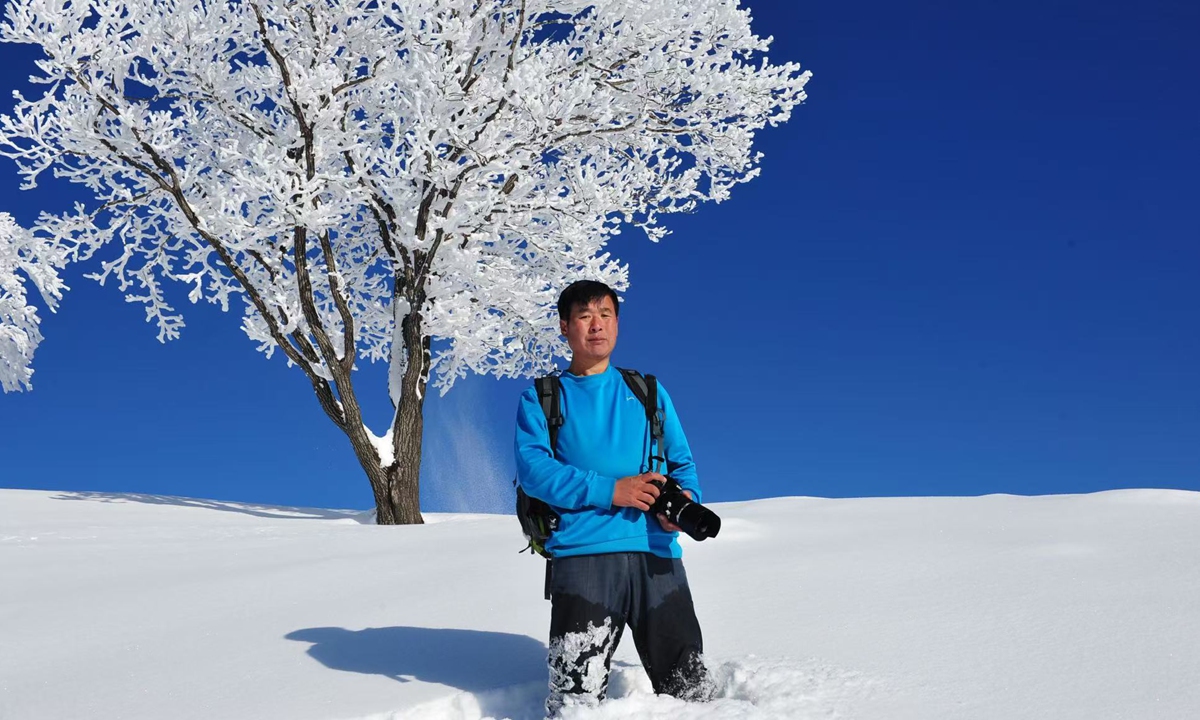
Botanist Zhou Yao on Sifang Mountain in Tonghua county, Northeast China's Jilin Province, on November 20, 2018 Photos on this page: Courtesy of Zhou Yao
In August, 64-year-old botanist Zhou Yao returned from yet another field expedition to Changbai Mountain in Northeast China's Jilin Province.
Zhou is a professor of Tonghua Normal University. He retired four years ago and is now working at the university again on a re-employment basis.
As with countless trips over the past four decades, he came back with more plant images stored in his camera and his hard drives.
Some of the plants may appear for only a few days each year. Others grow deep in high-altitude forests. Still others require years, even decades, of observation before their full life cycles can be documented.
Zhou describes his work simply as "giving each plant an ID card."
Since he first set foot on Changbai Mountain in 1983, Zhou has traveled hundreds of thousands of kilometers on field expeditions, worn through dozens of pairs of shoes, taken more than 520,000 photographs of plants and completed eight academic monographs.
Some have called his work a modern Northeast China version of Ben Cao Gang Mu, the ancient Chinese pharmacopoeia Compendium of Materia Medica.
But Zhou is not accustomed to defining himself through such numbers. He told the Global Times that what he does is actually very simple: "I just want to leave behind, as truthfully as possible, what I see in nature."
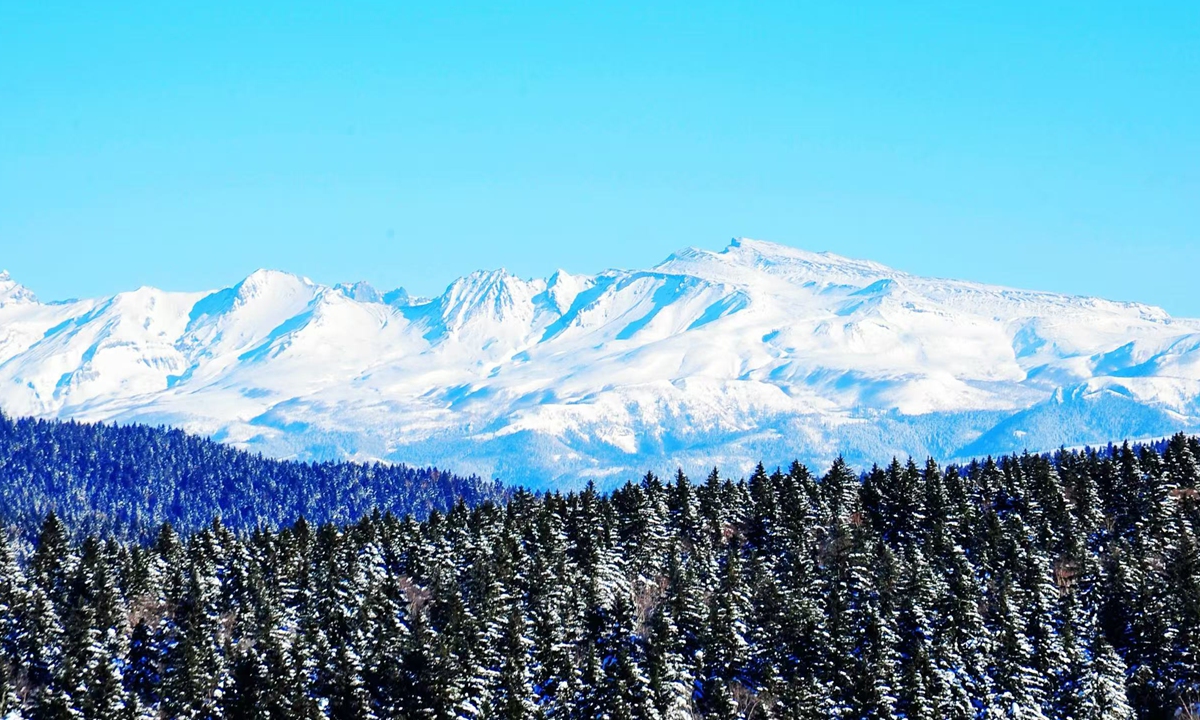
A view of the main peak of Wangtian'e in the Changbai Mountain National Nature Reserve
Waiting 30 years for a single fruit
Zhou once waited 30 years to photograph the fruit of a single plant.
The plant, known as bunchberry, grows at an altitude of around 1,500 meters in Changbai Mountain. When Zhou first encountered it in 1993, he documented what its flowers looked like. But as a botanist, he knew that every stage of a plant's life, from sprouting and flowering to fruiting, provides different information. Without a photograph of its fruit, the record would always be incomplete.
Finding the plant was difficult enough. It typically grows at high elevations, where the air is cold, damp and humid, rainfall is abundant and evaporation is limited. After the flowers fade, the rainy season often arrives, making it difficult for the fruit to survive long enough to be documented.
For more than two decades, Zhou returned to the mountains again and again in search of it, but never managed to get the photograph he wanted.
Then, in 2023, he finally received word that the plant was fruiting abundantly in the Lesser Khingan Mountains, Northeast China's Heilongjiang Province.
At the time, Zhou had been planning to attend a 40th-anniversary reunion with his university classmates. They had not seen one another for years and wanted him to be there. But he told his classmates that his elder brother was "ill," therefore he could not attend, then immediately packed his equipment and headed into the field.
Eventually, he got the photograph he had been waiting for.
"Plants don't wait for people," he said. "If you miss one opportunity, you may have to wait another year."
For Zhou, photographing plants is all about completeness. In one of his botanical works, Zhou used 35 photographs to document a single plant.
When Zhou first began systematically exploring Changbai Mountain in 1983, shortly after graduating from a now defunct university, China had relatively limited botanical resources. Many records were preserved through illustrations.
Drawings could capture a plant's general form, but they could not fully reproduce what it actually looked like in nature.
His alma mater provided some funding, but it was far from enough. More often than not, Zhou paid out of his own pocket, carrying equipment over mountains and through forests and sometimes spending an entire day waiting in the damp woodland for the right moment.
In 2026, to keep his fieldwork going, he eventually had to sell books he had treasured for years. When his friends came to his study to take the books away, he wrote in his diary that he felt "as if my heart were being cut with a knife."
It was no ordinary collection. His nine-volume Atlas of Medicinal Plant Resource in the Northeast of China, weighing 25 kilograms, represents years of fieldwork and accumulated research.
Even so, he did not stop traveling. "Scientific exploration is always a journey," he later wrote in his diary.
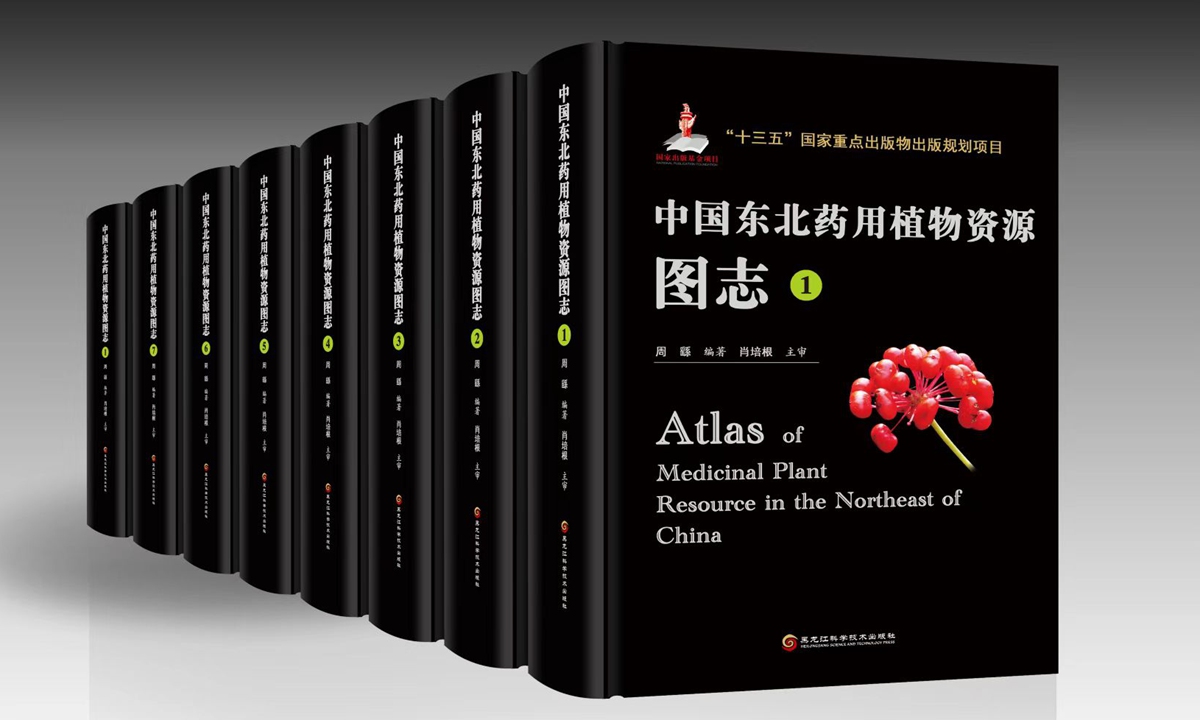
Nine-volume Atlas of Medicinal Plant Resource in the Northeast of China, authored by Zhou Yao
'Our own plants should be studied by us'
For a long time, research into Changbai Mountain's flora was dominated by foreign scholars. The names and records of many plants bore the imprint of that era.
"When I learned about this history, I kept thinking about one thing," Zhou said. "Our own plants should be studied by us."
That is why he kept going back. He has climbed to the summit of Changbai Mountain 173 times. Dense forests, wetlands and alpine meadows became his "classrooms."
At first, he simply wanted to answer one question: What exactly grows on this mountain?
He photographed flowers, leaves and fruits, searched through academic literature, classified and catalogued species, and studied which plants could be used medicinally, which could be eaten and which had ornamental value. Books gradually emerged from this accumulation of fieldwork.
But as his journeys multiplied, Zhou realized that botanical research was not simply about answering what grows on a mountain.
Why does the same plant grow abundantly in one place but sparsely in another? Why are the distribution ranges of some species quietly shifting? What is happening to the soil beneath them, the streams beside them and the forest canopy above them?
His focus expanded from a single plant to an entire forest, from recording flowers, leaves and fruits to observing soil, water sources and the broader ecosystem.
"Plants can never be separated from their environment," he said. "When you look at a blade of grass, you have to look at the whole mountain."
That shift in perspective also led him to pay greater attention to the relationship between people and the mountains.
"It used to be relatively easy to go into the mountains. Now, ironically, it's harder," Zhou said with a smile.
In the 1980s, Changbai Mountain's ecological protection system was still being developed. Restrictions on entering the mountains were relatively limited, and human activity had a more visible impact on nature.
Today, access is increasingly regulated. Entry into core areas requires approval, scientific surveys are subject to more stringent procedures and ecological protection has become the overriding priority.
To Zhou, this does not mean that people have become more distant from the mountains. It means the relationship between people and the mountains has changed.
The sakhalin rhodiola is one example. Because of its medicinal value, the plant was once heavily harvested, leaving holes scattered across mountain slopes.
Years later, when Zhou returned to Changbai Mountain, he found that the sakhalin rhodiola had recovered across large areas. Places that had once been damaged were once again covered with thriving plants.
For a botanist, such changes may be more tangible than any grand statistic.
As individual plants, hillsides and species begin to recover, the ecosystem of the entire mountain is quietly changing with them. And as the environment has improved, wildlife such as the Siberian Tiger has also returned to parts of the Changbai Mountain region. Ecological links once disrupted by human activity are gradually being restored.
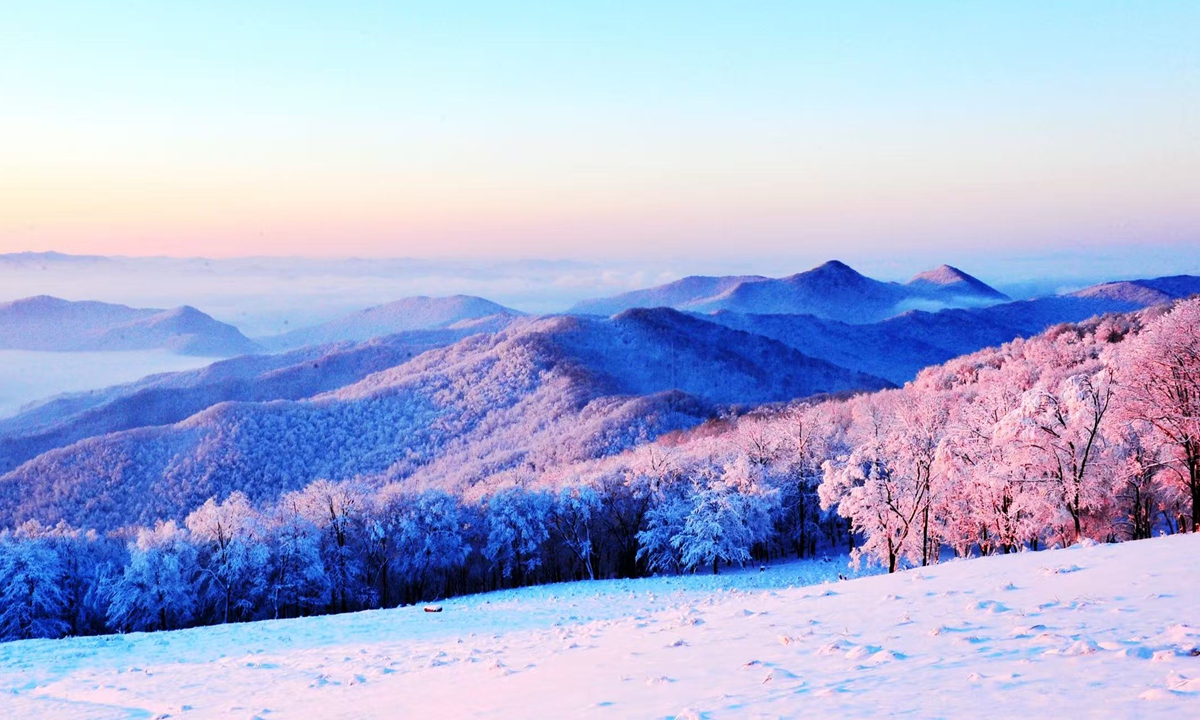
A view of Sifang Mountain in Tonghua county, Jilin Province
The country's four decades of green change
The more than 40 years since Zhou first entered Changbai Mountain have coincided with four decades of increasingly intensive ecological conservation in China.
The country has moved from an earlier emphasis on the development and utilization of natural resources toward a stronger focus on conservation and natural restoration. Protection has expanded from individual plants and animals to the integrated management of mountains, rivers, forests, farmland, lakes, grasslands and deserts.
China's changing understanding of the relationship between people and nature has been reflected first and foremost in its mountains, forests and other landscapes.
In Changbai Mountain, ecological protection has continued to strengthen. Today, the region is recognized as an international ecological landmark, is included as a UNESCO Biosphere Reserve and a UNESCO Global Geopark, according to the Beijing-based Economic Information Daily.
Protection has also evolved toward a more scientific and integrated approach.
More than 3,300 infrared cameras monitor the primeval forests around the clock, forming an integrated monitoring network that uses digital technologies to safeguard Changbai Mountain's wildlife, plants and geological heritage, the People's Daily reported.
Data released by China's National Forestry and Grassland Administration in March 2026 showed that China's forest area had reached around 240 million hectares, with forest coverage standing at 25.09 percent and total forest stock at 20.99 billion cubic meters. Both forest area and forest stock have increased for 40 consecutive years, making China one of the countries with the fastest and largest increases in forest cover worldwide.
Such enormous figures ultimately come down to individual pieces of land. For more than 40 years, Zhou's camera has been recording these changes. Film photographs and field notes from the 1980s and 1990s now sit alongside digital images stored on hard drives. Put together, they form a timeline spanning more than four decades.
In August, shortly after having completed another expedition to Changbai Mountain, Zhou set off once again, this time for fieldwork in Northwest China.
The plants have changed. The mountain has changed. Some species may gradually decline as environmental conditions shift. Some ecological phenomena, if not recorded in time, may never be possible to reconstruct. That is why Zhou keeps taking photographs.
"I hope that one day, when people open a botanical reference book, they will be able to see what Changbai Mountain truly looked like," Zhou said. "I hope future researchers entering the forest will know what once grew there, and understand how the landscape has changed."
RELATED ARTICLES