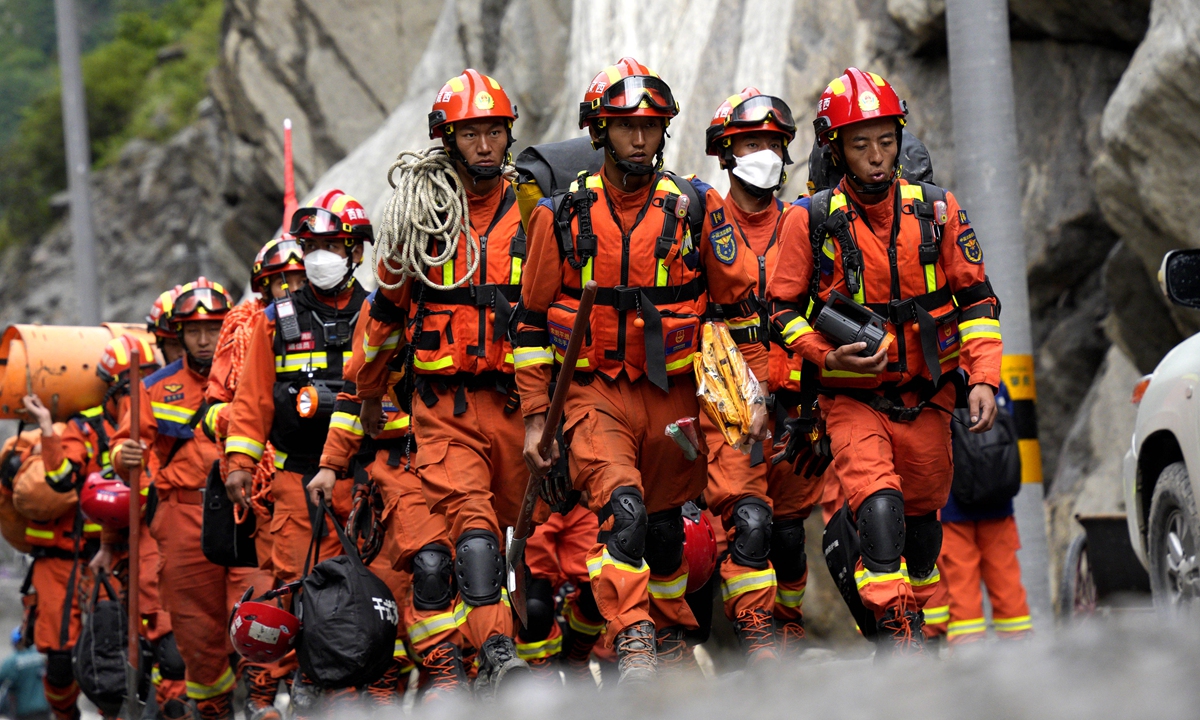
Rescuers carry supplies and equipment into the core disaster area on September 2, 2026. Road access to the core area of the mudslide-hit Gyirong Port in Southwest China's Xizang Autonomous Region was basically restored at 10 am on the day. Photo: VCG
The journey from Beijing to Gyirong, Southwest China's Xizang Autonomous Region, was long and difficult.As one of the members of an international media group, we flew to Lhasa before beginning a more than 12-hour road journey toward Gyirong, one of the areas hit by a major mudslide near the China-Nepal border.
The mudslide struck the area on August 26, causing extensive destruction and trapping people under enormous quantities of mud and debris. Some international criticism of the response time, I believe, did not fully account for the extraordinary geographical and logistical challenges rescue teams faced.
Gyirong is far from Lhasa, and access to the disaster-hit area was severely disrupted. Roads leading toward the affected zone were swept away or damaged, making it extremely difficult to transport rescue personnel, heavy machinery and relief supplies. Under these circumstances, the physical challenges of reaching the disaster zone need to be considered when assessing the initial emergency response.
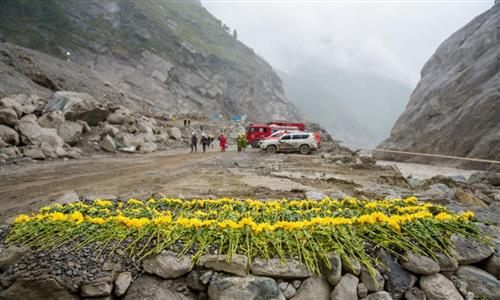
When our media delegation finally reached the affected area, the scale of destruction became immediately apparent. Mud and debris covered large portions of the landscape.
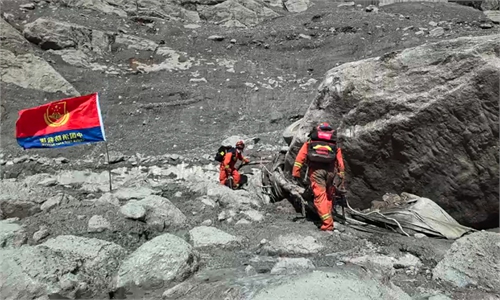
Standing at the site and seeing the destruction was very different from following the disaster through reports and images from a distance. The enormous quantities of earth and debris demonstrated the difficulties faced by rescuers attempting to locate and reach people who might still be alive.
According to the introduction given by the on-site staff, thousands of rescue workers had been deployed in the affected area and were working around the clock to locate possible survivors and provide assistance. The scale of the deployment reflected the seriousness with which the authorities were treating the emergency.
Technology stood out during the rescue and relief operations. Drones were being used to survey affected areas and assist teams on the ground. Where roads had been destroyed and terrain remained difficult or dangerous, they gave rescuers valuable information beyond their immediate reach. The use of drones and other equipment appeared to be part of a broader effort to combine manpower with modern tools in the search for survivors and the delivery of emergency assistance.
Another issue discussed during our visit was the collection and release of information about victims. Chinese officials said that authorities were collecting and verifying data concerning those affected, and taking great care before releasing victim related information publicly.
In the immediate aftermath of a disaster, accurate identification of victims is essential. Releasing unverified information prematurely can add to the distress of families and communities already struggling. The officials' explanation suggested that verification was the priority before publication.
For me, one notable aspect was the access given to international journalists. We were able to see the affected area, speak with officials and observe rescue and relief operations directly rather than relying exclusively on information released remotely. Firsthand observation helps journalists understand the circumstances and assess claims against what is actually happening on the ground.
Based on what I saw, the Chinese authorities deserve appreciation for facilitating international media access and providing information about the ongoing response.
My visit reinforced a broader lesson: The speed and effectiveness of an emergency operation cannot always be judged simply by the number of hours that pass before rescuers arrive. Geography, infrastructure, weather and the accessibility of the affected area can fundamentally shape what emergency teams are able to do. In Gyirong, the destruction of roads and the remoteness of the affected area presented formidable obstacles.
After witnessing the situation in person, I found the scale of the rescue effort and the deployment of thousands of workers were highly significant. The use of drones and other modern technologies demonstrated an attempt to employ every available means to support the operation.
As an international journalist based in Beijing, I have covered many developments from China. But traveling to Gyirong and witnessing the consequences of the mudslide firsthand was a particularly sobering experience. The disaster showed the immense power of nature and the vulnerability of people caught in its path. It also highlighted the enormous logistical challenges involved in reaching remote disaster zones.
What I witnessed was a large-scale rescue and relief operation being conducted under extremely difficult circumstances. The international community should consider these realities when evaluating the response, while continued transparency, accurate information and responsible media access remain essential as the recovery continues.
The author is a Pakistani journalist based in Beijing. opinion@globaltimes.com.cn
RELATED ARTICLES